Typical tendencies
Energy level
Always on; boredom turns into mischief.
Good with children
Gentle and tolerant around children.
Good with other pets
Easygoing with most household animals.
Shedding
A light scatter, easy to keep up with.
Vocalization
Narrates the whole day out loud.
Sociability
Hates being left out of anything.
More traits
Exercise needs
Adaptability
Grooming needs
Trainability
Intelligence
Family friendly
Friendly with strangers
Apartment friendly
Overview
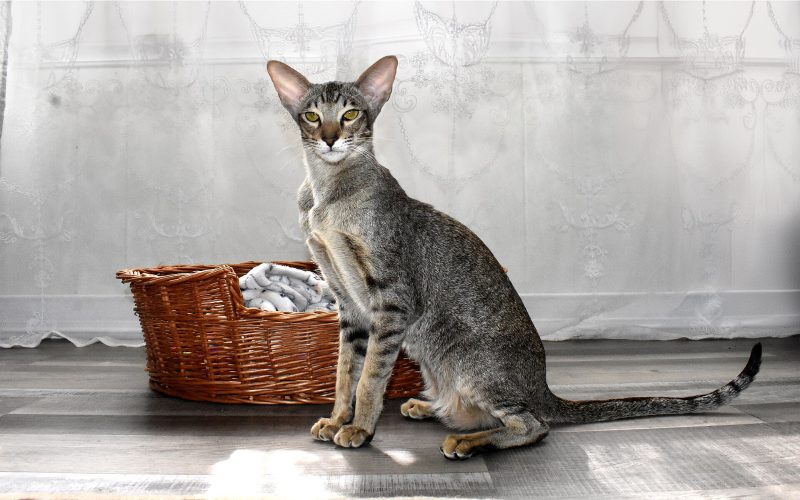
The Oriental Shorthair is a Siamese in every respect but color: the same long, tubular body, the same enormous ears and the same loud opinions, offered in solid, tabby, smoke, shaded and bicolor coats rather than restricted points. It suits people who are home a lot and want a cat that behaves like a shadow, a sidekick and a commentator rolled into one. Orientals follow you from room to room, ride on shoulders, sleep under the covers and announce every event in a raspy, insistent voice. They are intelligent, quick to learn and quick to find trouble when bored. Grooming is almost nothing; attention is everything. Left alone all day with nothing to do, an Oriental becomes anxious, destructive or depressed, so a second cat or a busy household is nearly a requirement. If you find Siamese personalities delightful but want a green-eyed cat in ebony, lavender or spotted tabby, this is your breed.
History & Origin
After the Second World War, British breeders rebuilding the Siamese population crossed their remaining cats with Russian Blues, British Shorthairs, Abyssinians and household cats. The kittens that inherited the Siamese body without the pointed pattern were at first a by-product, then a goal. The Havana, a solid chestnut-brown cat, was established in the early 1950s, and Foreign White programs followed in the 1960s; the Governing Council of the Cat Fancy registered each solid color as its own breed before gathering them under the Oriental name. In the United States, breeders Vicky and Peter Markstein were struck by solid and tabby cats of Siamese type they saw in Britain in 1971 and 1972, and the club Oriental Shorthairs International formed in 1973. CFA accepted the breed for registration in 1974 and for championship in 1977, added bicolors in 1985 and later brought the longhaired version under the same name, showing the two coat lengths in separate divisions. TICA and FIFe also recognize the breed.
Appearance
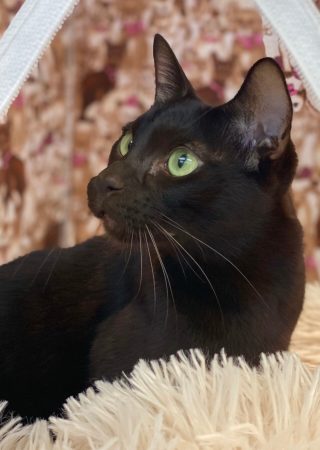
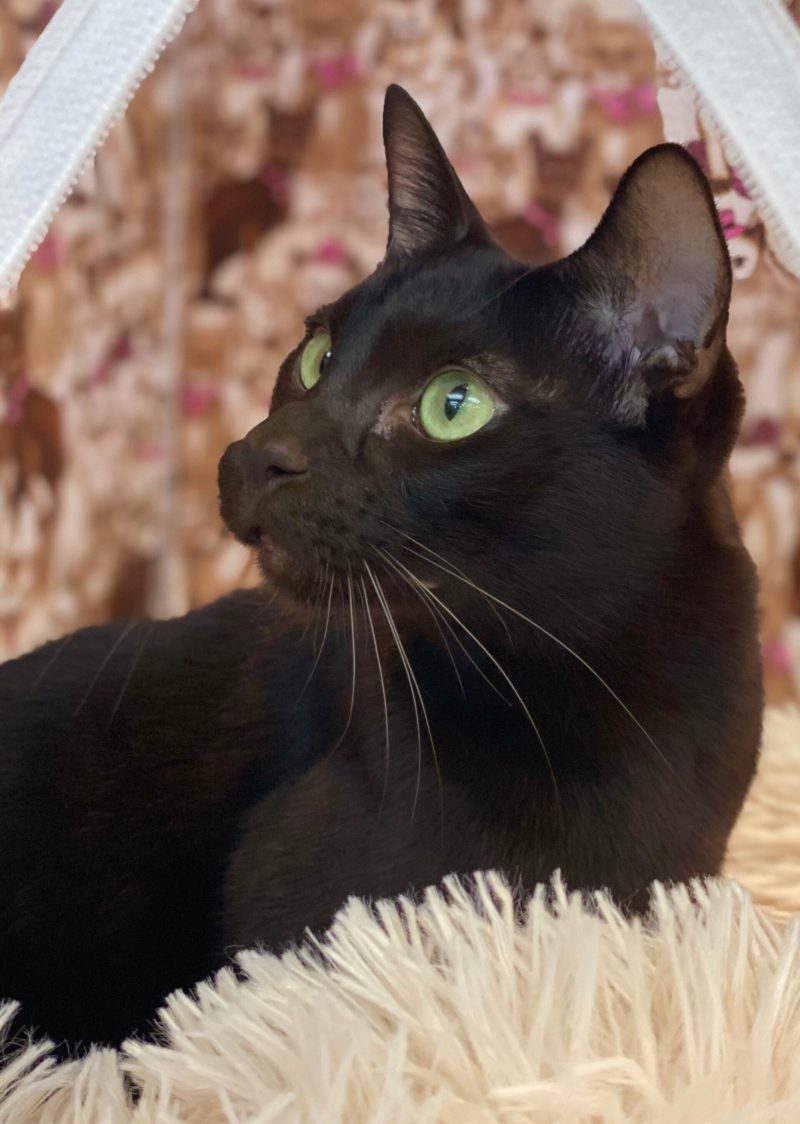
Everything about the Oriental is long and fine: a tubular body on slender legs, a whip-like tail, a long neck and a wedge-shaped head that flows from the nose to the tips of flaring ears so large they seem borrowed from a bigger cat. The eyes are almond-shaped, slanted toward the nose and usually a vivid green, though white Orientals may have blue or odd eyes and pointed cats have blue. The coat is short, fine and glossy and lies so close that the cat looks poured rather than furred, which shows off the muscle beneath. The breed exists in an enormous range of colors and patterns, with more than three hundred combinations possible: solid ebony, blue, chestnut, lavender, cinnamon, fawn, red and cream; classic, mackerel, spotted and ticked tabbies; smokes, shaded silvers and bicolors. It is distinguished from the Siamese only by color, and from the Havana Brown by its more extreme type. The Oriental Longhair is the same cat in a silky semi-long coat.
Temperament & Personality
Orientals are intense. They attach deeply to their people, often picking one favorite, and want to be touching that person for a good part of the day: on the lap, on the shoulder, draped around the neck or tucked under the covers at night. They talk constantly, in a voice that ranges from a conversational chirp to a honk that cannot be ignored, and they expect answers. Energy is high and lasts well into old age; they leap to the top of doors, open drawers and investigate every bag that comes into the house. With strangers they are usually outgoing after a brief assessment. They are good with considerate children and do well with other cats and cat-friendly dogs, and most are happier with a feline companion than alone. The flip side of all that devotion is sensitivity: an Oriental that is ignored or left alone for long hours may pine, over-groom or become destructive. This is a cat for people who want a partner, not an ornament.
Exercise & Activity
Expect to play actively with an Oriental at least twice a day for fifteen minutes or more, and to provide self-service entertainment for the hours between. Wand toys that fly and skitter, fetch with a crumpled ball, ping-pong balls in the bathtub and a cat wheel for the real athletes burn off the breed's considerable energy. Climbing is a passion, so install a tall cat tree and shelves that lead somewhere interesting, such as a window with a bird feeder outside. Puzzle feeders, snuffle mats and training sessions give the quick brain something to chew on. Their thin coat means they feel the cold; in winter they will seek radiators, laps and sunny windows, and should not be left in an unheated room. Boredom in this breed is expensive.
Signs of under-stimulation: yowling at night, chewing fabric or plastic, knocking things off shelves, over-grooming the flanks
Rotate toys weekly and hide treats around the house before you leave
Training
Few cats learn faster than an Oriental, and few are as motivated by attention. Clicker training with tiny food rewards teaches sit, spin, fetch and come in days, and short sessions double as the interaction the breed craves. Litter habits are reliable with a large, clean box in a quiet spot; this fastidious breed will protest a dirty box by going elsewhere. Scratching is vigorous, so provide a tall sisal post and a horizontal scratcher and reward their use. Carrier training matters because Orientals are vocal, dramatic travelers; leave the carrier out as a bed and feed treats inside. Harness training usually goes smoothly if begun young, and a supervised walk on a quiet patch of grass is a favorite outing. The sticking points are pica and wool-sucking, which run in Siamese-related breeds: keep string, hair ties, plastic bags and wool blankets out of reach and redirect to safe chew toys. Socialize kittens widely to visitors and noises so the breed's sensitivity does not tip into anxiety.
Grooming & Care
Grooming an Oriental is a pleasure rather than a chore. The short, close coat needs a weekly going-over with a rubber curry brush or a grooming mitt to lift loose hair and spread skin oils, followed by a polish with a chamois or a soft cloth for a show-ring shine. Shedding is light and fairly even through the year. Baths are rarely necessary; if the cat gets into something, a mild cat shampoo and a thorough towel dry suffice, and the coat dries in minutes. The large ears collect wax and dust, so check them weekly and wipe the visible part with a damp cotton pad. Nails grow quickly on an active cat and need trimming every two to three weeks. Dental care is the main investment: Siamese-type breeds are prone to gum disease, so brush the teeth several times a week with a cat toothpaste and schedule professional cleanings as your vet advises. Keep the house warm; a cat with no undercoat shivers in a draft.
Weekly: curry brush, ear check, tooth brushing
Every two to three weeks: nails
Health
Orientals share the health profile of the Siamese. The best-documented inherited problem is progressive retinal atrophy of the rdAc type, caused by a recessive variant in the CEP290 gene; affected cats lose night vision first and are usually blind by three to five years. A DNA test identifies carriers, and reputable breeders test both parents so that no kitten inherits two copies. Amyloidosis, in which abnormal protein is deposited in the liver, occurs in Siamese-group cats and typically shows up between one and seven years as lethargy, weight loss or sudden abdominal bleeding; there is no DNA test yet. Feline asthma, with coughing and wheezing, is more common in this group than in the average cat, as is a tendency to eat non-food items. Gum disease and tooth resorption are frequent and need regular dental checks. Hypertrophic cardiomyopathy can occur, and a murmur should be followed up with an echocardiogram. Crossed eyes and tail kinks are now rare. With good care an Oriental commonly lives twelve to fifteen years and sometimes well beyond.
Nutrition
An Oriental burns calories fast and stays naturally slim, so the job is to fuel activity without letting a greedy cat get round. Feed a complete, balanced diet for the life stage, with kittens on growth food until about a year. Adults do well on three or four small meals a day, which suits their quick metabolism and keeps them from inhaling one large meal and bringing it back up. Wet food is useful for hydration, and dry kibble works in puzzle feeders that make the cat hunt for breakfast. Weigh the cat monthly; on this lean frame even half a pound shows at the belly. Neutered adults need fewer calories than the package suggests. Because the breed is prone to chewing wool, plastic and string, keep those out of reach and consider whether a bored cat is hunting for more fiber or simply more to do. Treats should stay under ten percent of calories, and any supplement is a question for your vet.
Living With This Breed
Orientals thrive in apartments because they live vertically and indoors, but they need a warm home and a human who is around. A single Oriental in a household that is out ten hours a day is a recipe for trouble; two Orientals, or an Oriental and a Siamese, entertain each other. Noise is a real consideration: the voice carries through walls, and a lonely cat will use it. They are good with gentle children and with dogs that respect cats, and they adapt to new homes and travel better than most if their person comes along. Indoors is safest; this is a cat that will walk straight into a stranger's car.
Time alone: short workdays with a companion cat and puzzle toys; a sitter who visits twice daily and plays is better than once
For sitters: expect to be talked at and climbed; keep doors and windows shut, string and hair ties put away, and the house warm
Hiding places: inside drawers, under duvets and in open bags; check before closing anything
Interesting Facts
The Oriental Longhair is the same cat in a semi-long coat; CFA registers both lengths under the single name Oriental, and one litter can contain both.
The solid chestnut Oriental and the Havana Brown share early British ancestry, but the American Havana Brown was developed into a separate, more moderate breed.
The breed's distinctive honk, a nasal yowl deployed when it feels ignored, is a running joke among owners.
Orientals are reliable fetchers; many will retrieve a toy for as long as a human keeps throwing it.
The rdAc blindness variant was so widespread in Siamese and Oriental lines that around a third of cats in early surveys carried it, which is why DNA testing became routine.
With more than three hundred possible color and pattern combinations, the Oriental is often described as the breed with the largest wardrobe in the cat fancy.
Breeds similar to the Oriental Shorthair
What Oriental Shorthair owners say
Real pets, photos, stories and tips from the SitterNation community — separate from the editorial guide above.
Log in to add your pet, photos, stories and tips.
Meet Oriental Shorthairs on SitterNation
No Oriental Shorthairs have joined yet. Owners can show their pet here from the pet's profile.
Oriental Shorthair community photos
No Oriental Shorthairs photos yet — be the first to share one.
Stories from Oriental Shorthair owners
No stories yet. What is life with yours really like?
Tips from Oriental Shorthair owners
No tips yet. One practical thing that works for you is enough.
Ask Oriental Shorthair owners
No questions yet. Ask the people who live with the breed.