Typical tendencies
Energy level
Ready to go when you are, settles after.
Good with children
A famously patient playmate for kids.
Good with other pets
Friends with everything that lives at home.
Shedding
A light scatter, easy to keep up with.
Vocalization
Speaks up only when something matters.
Sociability
Hates being left out of anything.
More traits
Exercise needs
Adaptability
Grooming needs
Trainability
Intelligence
Family friendly
Friendly with strangers
Apartment friendly
Overview
The Burmilla is a happy accident: a silver-coated, green-eyed cat born of an unplanned 1981 meeting between a Chinchilla Persian and a lilac Burmese, with the easy charm of both. It is medium-sized, males 8 to 12 pounds and females 6 to 9, and lives 10 to 15 years. The temperament sits between its parents: more laid-back than a Burmese, more playful than a Persian, affectionate without being demanding. It suits families with children, first-time cat owners, apartments and multi-pet homes, and it copes with a normal workday alone better than many sociable breeds. It is less suited to anyone wanting an aloof cat or a very high-energy one. Grooming is light for the shorthair and moderate for the longhair. Sitters will meet a gentle cat with striking eyeliner that will probably bring a toy to the door.
History & Origin
In the summer of 1981 in England, Baroness Miranda von Kirchberg bought a Chinchilla Persian male, Jemari Sanquist, as a pet for her husband. Before he could be neutered, a cleaner left a door open and he met the Baroness's lilac Burmese queen, Bambino Lilac Fabergé. That September Fabergé produced four shorthaired black-shaded-silver females, Galatea, Gemma, Gabriela and Gisella, so striking that the Baroness decided to found a breed rather than neuter them. Therese Clarke took Gemma and formed the Burmilla Cat Club in 1984, while the Baroness continued the lines and later founded the Asian Cat Association. The GCCF granted preliminary recognition in 1990 and championship status in the mid-1990s, placing the Burmilla within its Asian group alongside its longhaired relative the Tiffanie; FIFe recognized it in the same decade. CFA accepted both coat lengths for registration in 2011 and advanced the breed to championship in 2014, and TICA also recognizes it. Burmese and Chinchilla outcrosses have kept the gene pool healthy.
Appearance
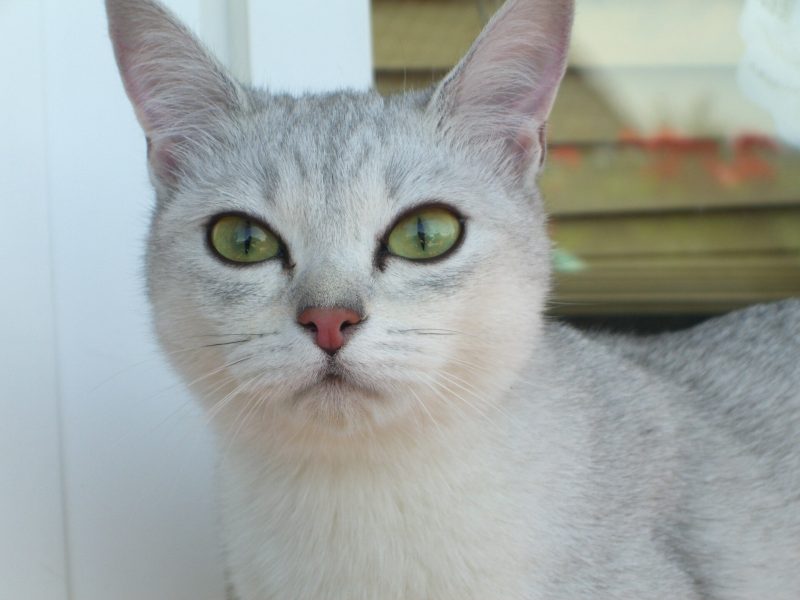
The Burmilla is a medium cat with the Burmese build softened: muscular yet elegant, with a straight back, slender legs and a tail of medium thickness tapering to a rounded tip. The head is gently rounded with a short, broad muzzle, medium to large ears set wide and tilted slightly forward, and large, expressive eyes in any shade of green, outlined in dark pigment as if drawn on with eyeliner. The same dark lines rim the nose leather, which is brick red in black-based cats. The coat is the point of the breed: a pale silver base tipped or shaded with color, so the cat shimmers as it moves. Tipping covers about an eighth of each hair in the lightest cats and about a third in shaded ones, in black, blue, chocolate, lilac, caramel, beige and more. The shorthair's coat is short, dense and silky with just enough undercoat for lift; the longhair is a semi-longhair with a fine, silky, plumed coat and no woolly undercoat.
Temperament & Personality
Burmilla owners describe a cat that is sweet-natured, sociable and gently playful. It likes company and attention, will sit on a lap and follow you around, but it is not clingy or loud, and it settles when the house is quiet. Kittenish games persist into adulthood; many fetch and most will chase anything that moves. The breed is a little reserved with strangers at first and friendly once it has decided a visitor is acceptable. With children it is patient, with other cats companionable, and with calm dogs usually fine after introduction. The voice is soft and used sparingly. Energy is moderate: bursts of play, then long naps in the sun. Intelligence shows in learning routines and tricks. Left alone for a workday with toys and a window a Burmilla manages well, though like most cats it prefers a companion of some kind.
Exercise & Activity
Two play sessions of 10 to 15 minutes a day keep a Burmilla fit, with wand toys, soft balls to fetch and games of chase across the floor. The breed enjoys climbing and watching, so provide a cat tree, shelves and a window perch, and rotate toys weekly to keep interest up. Puzzle feeders and treat hunts give the mind a job when you are out and help prevent the weight gain the breed is prone to. Many Burmillas accept a harness for garden walks, and a secure catio is ideal, since they are inclined to wander if given unsupervised access outdoors. Boredom shows up as extra sleeping and extra eating rather than destruction, so exercise matters for the waistline as much as for behavior. The coat handles normal indoor temperatures easily.
Two short interactive sessions daily, fetch if enjoyed
Climbing furniture and a window perch
Puzzle feeders to combine play with portion control
Training
The Burmilla is a willing, food-motivated student. Clicker training with small treats teaches sit, come, high five and fetch on cue; keep sessions short and end on a success. Litter habits are typically reliable; use one box per cat plus one, scooped daily, and consult your vet if habits change. Provide both a tall sisal post and a horizontal scratcher near resting spots and reward their use. Leave the carrier out as a bed with treats inside so vet trips are easy. Harness training usually succeeds with a slow indoor start and is worth doing for a breed that likes the outdoors but is not street-wise. Socialize kittens to visitors, handling and other animals early; the slight initial reserve with strangers softens with practice. Sticking points are few; this is an easygoing breed whose main training challenge is keeping treats within the daily calorie budget.
Grooming & Care
The shorthaired Burmilla needs a weekly comb with a fine steel comb or a soft slicker to remove dead hair, with a second session during spring and fall shedding; some owners report heavier seasonal shedding than the coat suggests. The longhair needs combing two or three times a week, paying attention to the ruff, behind the ears and the britches, though the absence of a woolly undercoat keeps matting manageable. Baths are rarely needed. Trim nails every two to three weeks, check the ears monthly for wax and wipe only the visible surface, and brush teeth several times a week with cat toothpaste; ask your vet about professional cleanings. The dark eye rims are natural and need no cleaning beyond a gentle wipe if discharge appears. A greasy coat on a cat that normally gleams can signal it has stopped grooming and deserves a vet check.
Shorthair weekly, longhair two to three times a week
Nails every two to three weeks, ears monthly
Dental care several times a week
Health
The Burmilla is generally healthy, with a lifespan of 10 to 15 years, but it can inherit conditions from both founding breeds. From the Chinchilla Persian side comes polycystic kidney disease, an inherited disorder in which cysts form in the kidneys and can lead to kidney failure in middle age; a DNA test for the PKD1 mutation exists, and breeders should test or ultrasound breeding cats. From the Burmese side comes the Burmese head defect, a lethal craniofacial malformation for which a DNA test is also available, along with the general Burmese tendencies toward diabetes and low blood potassium. Some references mention a predisposition to allergies. Hypertrophic cardiomyopathy, dental disease and obesity are the usual feline risks. Ask breeders for PKD and head-defect test results, and ask your vet about an annual exam with weight tracking, dental assessment and kidney bloodwork from middle age, with prompt attention to increased thirst or urination.
Nutrition
Feed a complete and balanced food with a nutritional adequacy statement for the life stage: kitten formula to about twelve months, adult thereafter, with a senior review from ten. Burmillas enjoy their food and are moderately active, a combination that leads to weight gain, so measure two or three meals a day and avoid free feeding. Puzzle feeders slow eating and add exercise. Wet food provides water, which supports kidney health in a breed with PKD in its background, and a fountain encourages drinking. Treats count toward the total and stay under a tenth of daily calories. Check body condition monthly by feeling for ribs under a thin layer of flesh. Longhairs benefit from hairball support during shedding seasons. Sitters should feed exactly the measured portion the owner leaves and report any increased thirst or appetite change to the owner promptly.
Living With This Breed
The Burmilla is an easy housemate. It fits an apartment or a house, copes with a normal workday alone, especially with toys and a window perch, and is quiet enough for close neighbors. Children who handle it gently get a playful, tolerant friend; other cats and calm dogs are generally accepted after a sensible introduction. It is inclined to wander if let outside, so keep it indoors or in a secure catio, and give it sunny spots, since it is a dedicated sunbather. A sitter will find it reserved for the first hour and then affectionate.
Sitters: expect a gentle cat that warms up quickly and may bring a toy
Measure meals exactly; this breed gains weight easily
Longhairs need their comb schedule kept up during a long stay
Report changes in drinking or litter box use to the owner
Interesting Facts
The entire breed descends from one unplanned 1981 litter of four silver females named Galatea, Gemma, Gabriela and Gisella.
The name is a blend of Burmese and Chinchilla, the two parent breeds.
The litter happened because a cleaner left a door open before the Persian male's neutering appointment.
A Burmilla's dark eye rims, nose outline and lip liner look like makeup and are required by the standard.
In Britain the longhaired Burmilla is a separate breed called the Tiffanie within the Asian group.
CFA was late to the party, accepting the breed for championship only in 2014, more than thirty years after it began.
Breeds similar to the Burmilla
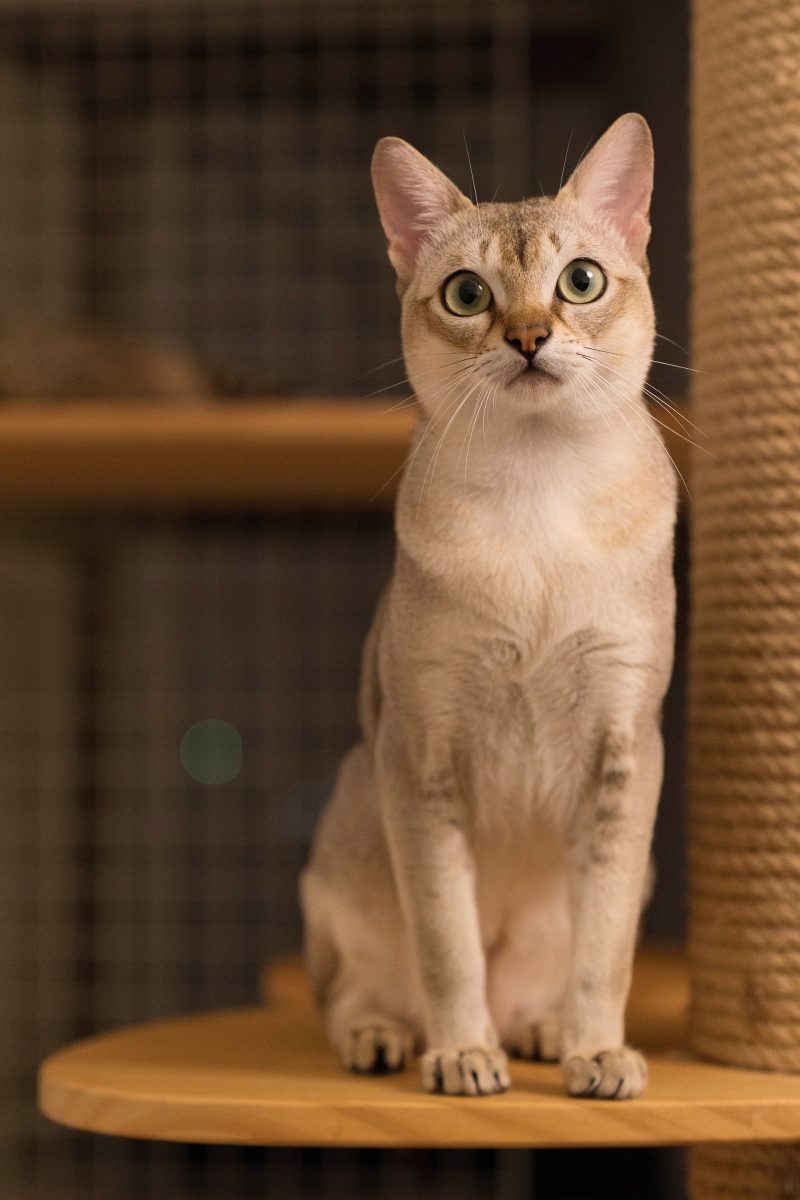
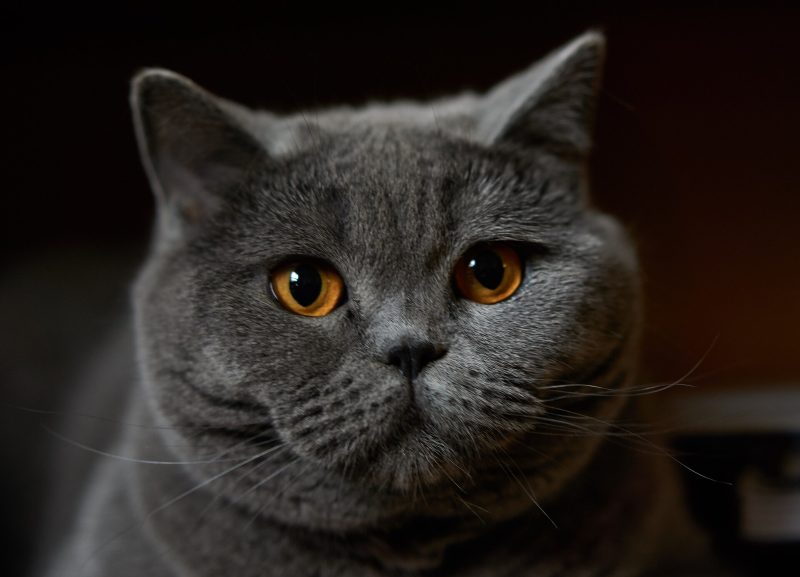
What Burmilla owners say
Real pets, photos, stories and tips from the SitterNation community — separate from the editorial guide above.
Log in to add your pet, photos, stories and tips.
Meet Burmillas on SitterNation
No Burmillas have joined yet. Owners can show their pet here from the pet's profile.
Burmilla community photos
No Burmillas photos yet — be the first to share one.
Stories from Burmilla owners
No stories yet. What is life with yours really like?
Tips from Burmilla owners
No tips yet. One practical thing that works for you is enough.
Ask Burmilla owners
No questions yet. Ask the people who live with the breed.