Typical tendencies
Energy level
Needs a real outlet most days.
Good with children
Gentle and tolerant around children.
Good with other pets
Friends with everything that lives at home.
Shedding
Barely a hair on the sofa.
Vocalization
Speaks up only when something matters.
Sociability
Hates being left out of anything.
More traits
Exercise needs
Adaptability
Grooming needs
Trainability
Intelligence
Family friendly
Friendly with strangers
Apartment friendly
Overview
The Singapura is one of the smallest pedigreed cats, a sepia-ticked, saucer-eyed sprite that weighs 4 to 8 pounds as an adult and never seems to notice how little it is. It is busy, affectionate and relentlessly nosy, the sort of cat that supervises every task from a shoulder or a countertop. Lifespan is usually 11 to 15 years. The breed suits people who are home a lot, apartments, gentle families and multi-cat households, since Singapuras generally enjoy feline company. It is a poor fit for a house that stands empty all day or one with boisterous dogs and rough play, because a small cat can be hurt. Grooming is minimal; attention is not. Sitters should expect a cat that greets them in the hall, climbs into the grocery bag and wants to know what is in every cupboard they open.
History & Origin
The breed takes its name from the Malay word for Singapore, and the small ticked cats of its streets and storm drains are its foundation. Americans Hal and Tommy Meadow, who had worked in Singapore, returned to the United States in 1975 with several brown ticked cats and began a breeding program; a further female, Chiko, found at the Singapore SPCA, was imported in 1980 and confirmed that cats of this type lived locally. TICA granted championship status early in the 1980s, CFA accepted the breed for registration in 1981 and advanced it to championship in 1988, and the first cat reached Britain in 1988. The early history drew controversy over whether Abyssinian and Burmese imports played a role, and a 2007 genetic study found the Singapura to have the lowest diversity of the breeds examined, prompting carefully managed outcross programs. Singapore itself adopted the cat as a tourism mascot, Kucinta, and calls it a living national treasure.
Appearance
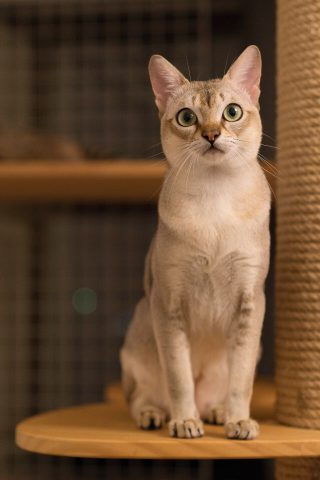
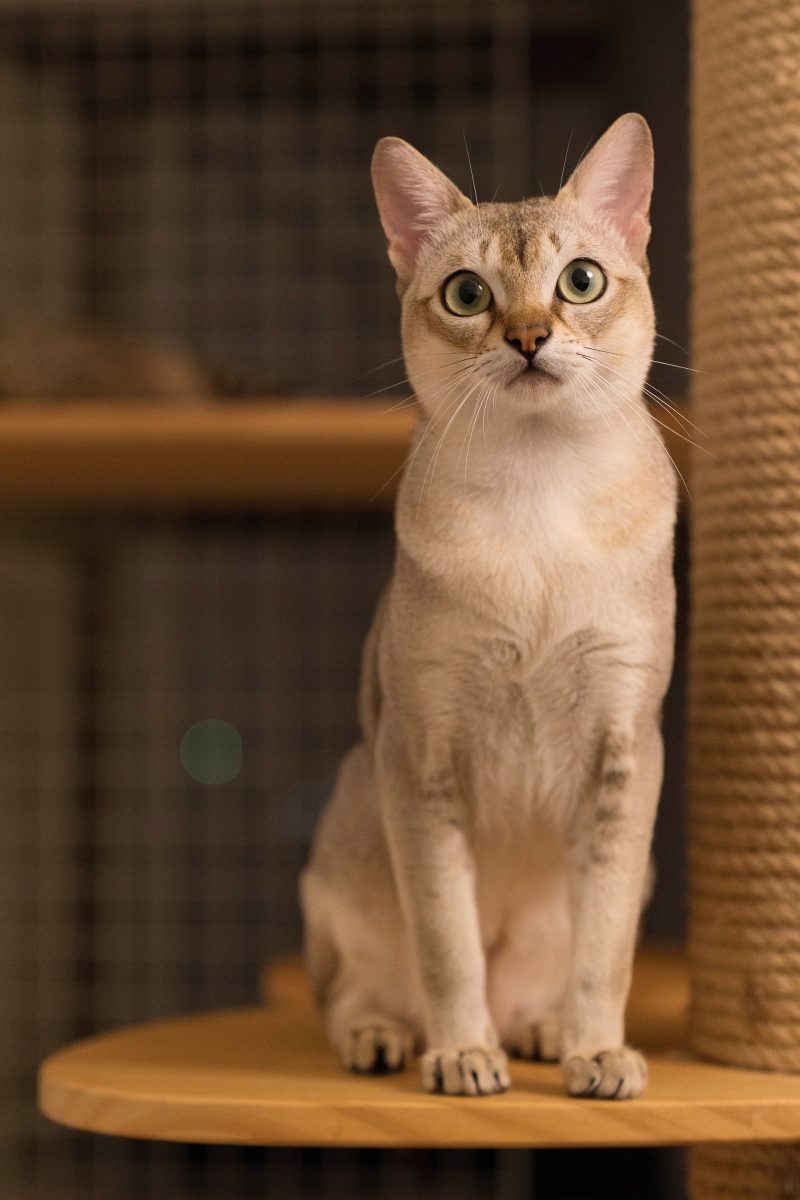
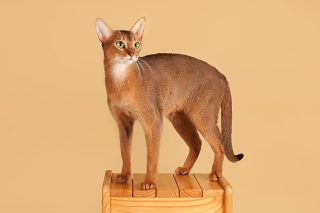
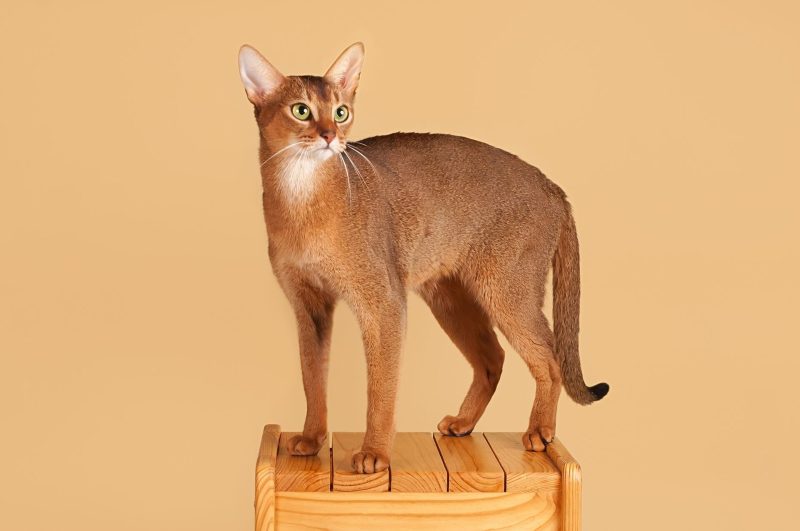
Small but solid, the Singapura is a muscular, moderately stocky cat whose size surprises people: females often weigh only 4 to 6 pounds and males 6 to 8, with full size reached at around two years. The head is rounded with a broad, blunt muzzle, and the features are dominated by very large ears with deep cups and huge almond eyes in hazel, green or yellow, each eye outlined in dark pigment. Only one color exists: sepia agouti, a warm old-ivory ground with each hair ticked in dark brown, at least two bands per hair, which gives the coat a shimmering look. The muzzle, chest and belly are lighter; dark cheetah lines run from the inner eye corners down beside the nose; the tail is slender with a blunt dark tip. The coat is very short, fine and close-lying. Next to an Abyssinian the Singapura is smaller, rounder-headed and paler, with far bigger eyes for its face.
Temperament & Personality
Breeders call the Singapura a pesky people cat, and they mean it fondly. It wants to be involved in everything, following you from room to room, riding on shoulders, sitting on the newspaper and inspecting every visitor's bag. It is affectionate and lap-loving in quiet moments, playful and mischievous the rest of the time, and its energy lasts well into adulthood. The voice is soft and used sparingly, though the breed can be surprisingly loud when it chooses. Singapuras are confident on home ground but may be unsettled by big changes and loud households; they are gentle rather than rough. With other cats they usually get along well, and many breeders recommend keeping two. With dogs, calm and cat-savvy ones are fine. With children, the breed is tolerant but small, so supervision matters. Left alone too long, a Singapura becomes clingy or anxious rather than destructive.
Exercise & Activity
Two or three play sessions of 10 to 15 minutes a day keep a Singapura content, built around chasing, climbing and investigating. Wand toys, crumpled paper, ping-pong balls and small toy mice all work; many fetch. Height is important to a cat this size, so provide tall trees, shelves and a window perch where it can watch the world. Puzzle feeders, treat hunts and cardboard boxes satisfy the curiosity that otherwise ends up inside your drawers. The thin, very short coat gives little insulation, so Singapuras seek warmth: heated beds, sunny windows and laps. Keep them indoors, or in a secure enclosure; they are small enough to be at risk from larger animals outside. Boredom shows up as shadowing, climbing on you while you work and opening cupboards.
Short, frequent play sessions with climbing included
Warm sleeping spots in cool rooms
Rotate small toys weekly to keep novelty high
Training
Singapuras are bright and eager to join in, which makes training a pleasure as long as sessions are short. Clicker training with tiny treats teaches sit, come, high five and target following quickly, and the breed enjoys the attention as much as the food. Litter habits are reliable; a box with low sides suits a small cat, scooped daily, one per cat plus one. Provide a tall sisal post and horizontal scratchers, reward their use and the furniture will be left alone. Leave the carrier out as a bed so it is familiar, and feed treats in it now and then. Many Singapuras take to a harness and will walk around a quiet garden, though they should never be left unattended outdoors. Socialize kittens to visitors, gentle children and other pets; this confident breed can become wary if it meets too little variety early. The main sticking point is simply persistence in getting onto things.
Grooming & Care
The Singapura's coat is about as easy as a coat can be. It is very short, fine and lies flat, sheds little and never mats. A weekly pass with a soft rubber brush or grooming mitt removes loose hair and distributes skin oils, and a final wipe with a damp cloth or chamois brings up the shine. Bathing is unnecessary outside the show ring. The large ears collect a little wax; check them monthly and wipe the visible part only. Trim nails every two to three weeks. Dental care deserves attention, because small mouths crowd teeth: brush several times a week with cat toothpaste and ask your vet about cleanings. Watch for eye discharge and wipe it away gently. Older or heavier cats that groom less may need extra help.
Weekly rubber brush or mitt, no bathing
Monthly ear check, nails every two to three weeks
Dental care several times a week
Health
The Singapura is generally vigorous, with a lifespan of 11 to 15 years, but its very small founding population means a few inherited issues deserve attention. Pyruvate kinase deficiency, a recessive enzyme disorder that causes intermittent anemia, lethargy and weight loss, occurs in the breed, and a DNA test identifies carriers, so ask breeders for both parents' results. Uterine inertia, where the queen cannot push kittens out and needs a caesarean, is reported in breeding females, which matters to breeders more than pet owners but reflects the breed's low genetic diversity. CFA also advises asking about any history of progressive retinal atrophy. Otherwise the usual feline concerns apply: dental disease, obesity in a tiny cat that is easy to overfeed, and age-related kidney and thyroid problems. Ask your vet about annual exams, dental checks and senior bloodwork from about ten, and see them promptly for pale gums, lethargy or sudden weight loss.
Nutrition
A cat that weighs five pounds needs very little food, and that is the challenge: a few extra kibbles a day add up to a round Singapura within a year. Feed a complete and balanced diet with a nutritional adequacy statement for the life stage, measured precisely, in three small meals a day for adults and more for kittens. Puzzle feeders and lick mats slow eating and add mental work. Wet food provides water, and a fountain encourages drinking. Treats should stay under a tenth of daily calories, which for this breed is a very small amount. Check body condition monthly: ribs easy to feel, a clear waist. Because the coat is thin, a cat kept in a cool home may use a little more energy, so adjust with your vet's guidance. Sitters should measure portions exactly and ignore the enormous pleading eyes.
Living With This Breed
The Singapura is made for apartment life: small, quiet, clean and happiest indoors. It needs company more than space, so a second cat or a person who works from home suits it better than long empty days. Gentle children who understand that the cat is small will be rewarded with a playful companion; toddlers and rough dogs are a poor mix. Other cats are usually welcomed. The breed does not yowl, climbs everywhere and seeks warmth, so expect it under blankets and on laptops.
Sitters: a shadow that greets you and wants to watch everything
Keep windows and balconies secured; it is light enough to fall
Provide a warm bed and close off cold rooms in winter
Check bags and boxes before closing them; it hides inside
Interesting Facts
Singapore's tourism board adopted the breed as a mascot named Kucinta in the early 1990s, from the Malay words for cat and love, and statues of it stand along the Singapore River.
The breed's nickname, drain cat, comes from the storm drains where Singapore's street cats sheltered from heat and rain.
A 2007 genetic study ranked the Singapura as the least diverse of the pedigreed breeds tested, a legacy of its handful of founders.
Only one color exists: sepia agouti, with each hair banded at least twice in dark brown on ivory.
Adult females can weigh as little as four pounds, making this one of the smallest recognized breeds.
Singapuras are born with big ears and bigger eyes and seem to grow into neither.
Breeds similar to the Singapura
What Singapura owners say
Real pets, photos, stories and tips from the SitterNation community — separate from the editorial guide above.
Log in to add your pet, photos, stories and tips.
Meet Singapuras on SitterNation
No Singapuras have joined yet. Owners can show their pet here from the pet's profile.
Singapura community photos
No Singapuras photos yet — be the first to share one.
Stories from Singapura owners
No stories yet. What is life with yours really like?
Tips from Singapura owners
No tips yet. One practical thing that works for you is enough.
Ask Singapura owners
No questions yet. Ask the people who live with the breed.