Typical tendencies
Energy level
Ready to go when you are, settles after.
Good with children
Gentle and tolerant around children.
Good with other pets
Easygoing with most household animals.
Shedding
Noticeable, with heavier seasonal blows.
Vocalization
Nearly silent; you may forget it is there.
Sociability
Follows the household from room to room.
More traits
Exercise needs
Adaptability
Grooming needs
Trainability
Intelligence
Family friendly
Friendly with strangers
Apartment friendly
Overview
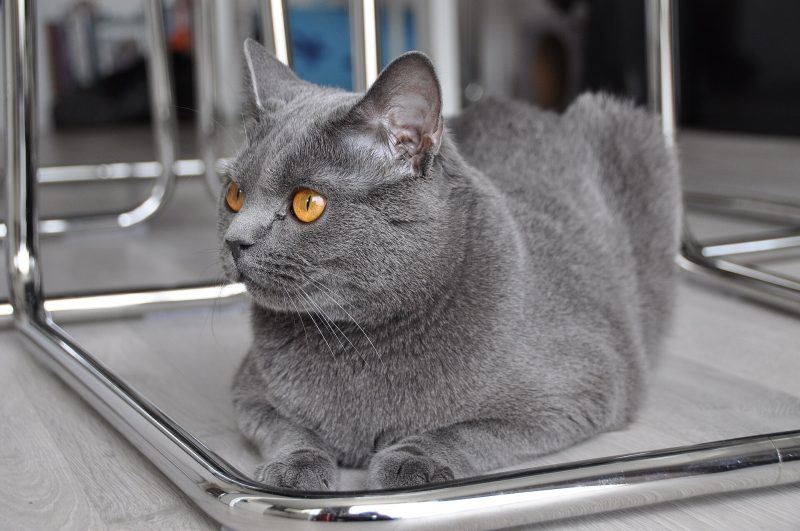
The Chartreux is the blue cat of France: a solid, muscular body on fine legs, a dense woolly coat in any shade of blue-grey, copper eyes and a face that seems to smile. It is one of the calmest, quietest breeds, a cat that watches rather than demands, rarely meows and prefers to communicate with a chirp or a look. It suits people who want a composed, affectionate companion that is easy to live with: apartment dwellers, families with considerate children, older owners and anyone who works from home and likes a cat on the desk.
It plays, hunts and fetches with surprising speed when the mood takes it, then goes back to observing. Grooming is light except during the seasonal sheds. Health is generally good, with weight control and a knee check the main things to ask about. It is not a cat for someone who wants constant interaction or conversation.
History & Origin
Blue cats in France were mentioned in a 1558 poem by Joachim du Bellay and painted by Perronneau in 1747, and an eighteenth-century trade dictionary used the name Chartreux for them, possibly after a Spanish wool of similar texture; the popular story that Carthusian monks bred them at the Grande Chartreuse has no support in the order's records. For centuries they were ordinary working cats.
In the 1920s two sisters named Léger found a colony of blue cats on the island of Belle-Île off Brittany and began the first breeding program, showing their cats in 1931. The breed nearly vanished during the Second World War, and postwar breeders rebuilt it using blue cats of the same type, which for a time blurred the line between the Chartreux and the British Blue. Helen and John Gamon imported the first Chartreux to the United States in 1970 and 1971; CFA accepted the breed for registration in 1979 and granted championship in 1987, and TICA also recognizes it. FIFe recognizes it as well, and French breeders still guard its original type.
Appearance
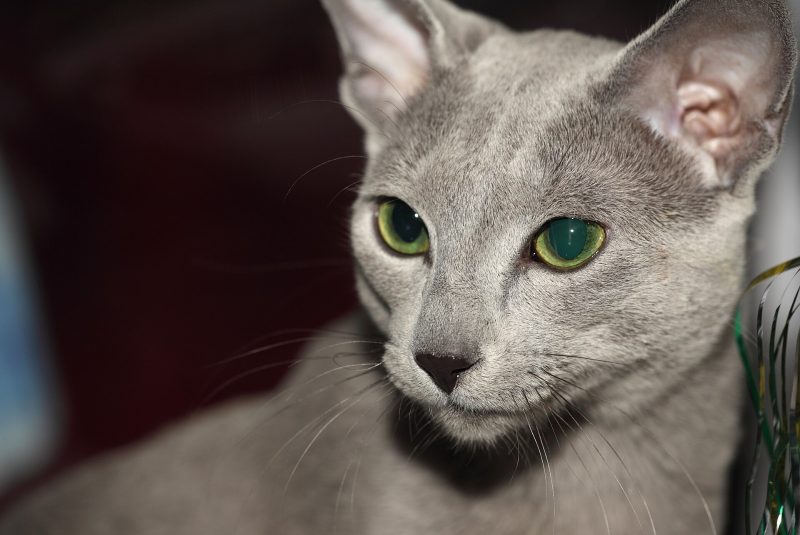
The Chartreux has been described as a potato on toothpicks, and the image is useful. The body is broad-shouldered, deep-chested and muscular, yet the legs are comparatively fine-boned and the feet small, so the cat looks heavier than its supports. Males are notably larger than females and take three to five years to fill out. The head is a broad, rounded trapezoid with full cheeks, a narrow muzzle and rounded whisker pads that produce the breed's gentle smile. Ears are medium, set high and upright, and eyes are large, round and copper to gold.
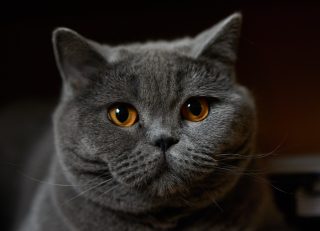
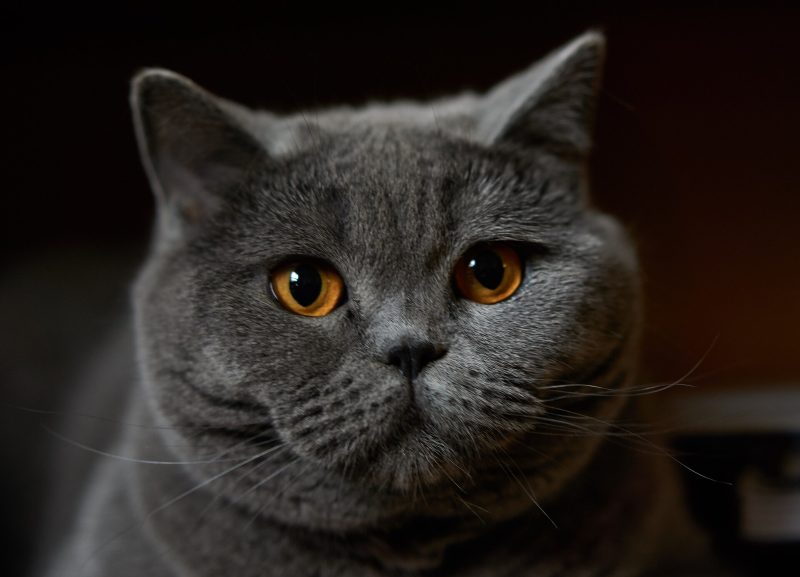
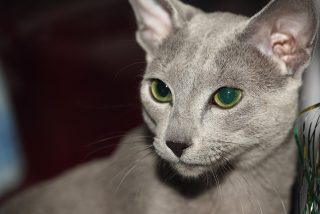
The coat is the signature: medium short, dense and woolly, with a thick undercoat that makes it stand slightly away from the body and break like sheepskin; it is somewhat water-resistant. Color is any shade of blue-grey from ash to slate, ideally even, with a silvery sheen on the tips. Beside a British Shorthair it is lighter in bone and less round-faced; beside a Russian Blue it is far heavier and woollier, with copper rather than green eyes.
Temperament & Personality
The Chartreux is composed. It observes the household from a comfortable spot, follows its person from room to room without fuss and greets visitors politely before resuming its post. It is affectionate and loyal, often attaching to one person, but it shows this by proximity rather than demands, and it is content to sit beside rather than on you. The voice is tiny; many Chartreux almost never meow and instead chirp, trill or simply look.
Playfulness persists through life, with fast reflexes, a strong hunting streak and a liking for fetch, but sessions are short and self-limiting. The breed is tolerant of children, dogs and other cats, and it takes change, travel and new homes with unusual calm. It is a creature of habit that likes meals and play at the same times. Owners sometimes mistake its reserve for indifference; it is not. A Chartreux simply does not see the need to say so.
Exercise & Activity
The Chartreux needs less exercise than most pedigreed cats, but it needs some, because its sturdy frame gains weight easily. Fifteen to twenty minutes of play a day in two short sessions is enough: wand toys for stalking and pouncing, a soft ball to fetch, and a puzzle feeder that makes it work for part of its food. A cat tree, a window perch and a scratching post give it a vantage point and a stretch. Many Chartreux enjoy a harness walk at a dignified pace or an afternoon in a catio.
The dense double coat means it handles cold well and can overheat in a warm room; keep play short in summer and provide cool floors.
Boredom shows as overeating and sleeping rather than destruction, which makes it easy to miss
Weigh the cat monthly; play is part of weight control
Hunting games tap its mouser heritage and keep an older cat moving
Training
The Chartreux is intelligent and cooperative, and it learns quickly when there is food involved. Clicker training teaches sit, come, fetch and jumping to a stool in a few sessions, and many learn their names and come when called. Litter habits are reliable; provide one box per cat plus one, scoop daily and avoid sudden changes, since this routine-loving cat prefers things as they were. Scratching goes to a sturdy post or a horizontal cardboard scratcher placed where it already likes to stretch.
Carrier training is easy with a breed this calm: leave the carrier out, feed in it and take short practice trips. Harness training works for many, started young and indoors. There are few sticking points. The Chartreux is not stubborn so much as unhurried, and it will do what you ask once it has considered it. Socialize kittens normally; the breed's natural steadiness means it rarely becomes fearful.
Grooming & Care
For most of the year the Chartreux needs only a weekly pass with a wide-toothed metal comb to lift loose undercoat and keep the woolly texture. Breeders advise against heavy brushing, which can flatten the coat's characteristic break. The exception is the seasonal shed in spring and again in fall, when the thick undercoat comes out in quantity and combing every day or two for a few weeks keeps hair off the furniture and out of the cat's stomach. Baths are rarely needed and are not easy, since the water-resistant coat takes a long time to soak through; if a bath is required, allow plenty of time and dry thoroughly.
Nails every two to three weeks
Teeth brushed several times a week
Ears checked weekly and cleaned only if dirty
Not a good choice for allergy sufferers, as the woolly undercoat holds dander
Wipe the eyes if any crust forms
Health
The Chartreux is a sturdy natural breed with a typical lifespan of 12 to 15 years and few breed-specific problems. The condition breeders watch for is patellar luxation, a hereditary looseness of the kneecap that lets it slip out of its groove. Mild cases cause an occasional skip or hop and may need nothing; severe cases cause lameness and can need surgery. A vet can grade it by feel during a routine exam, and affected cats should not be bred. Weight is the everyday issue: a mature Chartreux gains easily and extra pounds worsen any joint problem.
Some sources also report urinary stones in the breed, so straining or frequent trips to the box warrant a prompt visit. Routine feline risks apply, including dental disease, kidney disease in old age and hypertrophic cardiomyopathy, which some breeders screen by echocardiogram. Because the breed is rare, breeders work to keep the gene pool diverse, often exchanging cats internationally. Ask about knee checks and heart screening when buying, and ask your vet about weight targets.
Nutrition
Feed a complete, balanced diet for life stage: kitten food until about a year, then adult food, with a senior or weight-management formula later if your vet advises. The Chartreux matures slowly, and males may keep filling out until three to five years, which can look like weight gain; your vet can help distinguish muscle from fat. After that, weight control is the main task. Feed two or three measured meals rather than free-feeding, keep treats under a tenth of daily calories and check body condition monthly, parting the dense coat to feel the ribs.
A puzzle feeder slows a steady eater and adds activity. Wet food supports hydration and the urinary tract, which matters if stones are a concern, and a fountain encourages drinking. Hairball-control formulas can help during the heavy seasonal sheds if combing alone is not enough. Ask your vet before supplements, joint products or any special diet.
Living With This Breed
The Chartreux is among the easiest cats to live with. It is quiet enough for the thinnest apartment walls, calm with children who respect it, tolerant of dogs and other cats, and steady with change, which makes it a good traveler and a good cat for a household that moves. It is content indoors with a window to watch and a routine to keep, and a catio or harness walks add interest. It tolerates a workday alone better than most breeds, though it is happiest with its person in the house.
Climate: comfortable in cold, prone to overheating in warm rooms; provide cool floors and shade
Noise: almost none
Escape habits: not a door-dasher, but a skilled hunter if it gets out
For sitters: do not mistake quiet for unhappiness; keep meals and play at the usual times, feed only the measured portion, comb during shedding season and offer a few minutes of fetch. Report any limping or straining in the litter box
Interesting Facts
French breeders name every kitten with the same first letter in a given year, cycling through twenty letters and skipping K, Q, W, X, Y and Z, so a Chartreux's name tells its birth year.
Charles de Gaulle owned a Chartreux, and the novelist Colette wrote about hers, Saha, in La Chatte.
The legend that Carthusian monks bred the cat at the Grande Chartreuse was denied by the monastery itself in 1972; the name more likely comes from a Spanish wool called pile des Chartreux.
The breed almost disappeared after the Second World War and was rebuilt from a handful of French blue cats of the right type.
Chartreux are famously quiet; some never meow at all and communicate with a chirp that sounds like a small bird.
The whisker pads curve so that the cat appears to be smiling, which breeders consider a defining feature.
Breeds similar to the Chartreux
What Chartreux owners say
Real pets, photos, stories and tips from the SitterNation community — separate from the editorial guide above.
Log in to add your pet, photos, stories and tips.
Meet Chartreuxs on SitterNation
No Chartreuxs have joined yet. Owners can show their pet here from the pet's profile.
Chartreux community photos
No Chartreuxs photos yet — be the first to share one.
Stories from Chartreux owners
No stories yet. What is life with yours really like?
Tips from Chartreux owners
No tips yet. One practical thing that works for you is enough.
Ask Chartreux owners
No questions yet. Ask the people who live with the breed.