Typical tendencies
Energy level
Always on; boredom turns into mischief.
Good with children
Gentle and tolerant around children.
Good with other pets
Coexists with other pets after a settling-in.
Shedding
A light scatter, easy to keep up with.
Vocalization
A comment now and then.
Sociability
Likes being in the room with people.
More traits
Exercise needs
Adaptability
Grooming needs
Trainability
Intelligence
Family friendly
Friendly with strangers
Apartment friendly
Overview
The Egyptian Mau is the only naturally spotted domestic breed, a medium-sized, muscular cat with gooseberry-green eyes and a worried expression that belies a playful, fiercely loyal nature. It suits owners who want an active, intelligent companion that bonds hard to its family and treats play as serious business. Maus are fast, agile climbers that need vertical space and daily interactive play, and they are happiest with a predictable routine and people who are home a fair amount.
They are reserved with strangers and slow to trust, so a bustling household with constant visitors may suit a bolder breed better. Coat care is minimal. Health is generally good, with a DNA test available for the one inherited condition breeders worry about most. For a quiet household that wants a devoted, athletic cat with a wild look and a soft voice, the Mau is hard to beat.
History & Origin
Spotted cats appear in Egyptian papyri and tomb paintings going back more than three thousand years, and the Mau's supporters like to trace the breed to them; the word mau is simply Egyptian for cat. The modern breed, though, begins in the 1950s with Nathalie Troubetskoy, an exiled Russian princess living in Rome, who acquired a spotted female from Cairo named Baba. She bred her with a spotted male belonging to the Egyptian ambassador, showed the kittens in Italy in 1955 and in 1956 emigrated to the United States with three cats.
The gene pool stayed tiny for decades; later imports from India and from Egypt itself in the 1980s and 1990s widened it. CFA accepted the breed for registration in 1970 and championship in 1977, TICA followed in 1979, and FIFe recognized it in 1992. The Mau remains uncommon, and it is still the only recognized breed whose spots arose naturally rather than through deliberate crossbreeding.
Appearance
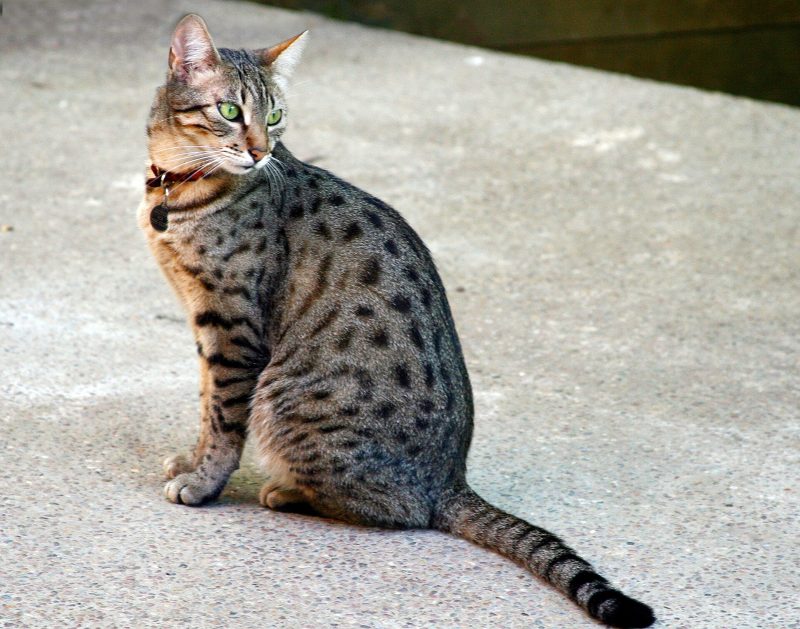
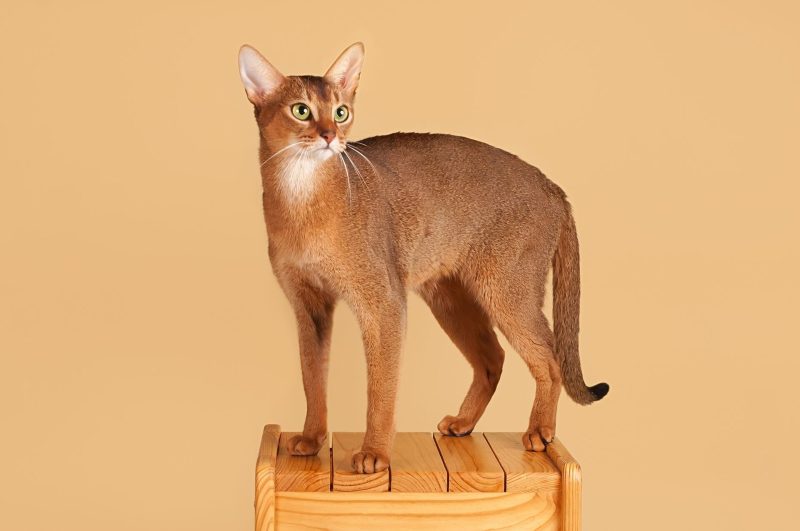
The Mau is a cat built for speed. It is medium sized and muscular, with hind legs longer than the front so it seems to stand on tiptoe, and a loose flap of skin from flank to knee that lets it stretch into a long stride. The head is a gently rounded wedge with large, alert ears and large, almond-shaped eyes in a clear light green, often called gooseberry; kittens' eyes are amber and take up to eighteen months to settle. Heavy mascara lines run from the eye corners along the cheeks and an M sits on the forehead, giving the characteristic worried look.
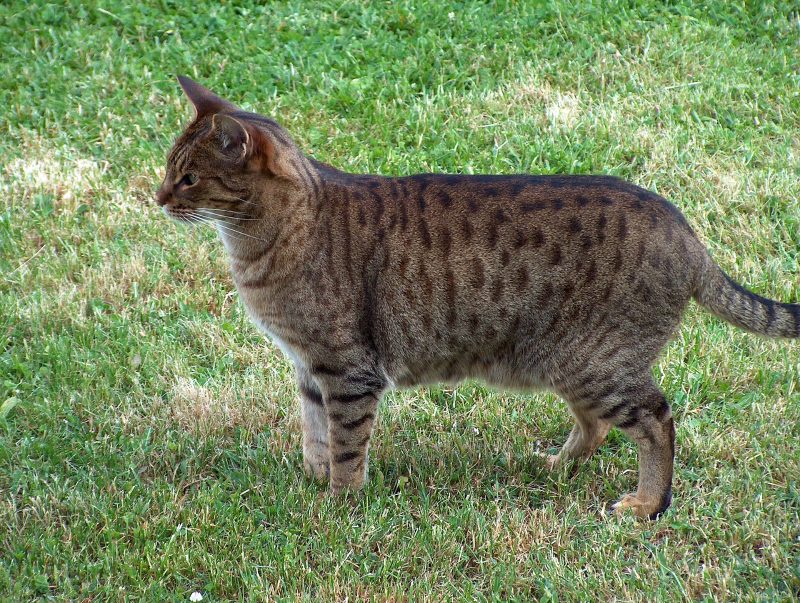
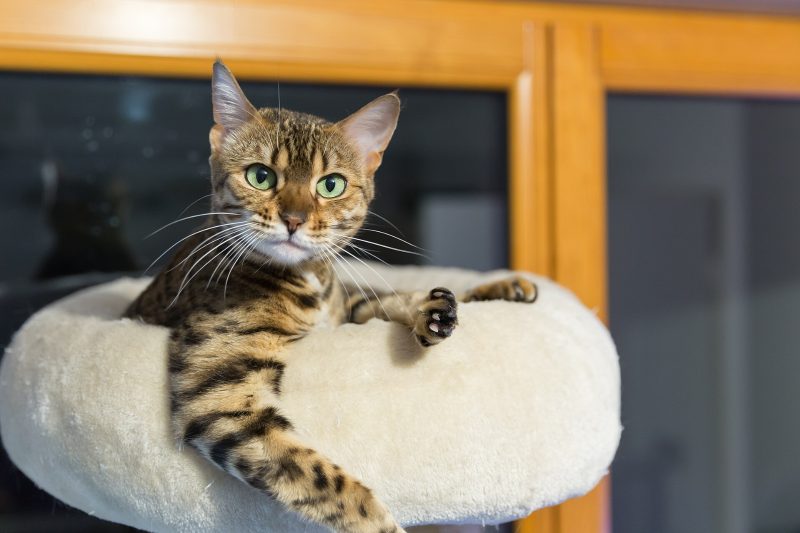
The coat is medium short and carries random spots of varying size on the body, barred legs and a ringed tail with a dark tip. Three colors are shown: silver, with charcoal spots on pale silver; bronze, with dark brown spots on warm bronze; and smoke, where the spots sit on a silvery base with dark hair tips. Solid black and blue cats occur but are not shown. Unlike the Ocicat and the Bengal, the Mau's spotting is wholly natural.
Temperament & Personality
A Mau loves its own people and is politely indifferent to everyone else. At home it is affectionate, often picking a favorite and following them about, sitting beside them, chirping and chortling in a low, melodious voice that is nothing like a Siamese yowl. It is sensitive to mood and to change, and a new sofa or a houseguest may send it to a high shelf for an afternoon.
Play is intense: Maus fetch, stalk, leap and wrestle toys with real focus, and many enjoy water enough to play in a dripping tap. Children who are calm and consistent earn a loyal playmate; toddlers who grab will be avoided. With other pets it is best introduced young and slowly, and it may be territorial with unfamiliar cats. Its hunting drive is high, so small pets need secure housing. Strong-willed and intelligent, a Mau will test rules and remember outcomes.
Exercise & Activity
Maus are among the fastest domestic cats and need an outlet for it. Aim for thirty minutes of active play daily, split into sessions, with wand toys that fly and skitter, balls to chase down a hallway and a fetch toy it can carry back. Vertical space is essential: a tall cat tree, shelves at different heights and a window perch let it survey its territory and burn energy climbing. Puzzle feeders, treat-dispensing balls and a rotating box of toys engage the mind. Many Maus take readily to a harness and enjoy a walk or a catio, and some play in water, so a shallow pan with floating toys is a hit.
The short coat offers little insulation; the Mau seeks warm spots in winter and should not be left in the cold.
Boredom shows as door-dashing, destructive climbing and night-time racing
Short, frequent sessions suit its sprinting style
End each session with a catch and a treat
Training
The Mau is bright and food-driven, which makes training straightforward if you respect its caution. Litter habits are reliable; provide one box per cat plus one, keep them very clean, and avoid sudden changes of litter type, which this sensitive breed may refuse. Scratching goes naturally to tall, sturdy posts; place one near its favorite perch and another by the door.
Clicker training works well for sit, come, fetch and target-following, and it also builds trust with a cat that is wary by nature. Harness training is unusually successful in the breed; start indoors as a kitten and progress to a quiet yard. Carrier training is worth real effort, because a stressed Mau can be hard to handle at the clinic; leave the carrier out, feed in it and take short practice trips. Socialization is the sticking point: expose kittens to many gentle people early, because an undersocialized Mau will hide from strangers for life.
Grooming & Care
The Mau is nearly self-maintaining. Its medium-short coat sheds lightly, and a weekly once-over with a rubber curry brush or a soft bristle brush lifts loose hair and spreads skin oils for shine; silver and bronze coats are a little denser than the finer smoke coat and benefit from a fine comb. Shedding rises modestly in spring and fall. Baths are unnecessary unless the cat is being shown or gets into something, though many Maus tolerate water well. Check ears weekly and clean only if there is visible wax, and wipe any crust from the eye corners.
Nails every two to three weeks; this cat's claws get a workout and grow fast
Teeth brushed daily or as often as the cat permits
Watch the tail base and hindquarters for fleas, which show easily on a silver coat
Grooming sessions double as bonding time for a breed that prizes its people
Health
The Mau is generally a healthy, long-lived breed, with a typical lifespan of 12 to 15 years and many living longer. The inherited condition breeders screen for is pyruvate kinase deficiency, a recessive enzyme defect of red blood cells that causes intermittent anemia; affected cats may show lethargy, pale gums and weight loss, sometimes not until adulthood. A DNA test identifies clear, carrier and affected cats, and responsible breeders test parents so that no affected kittens are born.
Maus also appear to have a higher-than-average rate of urinary stones, including the urate type, and any straining, frequent trips to the box or blood in the urine warrants a prompt vet visit, especially in males, where a blockage is an emergency. Some lines are prone to heart disease, so ask whether breeding cats have had a cardiac check. Routine risks such as dental disease and obesity apply as to any cat. A buyer should ask for the PK deficiency results of both parents and discuss any other screening with the breeder and with their own vet.
Nutrition
Feed a complete, balanced diet for the cat's life stage, with kitten food until about a year and adult food after. The Mau is an athlete with a lean build, and its high activity means it can take a slightly larger ration than a sedentary cat of the same weight, but portions should still be measured and adjusted to body condition: ribs easily felt, a visible waist from above. Feed two or three small meals and use a puzzle feeder for part of the ration to satisfy its hunting drive.
Because the breed is predisposed to urinary stones, water intake matters. Wet food, a fountain and multiple water bowls encourage drinking, and your vet may recommend a urinary-support diet for a cat with a history of crystals. A cat with pyruvate kinase deficiency has no special diet, but keeping it at a healthy weight supports general resilience. Avoid frequent diet changes, which the Mau's sensitive stomach may resent, and ask your vet before supplements.
Living With This Breed
The Mau does best in a calm home with routine. It can live in an apartment if it has climbing space and daily play, and it is quiet enough not to bother neighbors. Indoor life is strongly recommended; a fast, curious hunter with a wild look is at real risk outdoors, and a catio or harness walks give it fresh air safely. It tolerates a workday alone but dislikes long absences and change; a second cat it has grown up with is good company. With children it is loyal to those who are gentle. Visitors should expect to be ignored at first.
Climate: seeks warmth; provide heated beds in cold rooms
Escape habits: quick at doors; watch while carrying groceries in
Noise: low; conversational chirps and trills
For sitters: do not expect a greeting; sit quietly and let the cat approach, keep the routine, play with a wand at the usual time and watch the litter box for straining, which needs a vet call the same day
Interesting Facts
Maus have been clocked at around 30 miles per hour, and the loose skin flap along the flank is thought to lengthen the stride, as it does in a cheetah.
Mau gestation runs about 73 days, close to a week longer than the average house cat.
Kittens are born with amber eyes; the gooseberry-green color develops through the first year and may not be complete until eighteen months.
The Mau is the only recognized breed whose spots occurred naturally; Ocicats and Bengals were created by crossing.
The breed's foundation cats reached the United States in 1956 with Princess Nathalie Troubetskoy, who had started her program in Rome with a cat from Cairo.
Hind feet have four toes and front feet five, and the longer hind legs give the Mau a tiptoe stance when standing still.
Breeds similar to the Egyptian Mau
What Egyptian Mau owners say
Real pets, photos, stories and tips from the SitterNation community — separate from the editorial guide above.
Log in to add your pet, photos, stories and tips.
Meet Egyptian Maus on SitterNation
No Egyptian Maus have joined yet. Owners can show their pet here from the pet's profile.
Egyptian Mau community photos
No Egyptian Maus photos yet — be the first to share one.
Stories from Egyptian Mau owners
No stories yet. What is life with yours really like?
Tips from Egyptian Mau owners
No tips yet. One practical thing that works for you is enough.
Ask Egyptian Mau owners
No questions yet. Ask the people who live with the breed.