Typical tendencies
Energy level
Needs a real outlet most days.
Good with children
A famously patient playmate for kids.
Good with other pets
Friends with everything that lives at home.
Shedding
A light scatter, easy to keep up with.
Vocalization
A comment now and then.
Sociability
Hates being left out of anything.
More traits
Exercise needs
Adaptability
Grooming needs
Trainability
Intelligence
Family friendly
Friendly with strangers
Apartment friendly
Overview
The Ocicat looks like something that padded out of the jungle, with bold thumbprint spots on a sleek, athletic body, yet there is no wild blood in it at all. It was built from Siamese, Abyssinian and American Shorthair, and the result is a confident, sociable, trainable cat that behaves rather like a dog. Males run 10 to 15 pounds and females 7 to 12, with a lifespan of 12 to 18 years. The breed suits active households, people who work from home or keep more than one pet, and anyone who wants a cat that greets visitors, plays fetch and travels well. It is a poor fit for a home that is empty most of the day, because Ocicats dislike solitude. Grooming is almost nothing; attention is the real requirement. For sitters, this is a cat that will be at the door and will expect to be involved in everything.
History & Origin
In 1964 Virginia Daly, a breeder in Berkley, Michigan, was trying to produce a Siamese with Abyssinian-type points. A second-generation litter from her Siamese and Abyssinian lines contained an unexpected ivory kitten with golden spots. Her daughter said it looked like an ocelot, and the name Ocicat stuck. That kitten, Tonga, was neutered and sold as a pet, but a Detroit newspaper article caught the eye of geneticist Clyde Keeler, who was interested in domestic cats resembling vanished wild species, and Daly repeated the breeding. Other breeders joined in, adding American Shorthair for bone, substance and the silver gene. CFA accepted the breed for registration in 1966 but only advanced it to championship in 1987; TICA recognized it in the same era, and FIFe followed. The first Ocicats reached Britain in 1988, with GCCF championship status in 2006. The breed stands as a reminder that a dramatic look can come from entirely domestic ancestry.
Appearance
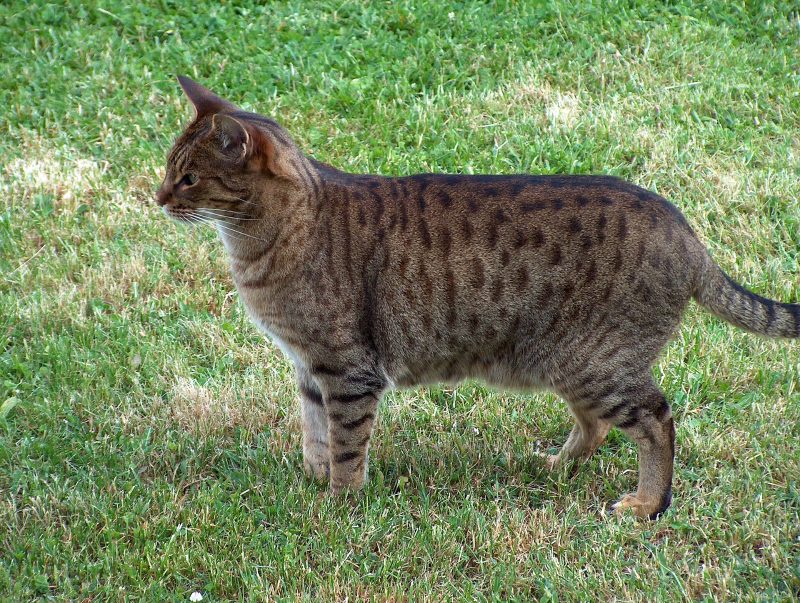
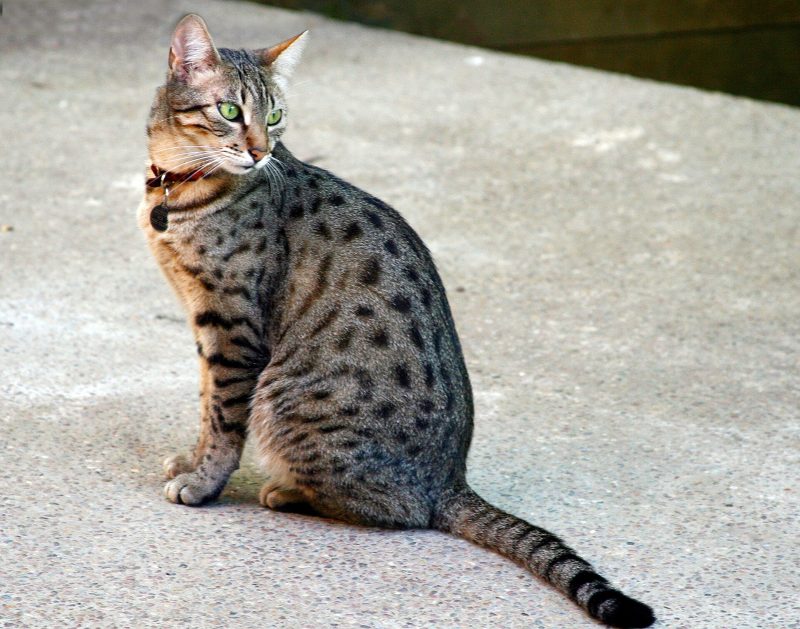
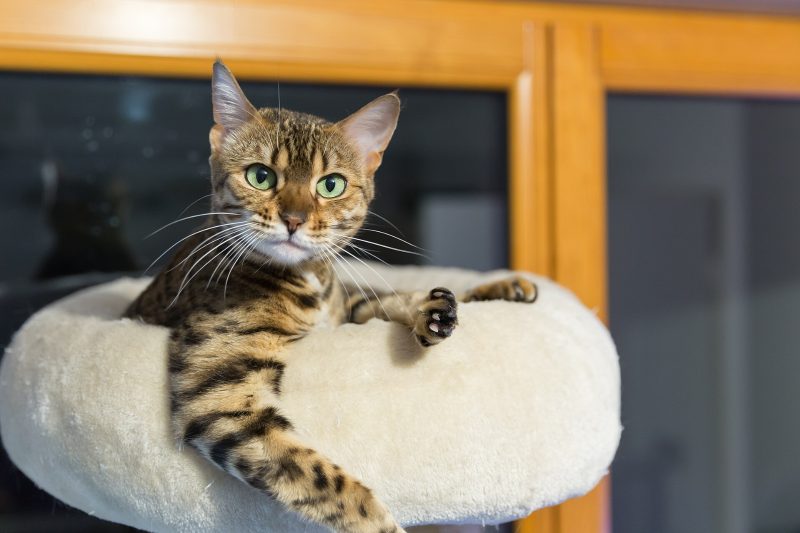
An Ocicat is medium to large, long-bodied and solidly muscled, and it feels heavier than it looks. The head is a modified wedge with a broad, squared muzzle, moderately large ears sometimes tipped with lynx tufts, and large almond eyes set at a slight slant, in any color except blue. The short, satiny coat lies close and carries the pattern that defines the breed: large, well-separated spots that look like thumbprints, arranged in rows that curve around the body and, on a good example, form a bullseye on each flank. The legs are barred, the tail ringed and dark-tipped, and the forehead carries the classic tabby M. Twelve colors are recognized, from the common tawny, chocolate and cinnamon through blue, lavender and fawn, each also in a silver version. Compared with a Bengal the Ocicat has a smaller, less rosetted spot and a more moderate build; the Egyptian Mau is smaller and finer.
Temperament & Personality
Owners describe the Ocicat as dog-like, and the label fits: it is devoted to its people, follows them from room to room, comes when called and learns its name quickly. Many fetch, walk on a leash and ride happily in the car. The breed is outgoing with strangers, usually appearing to inspect guests within minutes, and it thrives in busy homes with children, dogs and other cats. Energy is high but not frantic; an Ocicat is less wired than a Siamese or Abyssinian and will settle on a lap after a good game. It is moderately vocal, with a soft voice used to get attention rather than to complain. The flip side of all this sociability is that Ocicats do poorly alone. A single Ocicat in an empty house for ten hours a day tends to become anxious or mischievous, so most breeders recommend a companion animal.
Exercise & Activity
Expect to provide at least 30 minutes of active play a day, ideally split into two or three sessions, plus a home that invites movement. Tall cat trees, window perches and wall shelves let an Ocicat climb and survey, and a running wheel suits the most athletic cats. Fetch with a soft ball or mouse is often the favorite game, and wand toys that mimic birds bring out the hunter. Puzzle feeders, treat balls and hide-and-seek with kibble give the quick mind work to do. Harness walks in a quiet yard are well within reach for this breed. Boredom shows up as counter cruising, opening cupboards, and knocking things off shelves to see what you will do. The short coat handles normal indoor temperatures easily; avoid long exposure to cold.
Two or three play sessions daily, fetch if the cat enjoys it
Vertical space and puzzle feeders for solo time
A second pet goes a long way toward meeting the social need
Training
Few cats are easier to train. Ocicats are food-motivated, attentive and eager for interaction, so clicker work goes fast: sit, come, spin, high five and jumping through a hoop are common party tricks. Short daily sessions before meals keep focus sharp. Litter habits are reliable; use large boxes, scoop daily and provide one more box than there are cats. Scratching is enthusiastic, so give both tall sisal posts and horizontal scratchers in the rooms the cat uses most and reward their use early. Carrier training is simple if the carrier stays open in the living room with a soft bed inside. Harness training usually succeeds within a week or two indoors before the first outing. Socialize kittens broadly to handling, visitors, car rides and other animals; the breed's confidence is partly bred in and partly built. The main sticking point is persistence: an Ocicat that learns to open a door will keep doing it.
Grooming & Care
The Ocicat may be the lowest-maintenance cat in the show hall. Its short, close coat sheds lightly and needs only a weekly going-over with a rubber curry brush or grooming mitt to lift dead hair, followed by a wipe with a chamois or soft cloth to bring up the shine. Shedding increases a little in spring and fall; brush twice weekly then. Baths are unnecessary unless the cat is being shown or gets into something. Trim nails every two to three weeks, check ears monthly for wax or odor and clean only the visible part with a vet-approved product. Dental care is the real work: brush the teeth several times a week with cat toothpaste and ask your vet about professional cleanings, since periodontal disease is common in all cats. Light-coated silvers can sunburn on the ears if they bask in strong window light.
Weekly rubber brush and chamois polish
No professional grooming needed
Teeth several times a week, nails every two to three weeks
Health
The Ocicat benefits from three founding breeds and is generally robust, with a lifespan of 12 to 18 years, but it inherits a few known risks. Pyruvate kinase deficiency, a recessive condition causing intermittent anemia, lethargy and weight loss, is identified by a DNA test that responsible breeders run on both parents. Progressive retinal atrophy of the rdAc type, which causes gradual night blindness from around one to two years old, is also detectable by DNA test and has become rare through screening. Hypertrophic cardiomyopathy, the most common feline heart disease, has no breed-specific gene test, so breeders rely on periodic echocardiograms of breeding cats. Renal amyloidosis, a buildup of abnormal protein in the kidneys or liver, has been reported in lines with Abyssinian ancestry. Dental disease is common. Ask breeders for PK and PRA test results and ask your vet about a heart check, regular dental care and annual bloodwork from middle age.
Nutrition
An Ocicat is an athlete and eats like one, but portion control still matters, because a muscular cat can carry extra weight without looking fat. Choose a complete and balanced food with a nutritional adequacy statement for the right life stage: kitten food to about twelve months, then adult, then a senior review around ten. Two or three measured meals a day are better than free feeding, and a puzzle feeder turns at least one of them into exercise. High-quality animal protein supports the breed's muscle, and wet food adds water that helps the kidneys and urinary tract. Treats should stay under a tenth of daily calories, which is easy to forget when a cat performs tricks for them. Weigh the cat monthly or check body condition by feeling for ribs. Sitters should feed exactly what the owner measures out and keep lids on bins, since Ocicats open things.
Living With This Breed
The Ocicat wants a home with life in it. It does well in a house or a roomy apartment with vertical space, and it copes with a workday alone only if there is another pet, plenty of toys and a window. Children who play fairly get a tireless companion; dogs and other cats are generally welcomed and often preferred to solitude. The breed is not noisy, but it is busy, and a sitter should expect a cat that greets, follows, climbs and wants to join every task. It is trusting with strangers and should be kept indoors or in a secure enclosure.
Sitters: play before leaving, and leave puzzle feeders behind
Check cupboards, drawers and doors; Ocicats open them
Travels and boards better than most breeds if introduced early
Watch for signs of stress in a cat left alone too long
Interesting Facts
The first Ocicat, Tonga, was born in 1964 as an accident in a program meant to produce Abyssinian-pointed Siamese.
The name was coined by the breeder's daughter, who thought the spotted kitten looked like an ocelot.
Despite its wild look the breed has no wild ancestry; its three founding breeds are Siamese, Abyssinian and American Shorthair.
Twelve colors are recognized, including six silver versions, which came from the American Shorthair outcross.
Many Ocicats fetch, walk on a leash and ride in cars, which earned the breed its dog-like reputation.
Breeders say a good Ocicat should show a bullseye pattern of spots on each side of the body.
Breeds similar to the Ocicat
What Ocicat owners say
Real pets, photos, stories and tips from the SitterNation community — separate from the editorial guide above.
Log in to add your pet, photos, stories and tips.
Meet Ocicats on SitterNation
No Ocicats have joined yet. Owners can show their pet here from the pet's profile.
Ocicat community photos
No Ocicats photos yet — be the first to share one.
Stories from Ocicat owners
No stories yet. What is life with yours really like?
Tips from Ocicat owners
No tips yet. One practical thing that works for you is enough.
Ask Ocicat owners
No questions yet. Ask the people who live with the breed.