Typical tendencies
Energy level
Ready to go when you are, settles after.
Good with children
A famously patient playmate for kids.
Good with other pets
Friends with everything that lives at home.
Shedding
Keep the lint roller within reach.
Vocalization
A comment now and then.
Sociability
Hates being left out of anything.
More traits
Exercise needs
Adaptability
Grooming needs
Trainability
Intelligence
Family friendly
Friendly with strangers
Apartment friendly
Overview
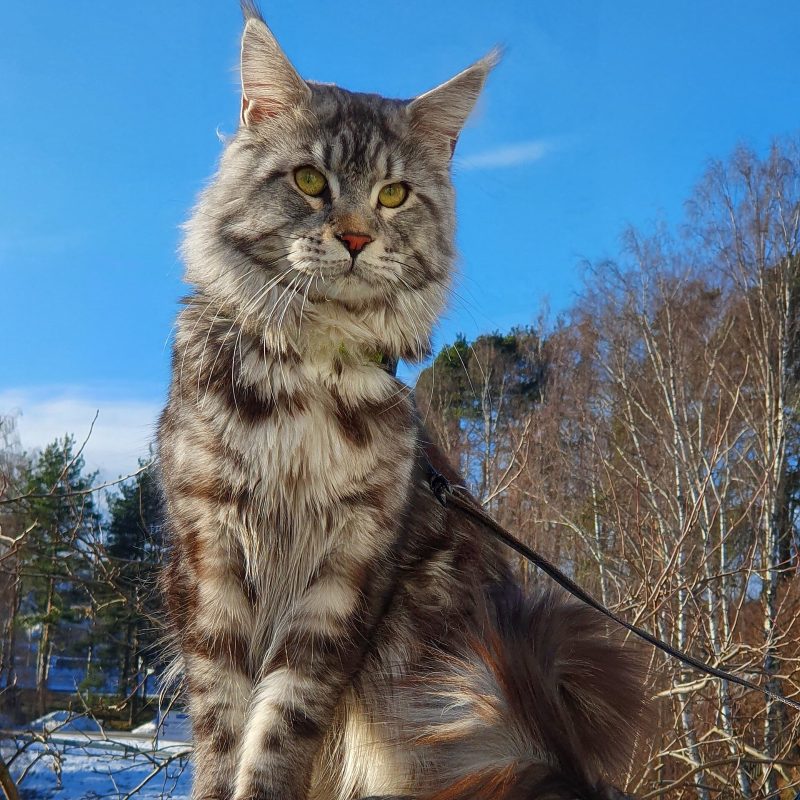
The Maine Coon is America's native longhaired cat: big, shaggy, tufted and friendly, with a chirping voice that seems too small for the body. Males weigh 13 to 18 pounds and females 8 to 12, and healthy cats live 12 to 15 years. The breed suits families with children and dogs, people who want a cat that joins in rather than watches from a distance, and anyone with room for a large cat tree. It is a less obvious fit for a tiny studio or for someone who dislikes hair on the furniture. Maine Coons are easygoing and adaptable, learn tricks readily and love water. They are slow to mature, so you may share your home with an oversized kitten for three or four years. In return you get a loyal, clownish companion that greets visitors and chirps at birds through the window.
History & Origin
Longhaired cats have lived on farms and ships in Maine since the 1800s, probably descending from shorthaired settlers' cats crossed with longhaired cats carried by sailors. The folk explanations, from raccoon ancestry to Marie Antoinette's pets, are legend. By the 1860s farmers were showing their best coon cats at the Skowhegan fair, and a dozen were listed at a Boston show in 1878. At the big New York show of May 1895 a brown tabby named Cosey was chosen best cat; Cosey's silver collar now belongs to the CFA Foundation. Persians and other imports then pushed the breed aside, and by the late 1950s it was thought to be nearly extinct. A small group of Maine breeders kept it going, a breed club formed in 1968, and CFA granted provisional status in 1975 and championship status in 1976. Maine named the Maine Coon its official state cat in 1985, and the breed is now among the most popular pedigreed cats in the world.
Appearance
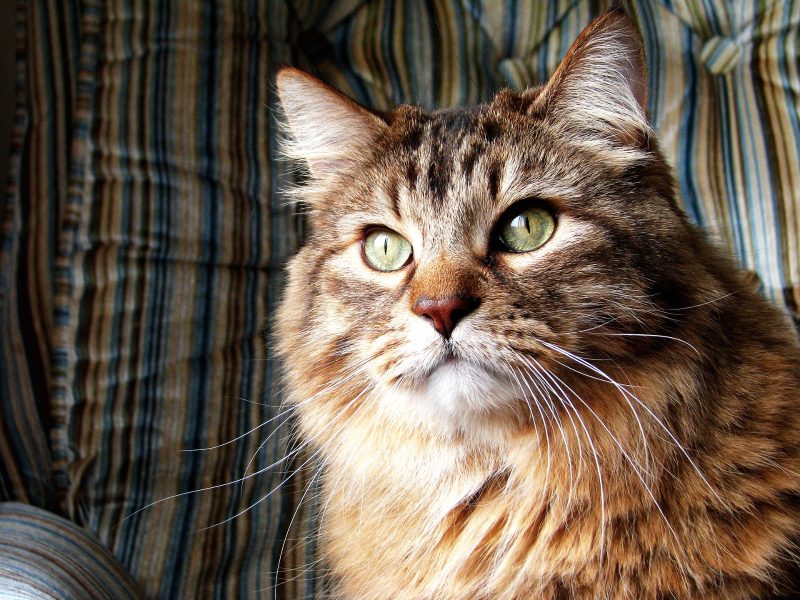
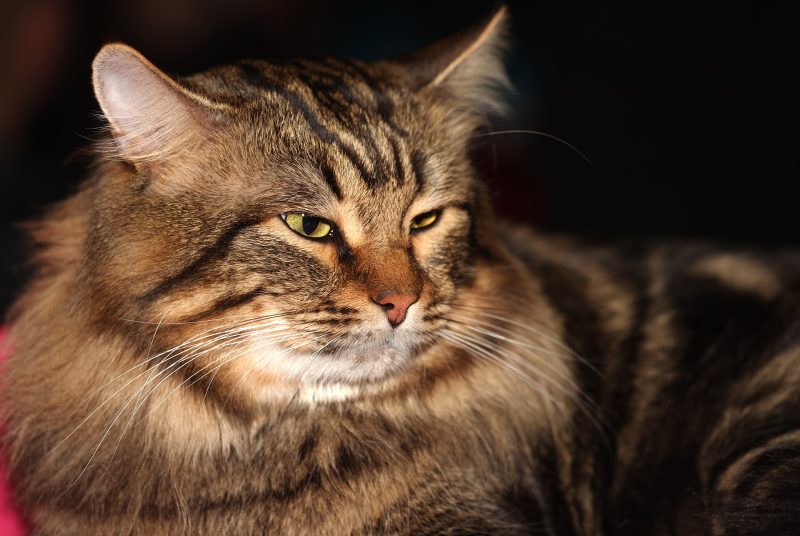
Everything about a Maine Coon is built for cold weather. The body is long and rectangular with a broad chest and substantial bone; the legs are medium and the paws large and tufted between the toes, and some lines carry extra toes. The head is slightly longer than it is wide, with high cheekbones, a square muzzle and large ears that are wide at the base, tufted inside and often tipped with lynx-like points. Eyes are large and slightly oval, in green, gold or copper, or blue and odd-eyed in white cats. The shaggy coat is shorter over the shoulders and longer on the belly, britches and tail, with a frontal ruff and a water-resistant, glossy top layer. Brown tabby is the classic look, but nearly every color and pattern except pointed is accepted. The Norwegian Forest Cat has a more triangular head and a straight profile; the Siberian is rounder and more compact.
Temperament & Personality
Maine Coons are sociable without being clingy. A typical cat wants to be in the same room as the family, supervising dinner from a chair or sprawling across a desk, but is content to let you get on with things. They are patient with children, accept dogs readily and usually welcome other cats. Strangers get a curious inspection rather than a retreat. The voice is a surprise: trills, chirps and squeaks instead of a full meow. Many are fascinated by water, dipping paws into bowls or watching the shower. Intelligence is high; they work out cupboard doors and puzzle toys quickly. Indoors they are moderately active, with play bursts between long naps; outdoors in a secure space they hunt and explore. Maine Coons retain kittenish play well into adulthood and can be a little clumsy, misjudging jumps with their big frames.
Exercise & Activity
A Maine Coon needs 20 to 30 minutes of active play a day split into two or three sessions, more for a young cat. Fetch is a favorite, as are wand toys that can be dragged across the floor, because the breed hunts low rather than leaping high. A very sturdy, tall cat tree with wide platforms is essential; flimsy ones tip under this much cat. Puzzle feeders, treat balls and a cardboard box fort keep the mind busy. Harness walks and a catio give safe outdoor time. The coat handles cold well but heat poorly, so keep summer play short and offer cool tile to sprawl on. A bored Maine Coon opens cupboards, raids counters and wakes you at dawn.
Two or three play sessions daily, with fetch and floor-level wand games
Oversized cat tree, scratching posts and litter box
Shade and water in hot weather
Training
This is one of the most trainable cat breeds. Maine Coons are food-driven, curious and keen to interact, so clicker training for sit, high-five, fetch and come when called moves quickly in short daily sessions. Litter habits are usually reliable from kittenhood; the main issue is box size, so provide an extra-large box or a storage tub with an entry cut in the side, and scoop daily. Scratching is enthusiastic and needs tall, solid posts, ideally sisal, placed where the cat already stretches. Introduce the carrier early by leaving it open as a bed and feeding treats inside, because lifting a reluctant 18-pound cat into one is no fun. Most Maine Coons accept a harness with patience and treats. Socialize kittens to visitors, dogs and car rides. Reward-based methods only; this breed sulks after harsh handling.
Grooming & Care
The Maine Coon's coat is easier than its length suggests because the top layer is glossy and the undercoat is moderate, but it still needs regular attention. Comb two or three times a week with a wide-toothed steel comb, following with a slicker brush on the ruff, belly and britches where mats form. During the spring and fall sheds, comb daily and expect loose fur everywhere. An occasional bath helps remove shed undercoat and oil; introduce bathing as a kitten. Check the big ears weekly and clean only when needed. Trim nails every two to three weeks, including any extra toes. Brush teeth several times a week, as gum disease can start young. Watch for food caught in the ruff after meals.
Comb two or three times weekly, daily in shedding season
Occasional bath, nails every two to three weeks
Daily tooth brushing is ideal
Health
Most Maine Coons are sturdy, and the breed's lifespan of 12 to 15 years reflects a few inherited conditions that responsible breeders screen for. Hypertrophic cardiomyopathy is the main one; a mutation in the MYBPC3 gene called A31P raises risk, with cats carrying two copies at the greatest risk, though cats without it can still develop the disease. Breeders should show both a DNA result and regular echocardiogram reports. Hip dysplasia is more common in this big breed than in most cats; there is no gene test, so breeding cats are x-rayed, and affected pets are managed with weight control. Spinal muscular atrophy, caused by a deletion in the LIX1 gene, appears at three to four months as a wobbly gait; it is not painful, and a DNA test identifies carriers. Polycystic kidney disease occasionally occurs and is also testable. Gingivitis can begin early. Ask your vet about any rapid breathing, reluctance to jump, hind-limb weakness or bad breath.
Nutrition
Maine Coons grow for three to four years, so keep kittens on a growth or all-life-stages food longer than you would a smaller breed, and switch to adult maintenance on your vet's advice. Feed measured meals two or three times a day rather than free-feeding; the breed is prone to weight gain once growth slows, and extra pounds on a large frame strain hips and heart. Portion sizes depend on activity, age and neutering status, so have your vet set a target and adjust by body condition. Wet food adds moisture and helps urinary health. The long coat means hairballs, so a hairball formula or added fiber can help in shedding seasons. Wide, shallow bowls suit the broad face and whiskers. Joint supplements are sometimes suggested for older cats, but ask your vet first. Give sitters exact amounts.
Living With This Breed
A Maine Coon is happiest in a home with space to roam, but a larger apartment works if there is vertical furniture and daily play. It is an indoor-outdoor breed by history and a target for theft and traffic today, so a catio, a harness or a secure garden is the safer compromise. The coat makes cold weather easy and heat harder; air conditioning or cool floors matter in summer. Children, dogs and other cats are usually welcomed. Maine Coons cope with a normal workday alone but prefer company, and two cats keep each other busy. Everything needs upsizing: litter box, carrier, cat tree, beds.
Sitters: expect trills at the door, a cat on the counter and water bowls full of paws
Comb during longer stays and watch for mats behind the ears
Secure window screens; big cats push hard
Interesting Facts
The coon nickname comes from the raccoon-like ringed tails of brown tabbies; the raccoon-ancestry story is biologically impossible.
A brown tabby named Cosey won best cat at the May 1895 show in New York's Madison Square Garden; the engraved silver collar is kept by the CFA Foundation.
Maine made the Maine Coon its official state cat in 1985, the first state to adopt a cat as a symbol.
Several Maine Coons have held the Guinness record for longest domestic cat, with body lengths over 47 inches from nose to tail tip.
Many Maine Coons are polydactyl, with extra toes that look like mittens, a trait once common on New England ships.
The breed chirps and trills far more often than it meows, and many cats scoop water out of bowls with a paw before drinking.
Breeds similar to the Maine Coon
What Maine Coon owners say
Real pets, photos, stories and tips from the SitterNation community — separate from the editorial guide above.
Log in to add your pet, photos, stories and tips.
Meet Maine Coons on SitterNation
No Maine Coons have joined yet. Owners can show their pet here from the pet's profile.
Maine Coon community photos
No Maine Coons photos yet — be the first to share one.
Stories from Maine Coon owners
No stories yet. What is life with yours really like?
Tips from Maine Coon owners
No tips yet. One practical thing that works for you is enough.
Ask Maine Coon owners
No questions yet. Ask the people who live with the breed.