Typical tendencies
Energy level
Needs a real outlet most days.
Good with children
A famously patient playmate for kids.
Good with other pets
Friends with everything that lives at home.
Shedding
Keep the lint roller within reach.
Vocalization
Speaks up only when something matters.
Sociability
Hates being left out of anything.
More traits
Exercise needs
Adaptability
Grooming needs
Trainability
Intelligence
Family friendly
Friendly with strangers
Apartment friendly
Overview
The Siberian is Russia's native forest cat: a big, powerful, slow-maturing longhair with a thick triple coat and a personality that owners describe as mostly placid with a streak of mischief. It suits families who want a sturdy, affectionate cat that enjoys children, dogs and other cats, follows people from room to room and plays like a kitten well into middle age. It is also the breed most often tried by people with mild cat allergies, because many individuals produce less of the Fel d 1 allergen than average; that is a tendency, not a guarantee, and it has to be tested with the actual cat. You'll need to budget for a large cat: more food, a bigger litter box, a sturdier cat tree and a couple of weekly combing sessions that become daily during the spring and fall molts. If you want a quiet, undemanding ornament, look elsewhere; the Siberian wants in on whatever you are doing.
History & Origin
Longhaired cats have lived around Russian farms, markets and monasteries for centuries, turning up in folk tales and in the 1864 natural history of Alfred Brehm, who described a red cat from Tobolsk in Siberia. Harrison Weir, who organized the first English cat show in 1871, wrote about a Russian longhair in his 1892 book. Inside Russia the cats stayed working animals rather than show cats until the Soviet era loosened its grip. The Kotofei club in Leningrad published one of the first written standards in 1987, and breeding programs followed in Moscow and St. Petersburg. The first registered Siberians reached the United States in 1990, imported by Louisiana breeder Elizabeth Terrell, and others soon followed into Europe. TICA accepted the breed into its new-breed program in 1992 and granted championship status in 1996; FIFe recognized it in 1997; CFA accepted registrations in 2000 and advanced the breed to championship in 2006. FIFe now lists the colorpoint Neva Masquerade as a separate breed, while CFA and TICA treat it as a Siberian color.
Appearance
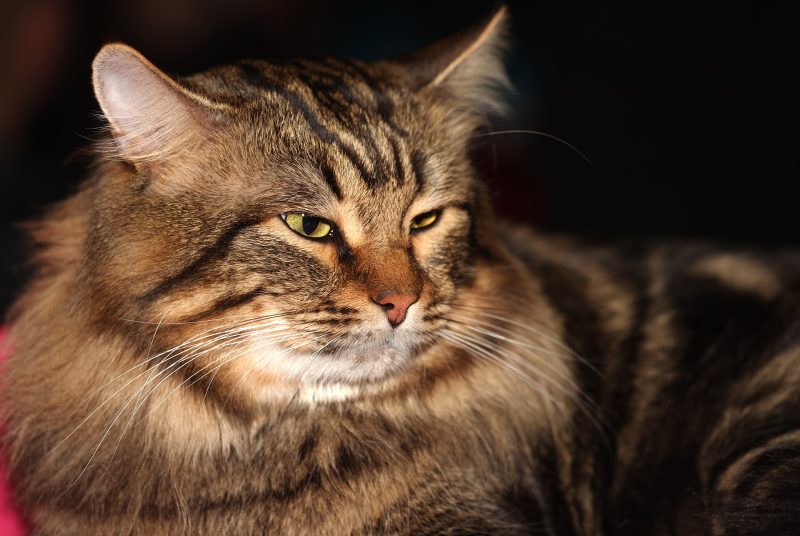
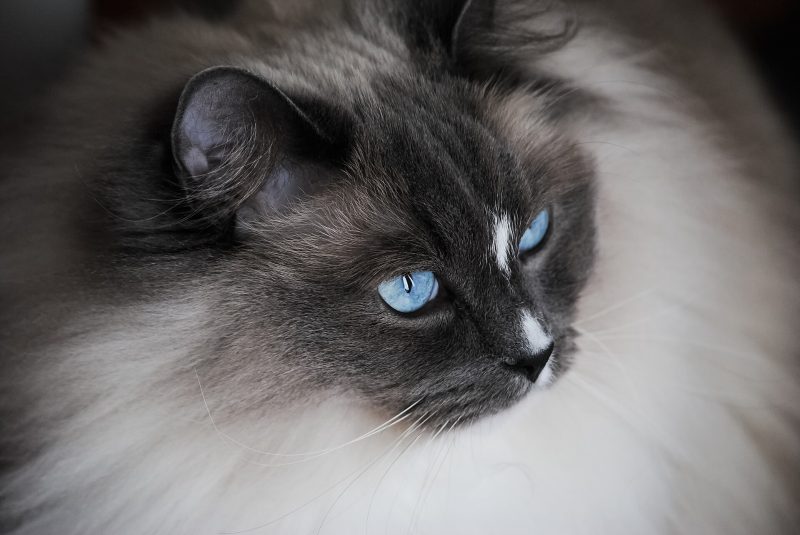
Picture a barrel on four strong legs. The Siberian is a medium-large to large cat with a broad chest, a rounded body that feels heavier than it looks and hind legs slightly longer than the front, which gives the back a gentle upward slope and powers remarkable jumps. The head is a modified wedge with rounded contours, full cheeks, a short muzzle, medium ears set wide apart and large, nearly round eyes in green, gold, copper or, in the colorpoints, blue. The coat has three layers: a water-resistant outer layer of guard hairs, a middle layer of awn hairs and a dense, downy undercoat that thickens in winter and thins noticeably in summer. A full ruff, britches and a bushy tail complete the picture, and tufts of fur sprout between the toes. Every color and pattern is accepted, with brown tabby the most common and the colorpoint Neva Masquerade a well-known variety. Next to a Maine Coon it looks rounder and more compact; next to a Norwegian Forest Cat its face is softer and less triangular. Full size takes up to five years.
Temperament & Personality
Siberians are confident, curious and affectionate without being clingy. Most bond with the whole household rather than one person, greet visitors at the door and accept a stranger's hand after a brief inspection. They are famous for being dog-like: many learn to fetch, follow people around the house and wait by the door at the usual homecoming time. Energy is moderate to high, with bursts of galloping and climbing between long, contented naps; a sunny perch overlooking the room is a favorite spot. They are gentle and tolerant with children, patient with respectful dogs and usually easygoing with other cats, which makes them one of the better choices for a busy multi-pet home. Watchful rather than nervous, they take new furniture, houseguests and even a move in stride. Vocally they are quiet, communicating with chirps, trills and a deep purr instead of yowls. Many are fascinated by water and will dabble in a dripping tap or the bath.
Exercise & Activity
A Siberian needs two or three play sessions a day of ten to fifteen minutes, ideally with a wand toy that lets it stalk, chase, leap and finally catch something. Because the breed is a natural climber with powerful hindquarters, vertical space matters more than floor space: a tall, stable cat tree, wall shelves or the top of a bookcase give it somewhere to survey its territory. Puzzle feeders, treat balls and a rotating box of toys supply mental work, and many Siberians enjoy fetch, learning tricks or walking on a harness in a quiet yard. The thick coat means they handle cold well but can overheat in summer; keep sessions short on hot days and offer a cool tile floor. Mature cats stay playful far longer than most breeds, so do not let a calm adult convince you that it has outgrown play.
Boredom shows as night-time zoomies, counter surfing, shredded paper or opened cupboard doors
Weigh monthly; a thick coat hides creeping weight gain
Training
Siberians are among the more trainable cats because they are food-motivated, observant and genuinely interested in people. Clicker training works well: start with a target stick, then sit, high five and come when called, in sessions of two or three minutes. Litter habits are usually flawless as long as the box is big enough for a large cat, roughly one and a half times its body length, with an unscented clumping litter scooped daily. Scratching is strong and enthusiastic; provide tall sisal posts and a horizontal scratcher near sleeping spots from day one, and trim nails every two or three weeks. Teach the carrier early by leaving it open with bedding and treats inside, so vet trips do not become wrestling matches with a fifteen-pound cat. Harness training is realistic for this breed if you start indoors and move outside gradually. Socialize kittens to grooming tools, nail clippers and being picked up, since adult Siberians are heavy and a cat that resists handling is hard to manage. Keep rules consistent; they learn cupboard latches faster than you expect.
Grooming & Care
The triple coat is more self-maintaining than its volume suggests, because the guard hairs shed dirt and the texture resists matting better than a Persian's. For most of the year a thorough combing once or twice a week with a wide-toothed steel comb, followed by a slicker brush, keeps it tidy. During the spring and fall molts, when the undercoat comes out in handfuls, comb daily and expect tumbleweeds on the floor. Pay attention to the armpits, the belly, the britches behind the hind legs and under the tail, where small tangles form; tease them apart with your fingers rather than cutting. Baths are rarely needed and the water-resistant coat takes a lot of wetting; a quick rinse after a muddy adventure and a complete dry is enough. Check ears monthly, trim nails every two to three weeks and brush teeth as often as the cat allows.
Shedding is heavy twice a year and moderate in between
A sanitary trim keeps the rear clean on fluffier cats
Health
Siberians are generally robust, with a wide gene pool, and most live twelve to fifteen years or longer. The condition breeders watch most closely is hypertrophic cardiomyopathy (HCM), a thickening of the heart muscle that occurs in the breed; there is no Siberian-specific DNA test, so responsible breeders have breeding cats screened by echocardiogram, and a murmur found at a check-up should prompt an ultrasound. Pyruvate kinase (PK) deficiency, an inherited anemia that causes intermittent lethargy and pale gums, has been identified in the breed, and a simple DNA test lets breeders avoid pairing two carriers. Polycystic kidney disease has appeared in some colorpoint lines, and a DNA test exists for the common PKD1 mutation. White, blue-eyed cats carry the usual risk of deafness. Beyond that the list is the ordinary feline one: dental disease, obesity, urinary problems and, in older cats, kidney disease and hyperthyroidism. Ask the breeder for HCM scan results and DNA reports for both parents, and ask your vet about a baseline cardiac check in early adulthood.
Nutrition
Feed a complete and balanced diet labeled for the cat's life stage. Siberians grow slowly, so many vets are comfortable keeping them on kitten food for twelve to eighteen months, but kitten diets are calorie-dense and portions need watching. Adults do best on measured meals two or three times a day rather than a free-fed bowl; the barrel shape and thick coat make a gain of a pound or two easy to miss, and extra weight strains joints and raises diabetes risk. Run your hands along the ribs monthly and look for a waist from above. A mix of wet and dry food adds water to the diet, which supports the kidneys and urinary tract, and puzzle feeders slow down an enthusiastic eater. During the heavy molts a hairball-control formula or extra fiber can help; ask your vet whether it is worth trying. Keep treats under ten percent of daily calories, provide fresh water in several spots and skip supplements unless your vet recommends one.
Living With This Breed
A Siberian fits a house or an apartment as long as it can climb and has company for a good part of the day. It is content indoors, but a secure catio or harness walks suit its love of the outdoors; a free-roaming Siberian is both a formidable hunter and a target for traffic. Cool rooms, a window perch and a cat tree near the family make it happy; heat waves call for air conditioning or a shaded tile floor. Children and dogs are usually welcome once introductions are calm, and most Siberians enjoy a second cat. Expect fur on furniture twice a year. Allergy sufferers should spend time with the specific kitten or its parents before committing.
Time alone: copes with a workday; for trips longer than a night, a daily sitter visit with play and a combing keeps it settled
For sitters: it will likely greet you, may try to open doors and cupboards, and loves a wand toy; check water bowls, since many like to paddle in them
Secure screens and shelves; this is a climber with weight behind it
Interesting Facts
The Siberian is often called Russia's national cat and appears in Russian folk tales as a guardian of the home.
Harrison Weir, the organizer of the first modern cat show in 1871, described a Russian longhair in his 1892 book on cats.
Only a trickle of Siberians left the Soviet Union before 1990; the first registered breeding cats reached the United States that year.
Many Siberians produce less Fel d 1 allergen than average, and a 2017 Italian study found unusual variants in the genes that make it, but every cat still produces some.
Siberians take up to five years to reach full size, and males can top fifteen pounds without being overweight.
The colorpoint version, the Neva Masquerade, is named for the Neva River in St. Petersburg and the masked balls once held along it.
Breeds similar to the Siberian
What Siberian owners say
Real pets, photos, stories and tips from the SitterNation community — separate from the editorial guide above.
Log in to add your pet, photos, stories and tips.
Meet Siberians on SitterNation
No Siberians have joined yet. Owners can show their pet here from the pet's profile.
Siberian community photos
No Siberians photos yet — be the first to share one.
Stories from Siberian owners
No stories yet. What is life with yours really like?
Tips from Siberian owners
No tips yet. One practical thing that works for you is enough.
Ask Siberian owners
No questions yet. Ask the people who live with the breed.