Typical tendencies
Energy level
Calm at home with short bursts of play.
Good with children
A famously patient playmate for kids.
Good with other pets
Friends with everything that lives at home.
Shedding
Noticeable, with heavier seasonal blows.
Vocalization
Speaks up only when something matters.
Sociability
Hates being left out of anything.
More traits
Exercise needs
Adaptability
Grooming needs
Trainability
Intelligence
Family friendly
Friendly with strangers
Apartment friendly
Overview
The Ragdoll is a big, soft-coated, blue-eyed cat whose whole personality is built around people. Males weigh 15 to 20 pounds and females 10 to 15, and most live 12 to 17 years, so you are signing up for a long friendship with a cat who wants to be in the same room as you at all times. Ragdolls suit families with children, first-time cat owners, apartment dwellers and anyone who wants a gentle, lap-loving companion that gets along with dogs and other cats. They are a poor fit for a household that wants an independent cat that entertains itself, or for homes where the cat would be left alone most of the week. Give a Ragdoll a comfortable sofa, a weekly comb-through and a willing lap, and it will follow you from room to room, greet you at the door and sleep on your pillow.
History & Origin
The breed began in Riverside, California, in the 1960s, when a breeder named Ann Baker started working with a white domestic longhair named Josephine and a handful of other local cats. Josephine's kittens were unusually relaxed and affectionate, and Baker built a breeding program around them. She gave the cats their name, trademarked it, and ran her own registry with strict contracts, which frustrated other breeders. In the 1970s a group led by Denny and Laura Dayton broke away, wrote the standard that mainstream associations use today and worked toward wider acceptance. TICA accepted the Ragdoll for championship competition in 1979. CFA registered the breed in 1993 and advanced it to championship status in 2000. The first Ragdolls reached Britain in 1981, and the GCCF recognized them about a decade later. Baker's stories about Josephine, including claims that the cats felt no pain or went limp when held, were never supported by evidence, but the easygoing temperament she selected for is real and is the reason the breed now tops popularity charts in several registries.
Appearance
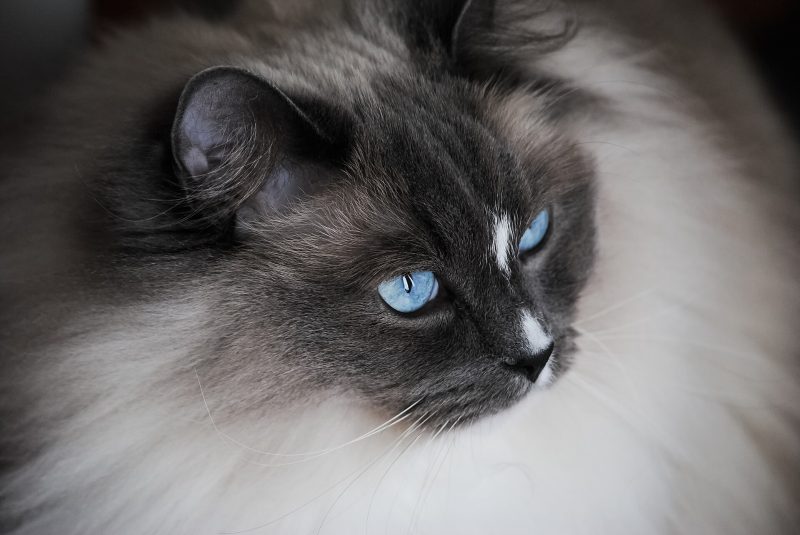
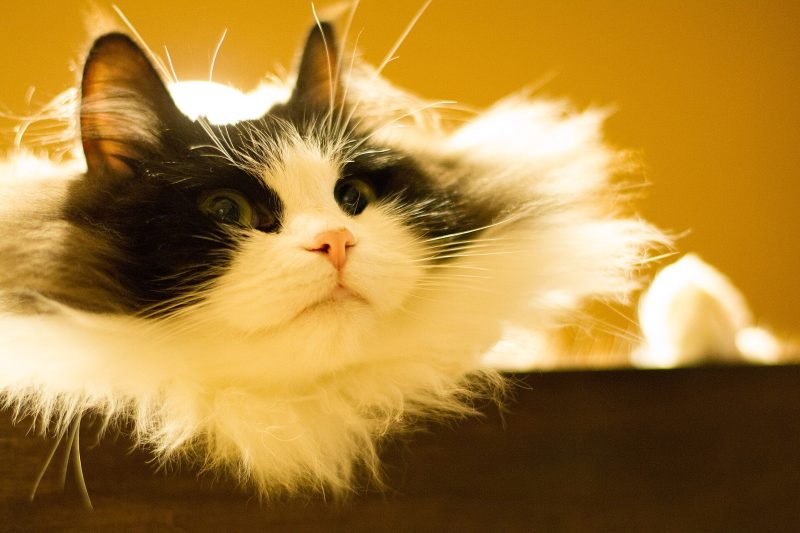
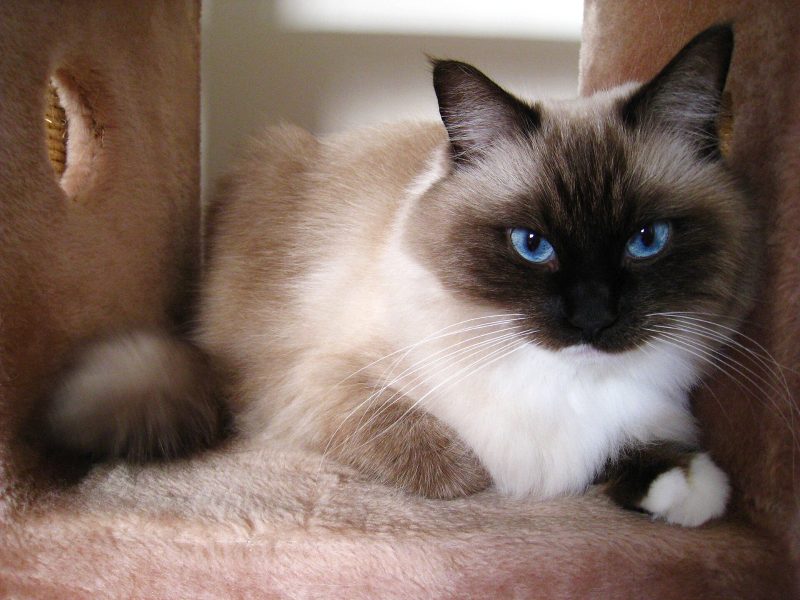
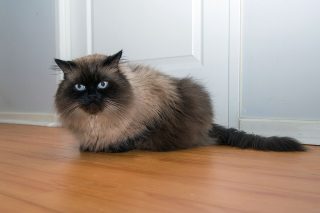
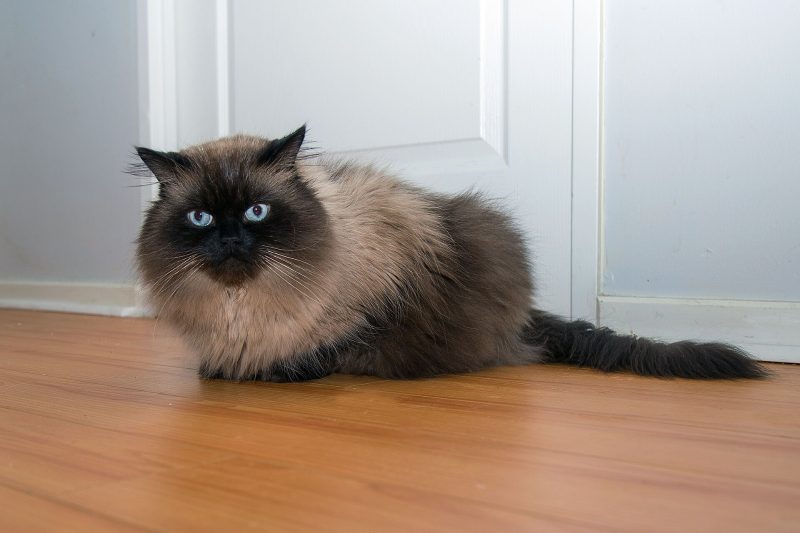
A Ragdoll is a large, long-bodied cat with a broad chest, heavy bone and a plumed tail, and it takes its time growing into that frame: full size often arrives at around four years. The head is a broad, modified wedge with a gently curving profile, medium ears and large oval eyes that are always blue. The coat is semi-long and silky, with little undercoat, so it lies close to the body and resists matting; the fur is longest in the neck ruff and on the tail. Every Ragdoll is pointed, meaning the face, ears, legs and tail are darker than the body, in seal, blue, chocolate, lilac, red or cream, with solid, lynx (tabby) or tortie points. Three patterns are recognized: colorpoint with no white, mitted with white paws and chin, and bicolor with an inverted V of white on the face and a white chest and legs. The Birman is the closest look-alike; it is smaller with sharply defined white gloves, while the Ragamuffin shares Ragdoll ancestry but comes in non-pointed colors.
Temperament & Personality
Ragdolls are gentle, trusting and unusually tolerant of handling. They are often described as puppy-like because they greet people at the door, follow a favorite person around the house and may learn to fetch. Most prefer to stay close to the floor rather than on high shelves, and many will flop onto their back for a belly rub. The breed is quiet, with a soft voice used sparingly. With strangers a Ragdoll is usually curious rather than wary, and with children it is patient as long as the children are taught to handle a cat gently. Dogs and other cats are generally accepted after a calm introduction. Energy is moderate: short bursts of play, then a long nap on the nearest lap. That trusting nature has a flip side. Ragdolls are poor judges of danger and do not defend themselves well, so they should live indoors or in a secure enclosure, and they can become withdrawn in homes where nobody has time for them.
Exercise & Activity
Ragdolls are not athletes, but they do need daily play to stay trim, because their appetite is larger than their activity level. Aim for two or three sessions of 10 to 15 minutes with a wand toy, a thrown crinkle ball or a feather on a string; many Ragdolls fetch, and retrieving a soft toy across the room is an easy way to get them moving. Puzzle feeders and food-dispensing balls add mental work and slow down eating. A low, sturdy cat tree or a window perch gives them somewhere to watch the world without big jumps, which suits their heavy build. Rotate toys weekly so they stay interesting. Boredom shows up as overeating, over-grooming or pestering you at night.
Two or three short play sessions a day, ideally before meals
Fetch, wand toys and puzzle feeders over high-climbing games
Sitters should expect a cat that wants company more than exercise
Training
Ragdolls are among the easiest cats to train because they are food-motivated, attentive and eager to be near you. Litter training is rarely a problem; use a large, uncovered box, since a 20-pound cat needs room to turn around, and scoop daily. Teach scratching habits early by placing tall, stable posts and a horizontal cardboard scratcher near sleeping spots and rewarding use. Clicker training works well: sit, high-five, come when called and fetch are all realistic goals in a few short sessions. Because the breed is so relaxed about handling, carrier training is straightforward; leave the carrier out as a bed, feed treats inside and take short practice drives. Many Ragdolls accept a harness, which lets them enjoy a patio or garden safely. Keep sessions brief and upbeat, never punish, and remember that this is a slow-maturing breed that may stay kittenish, and occasionally clumsy, until three or four.
Grooming & Care
The silky, low-undercoat coat is easier than it looks. Comb once or twice a week with a wide-toothed steel comb, paying attention to the ruff, the britches on the hind legs, behind the ears and under the arms where tangles start. During the spring and fall sheds, comb every other day and expect more hair on your clothes. Baths are rarely needed, but a bath after a thorough comb-out can help during heavy shedding; dry the coat completely. Check the ears weekly and clean only if you see wax. Trim nails every two to three weeks. Brush teeth several times a week, since dental disease is common in all cats. Wipe the eyes if you notice staining. Start all of this in kittenhood so grooming becomes a pleasant routine rather than a wrestling match.
Weekly comb, more often in shedding season
Nails every two to three weeks, teeth several times a week
No professional grooming required
Health
Ragdolls are generally robust and live 12 to 17 years, but one inherited heart condition deserves attention. UK veterinary records put average life expectancy at birth nearer 10 years. Hypertrophic cardiomyopathy, a thickening of the heart muscle, is linked in this breed to a specific mutation in the MYBPC3 gene, known as R820W. A DNA test has been available since 2007; cats with two copies are at high risk of early, severe disease, while cats with one copy are at lower risk but can still pass it on. Responsible breeders test every breeding cat and many also screen with echocardiograms, because other, untested causes of HCM exist. Ask to see both parents' results. Polycystic kidney disease occasionally turns up through outcross ancestry and is also DNA-testable. The breed has a higher share of blood type B than many, which matters for transfusions and breeding. Obesity, and the bladder stones it can contribute to, are common, so weight checks matter. Ask your vet about any rapid breathing, lethargy, straining in the litter box or sudden hind-limb weakness.
Nutrition
Feed a complete and balanced food labeled for the cat's life stage: a kitten or all-life-stages formula during the long growth period, which can last up to four years in this breed, then an adult maintenance diet. Ragdolls love food and have a modest activity level, so measured meals rather than free feeding are the single most useful habit. Two or three portions a day, with treats counted inside the daily total, keeps weight in check. Including wet food helps water intake, which supports urinary health in a breed prone to bladder stones. Hairballs are less of an issue than in dense-coated cats, but a hairball formula or a little extra fiber can help during shedding seasons. Use body condition rather than the scale: you should feel ribs under a light covering and see a waist from above. Ask your vet before changing diets or adding supplements, and give sitters exact portion instructions.
Living With This Breed
A Ragdoll fits almost any home that can give it company. Apartments are fine because the breed is quiet, not inclined to climb curtains and happy at floor level. It is an indoor cat by temperament; its trust in people and lack of street sense make unsupervised outdoor time risky, so a harness, a catio or a secure balcony is the compromise. Ragdolls tolerate children well and usually make friends with dogs and other cats. They cope with a working day alone but are unhappy with long, repeated absences; a second pet helps. The coat makes them warm, so provide cool spots in summer. Household changes bother them less than most breeds.
Sitters: expect a cat that wants to be in your lap, not hiding
Keep doors and windows secured; Ragdolls may wander out and not find their way back
Watch portions, and note any change in appetite or litter habits
Interesting Facts
The name comes from Ann Baker's claim that her cats went limp like a rag doll when picked up; today's registries say that trait is not typical of the breed.
Ann Baker trademarked the word Ragdoll in the 1970s and licensed it to breeders through her own registry, the IRCA, which is why mainstream breeders had to form their own clubs.
Every Ragdoll kitten is born pure white; the point color develops over weeks, and the full coat and body color can take up to four years.
Ragdolls have been the most registered breed with CFA for several years running, having overtaken the Persian and the Exotic.
The Ragamuffin, recognized as a separate breed, descends from the same early Baker cats but comes in non-pointed colors and patterns.
Many Ragdolls are fascinated by running water and will hop into an empty tub or supervise the kitchen sink.
Breeds similar to the Ragdoll
What Ragdoll owners say
Real pets, photos, stories and tips from the SitterNation community — separate from the editorial guide above.
Log in to add your pet, photos, stories and tips.
Meet Ragdolls on SitterNation
No Ragdolls have joined yet. Owners can show their pet here from the pet's profile.
Ragdoll community photos
No Ragdolls photos yet — be the first to share one.
Stories from Ragdoll owners
No stories yet. What is life with yours really like?
Tips from Ragdoll owners
No tips yet. One practical thing that works for you is enough.
Ask Ragdoll owners
No questions yet. Ask the people who live with the breed.