Typical tendencies
Energy level
Calm at home with short bursts of play.
Good with children
A famously patient playmate for kids.
Good with other pets
Friends with everything that lives at home.
Shedding
Noticeable, with heavier seasonal blows.
Vocalization
Speaks up only when something matters.
Sociability
Hates being left out of anything.
More traits
Exercise needs
Adaptability
Grooming needs
Trainability
Intelligence
Family friendly
Friendly with strangers
Apartment friendly
Overview
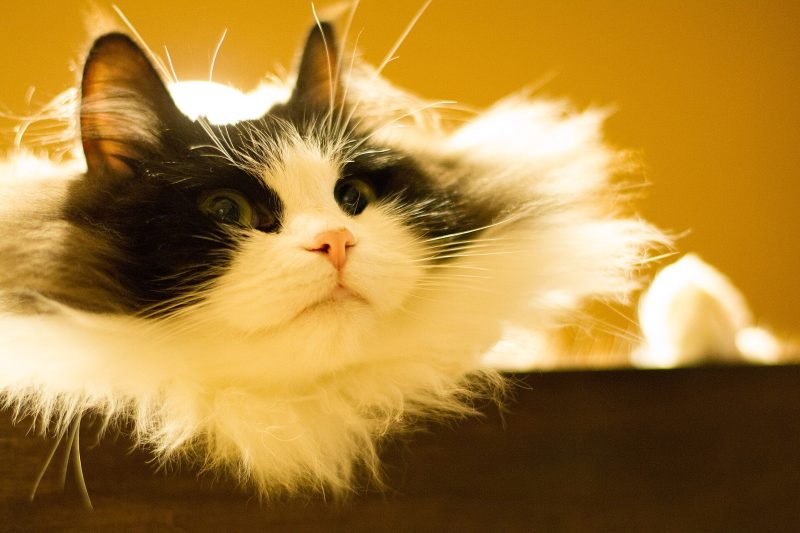
The Ragamuffin is a big, plush, slow-maturing cat with a rabbit-soft coat, large expressive eyes and a temperament so gentle that owners describe it as a living teddy bear. It descends from the same cats as the Ragdoll but comes in every color and pattern, including the solids and tabbies that the Ragdoll lacks. It suits people who want a lap cat above all: a Ragamuffin goes limp when picked up, follows its family from room to room, greets visitors and sleeps against someone every night. It is patient with children, friendly with dogs and other cats and quiet. Grooming is lighter than the coat suggests, because the texture resists matting. You'll need room for a cat that can approach twenty pounds, a budget for feeding it and the time to give it company; this breed is not built for long days alone. For a devoted, undemanding, enormous cuddle, the Ragamuffin is ideal.
History & Origin
The Ragamuffin's story begins with Ann Baker of Riverside, California, who developed the Ragdoll in the 1960s from a white longhaired cat named Josephine and her unusually relaxed kittens. In 1971 Baker founded her own registry, the International Ragdoll Cat Association, trademarked the Ragdoll name and set strict terms for breeders working under her. Over the years her cats were registered under several labels, including Cherubim, and were not accepted by the mainstream registries. By 1994 a group of breeders had tired of the restrictions and left to establish their cats on their own terms. Because the Ragdoll name was trademarked, they needed a new one; Liebling was considered, and Ragamuffin, suggested as a playful nod to the breed's street-cat ancestry, won. To widen the gene pool they outcrossed to domestic longhairs and, early on, to Persians and Himalayans. The United Feline Organization and the American Cat Fanciers Association were the first to accept the breed; CFA admitted it to the miscellaneous class in February 2003 and to championship in February 2011. The breed reached Britain in 2009 and the GCCF granted preliminary recognition in 2010.
Appearance
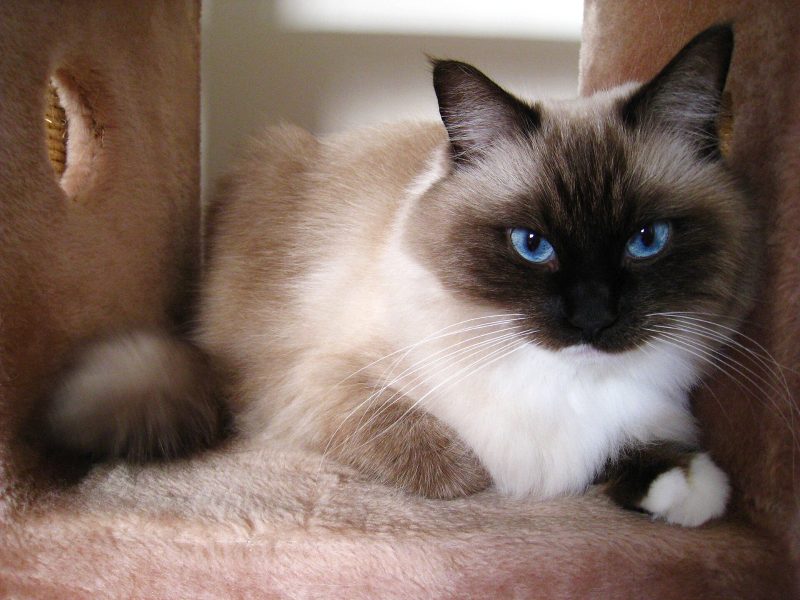
A Ragamuffin is a large, heavy-boned, rectangular cat with a broad chest, strong shoulders and a tendency to carry a soft pad of fat on the lower belly even at a healthy weight. Males commonly reach fifteen to twenty pounds and females ten to fifteen, and full size takes about four years. The head is a broad modified wedge with rounded contours, full cheeks, puffy whisker pads and a short nose with a gentle scoop in profile. The eyes are large, walnut-shaped and set wide, giving the sweet, slightly worried expression the breed is known for, and they may be any color, including odd-eyed. The coat is medium-long to long, dense and silky, longer around the neck and on the britches and tail, and famous for feeling like rabbit fur. Every color and pattern is accepted, with or without white, except that pointed cats, which do occur, are registered but not shown in CFA. Compared with a Ragdoll it is rounder in the head and eye and comes in far more colors; compared with a Maine Coon it is softer, shorter-faced and less shaggy.
Temperament & Personality
Ragamuffins are docile, affectionate and people-focused to a degree that surprises people used to independent cats. They want to be where you are, usually in contact, and most go limp and relaxed when picked up and carried. They greet visitors, ride in arms, sleep on the bed and follow the family's routines like a shadow. Energy is low to moderate; they play with real enthusiasm for a few minutes, especially with a person on the other end of the toy, then settle for a long cuddle. They are exceptionally patient with children, tolerating dress-up and being carried in ways that would send most cats under the bed, though they should always be allowed to leave. With dogs and other cats they are trusting and gentle, sometimes too much so, and need protecting from a bossy housemate. The voice is soft and seldom used. They are sensitive to mood and will seek out an unhappy person. The flip side is that they do not cope well with long hours alone and may become withdrawn or over-eat without company.
Exercise & Activity
A Ragamuffin needs gentle, regular play rather than hard exercise, but it does need it, because this is a breed that gains weight when bored. Plan on two sessions of ten minutes a day with a wand toy, a tossed crinkle ball or a game of fetch, which many Ragamuffins learn readily. Keep it interactive; a toy left on the floor will be ignored, but a toy moved by a person is irresistible. Puzzle feeders, treat balls and slow feeders combine mental work with portion control. A cat tree with wide, sturdy platforms suits a heavy cat, and a window perch provides hours of bird-watching. The coat makes heat uncomfortable, so play in a cool room in summer. Clicker tricks and short harness walks in a quiet garden round out the week. Older cats need lighter daily games to keep joints moving.
Boredom shows as weight gain, over-grooming and sleeping even more than usual
Play with the cat; it will rarely play alone
Training
Ragamuffins are eager to please, food-motivated and unhurried, which makes them easy to train in short, calm sessions. Clicker training teaches sit, come, high five and fetch, and many learn to walk on a harness and leash. Litter habits are reliable; provide a large, low-sided box for a big cat, scoop daily and consider a sanitary trim so that litter does not cling to the britches. Scratching is moderate and satisfied by a tall, heavy sisal post that will not tip under twenty pounds, plus a horizontal scratcher. Carrier training is important for a cat this size; a large carrier left out as a bed, with treats inside, makes vet trips calm. Handling tolerance is the breed's gift, but it still needs nurturing: comb, touch paws and ears and brush teeth from kittenhood with rewards. Sticking points are few; the main one is a trusting cat that will follow anyone, so keep doors secure and teach a station behavior at the entrance. Socialize kittens to a variety of people and gentle children.
Grooming & Care
The Ragamuffin's coat is long but forgiving. Its silky texture resists tangling, so a thorough combing once or twice a week with a wide-toothed steel comb is usually enough, with extra attention to the ruff, armpits, belly and britches, where small knots start. During the spring and fall sheds, comb more often to limit hairballs and keep fur off the furniture. Tease out any tangle with your fingers rather than cutting. Baths are rarely needed; an occasional bath with a cat shampoo, after a complete combing, is fine, followed by a thorough towel dry. Check the ears monthly, clip nails every two to three weeks and brush the teeth as often as the cat allows. Because a reluctant groomer is a sign of pain in an older cat, note any change in self-grooming, especially a greasy or matted patch above the tail.
Shedding is moderate, with seasonal peaks
A sanitary trim keeps the rear clean
Hairballs: combing and a vet-approved diet if frequent
Health
Ragamuffins are generally sturdy, and their mixed background has kept inherited problems uncommon, but two conditions deserve attention. Hypertrophic cardiomyopathy (HCM), thickening of the heart muscle, occurs in large breeds and in Ragdoll lines; a DNA test exists for the Ragdoll MYBPC3 variant, and because the two breeds share ancestry some breeders run it, while an echocardiogram remains the definitive screen. Polycystic kidney disease (PKD) came into some lines through early Persian and Himalayan outcrosses, and a DNA test for the PKD1 mutation identifies carriers. Obesity is the most common everyday problem and leads to diabetes and arthritis, which shows up in a heavy cat around ten years old as reluctance to jump and reduced grooming. Dental disease is common, as in all cats. With good care Ragamuffins typically live twelve to sixteen years and sometimes longer. Ask the breeder for HCM and PKD results for both parents, and ask your vet about a baseline heart check and a weight plan during the long adolescence.
Nutrition
Feed a complete, balanced diet for the life stage. Ragamuffins grow for about four years, so many vets keep them on growth or all-life-stages food longer than usual, but those diets are calorie-dense, so portions must be measured. Adults do best on two or three measured meals a day; free feeding is a mistake for a breed this fond of food and this prone to gaining. Weigh the cat monthly and feel the ribs; the belly pad is normal, but a lost waist from above is not. Wet food adds water for kidney and urinary health, and kibble in puzzle feeders slows eating and adds activity. A hairball-control formula or extra fiber can help during the sheds; ask your vet before changing. Keep treats under ten percent of daily calories, and remember that a twenty-pound cat is not a license for twenty-pound portions; large cats need proportionally fewer calories per pound. Supplements such as fish oil are a question for your vet.
Living With This Breed
A Ragamuffin suits almost any home, from a small apartment to a farmhouse, as long as people are around. It is quiet, not destructive and uninterested in escaping, and it lives well with children, dogs and other cats; the main risk is that a dominant pet will push it around, so make sure it has its own safe places and feeding spot. Keep it indoors or in a catio; it is too trusting for the street. A cool home suits the coat.
Time alone: a workday is tolerated, better with a companion; for anything longer, a daily sitter visit with cuddles and play is a must
For sitters: expect a large cat in your lap; measure food exactly, comb if asked, watch for reduced appetite or grooming
Furniture: a sturdy cat tree, a large litter box and a bed big enough for a cat the size of a small dog
Moving house: adapts well if its people and routine come along
Interesting Facts
The name was chosen partly as a joke about the breed's alley-cat ancestry; the alternative, Liebling, is German for darling.
Ragamuffins and Ragdolls descend from the same California cats of the 1960s, but only the Ragamuffin comes in non-pointed solid colors, tabbies and torties.
CFA writes the name with a capital M, RagaMuffin, as the breed's founders did.
Mature males can reach twenty pounds and take four years to get there.
Many Ragamuffins go completely limp when picked up, a trait shared with Ragdolls and the origin of both names.
TICA does not recognize the Ragamuffin as a separate breed; in the United States its home registry is CFA, with ACFA and others also accepting it.
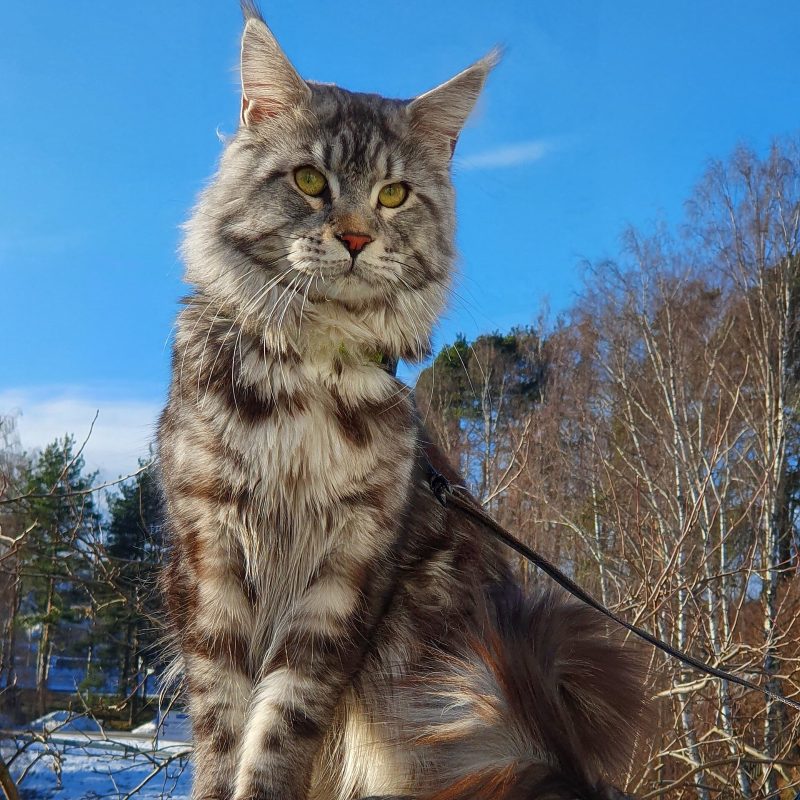
Breeds similar to the Ragamuffin
What Ragamuffin owners say
Real pets, photos, stories and tips from the SitterNation community — separate from the editorial guide above.
Log in to add your pet, photos, stories and tips.
Meet Ragamuffins on SitterNation
No Ragamuffins have joined yet. Owners can show their pet here from the pet's profile.
Ragamuffin community photos
No Ragamuffins photos yet — be the first to share one.
Stories from Ragamuffin owners
No stories yet. What is life with yours really like?
Tips from Ragamuffin owners
No tips yet. One practical thing that works for you is enough.
Ask Ragamuffin owners
No questions yet. Ask the people who live with the breed.