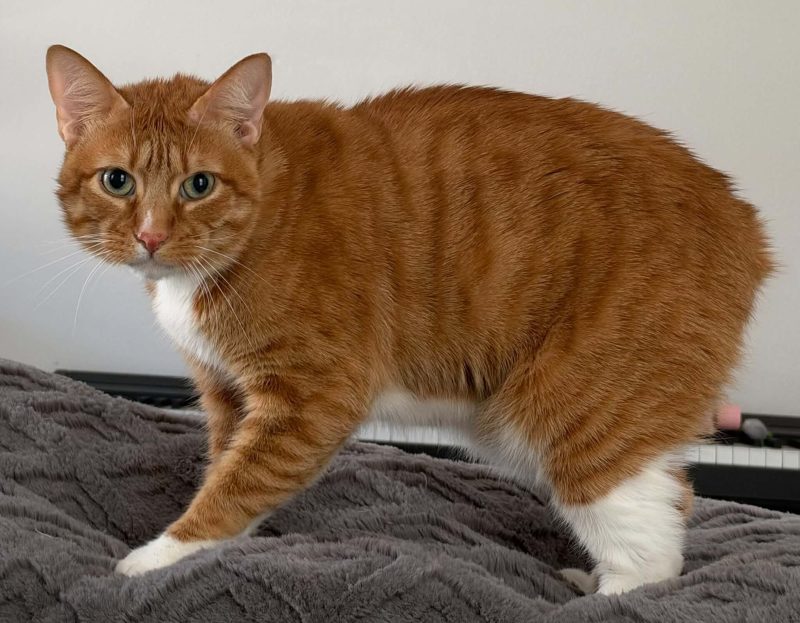
Typical tendencies
Energy level
Ready to go when you are, settles after.
Good with children
Gentle and tolerant around children.
Good with other pets
Easygoing with most household animals.
Shedding
Noticeable, with heavier seasonal blows.
Vocalization
Speaks up only when something matters.
Sociability
Follows the household from room to room.
More traits
Exercise needs
Adaptability
Grooming needs
Trainability
Intelligence
Family friendly
Friendly with strangers
Apartment friendly
Overview
The Manx is a round, sturdy cat from the Isle of Man whose missing tail is only the most obvious thing about it. Underneath is a calm, affectionate companion with a reputation for dog-like loyalty: it chooses its people, follows them about, fetches and answers to its name. It suits households that want a relaxed, moderately playful cat that is tolerant of children and easy to live with, and it is just as content in an apartment as on a farm.
Prospective owners should understand the genetics before buying. The gene that removes the tail can also damage the spine, and a proportion of completely tailless kittens develop Manx syndrome. A responsible breeder keeps kittens until about four months to be sure they are sound. Adopters who want the look without the risk can look for tailed or stubby Manx, which are the same cat with fewer problems.
History & Origin
The Isle of Man sits in the Irish Sea between England and Ireland, and its tailless cats have been part of island identity for centuries. The trait is a spontaneous mutation in the island's own shorthair population that spread because the island was small and isolated; folk tales about Noah shutting the Ark door on a cat's tail, or a cat and rabbit cross, are charming but impossible. CFA says visiting sailors noted the cats as early as the 1500s, though the earliest surviving written records date from the early 1800s, when they were already well known as Isle of Man cats.
The Manx was among the first breeds shown at British cat shows in the late nineteenth century and was one of the founding breeds registered when the Cat Fanciers' Association began in the United States. Today CFA, TICA and FIFe all recognize it. The longhaired version, called the Cymric by some registries and simply a longhaired Manx by CFA, was developed in Canada in the twentieth century. The island honors its cat on coins and stamps.
Appearance
Everything about the Manx is round: a round head with full cheeks, round eyes, a rounded rump and a short back that rises from the shoulders to hindquarters set on noticeably longer hind legs. The result is a cat that looks like it is standing uphill and that hops rather than runs when it hurries. Breeders describe the ideal as a bowling ball with fur, and the cat is heavier in the hand than it looks. The coat is a plush double coat, short on most cats and semi-long on the Cymric, in nearly every color and pattern except the pointed, chocolate and lilac shades.
Tails come in degrees. A rumpy has none at all, often with a dimple where the tail would start; a riser has a small bump of cartilage; a stumpy has a short partial tail; and a longy has a tail close to full length. Only the completely tailless are shown, but all are Manx. Ears are medium and tipped slightly forward, giving the classic cradle shape when seen from behind.
Temperament & Personality
Manx owners talk about their cats the way dog owners do. The breed bonds closely with one or two people, greets them at the door, carries toys over for fetch and settles nearby for the evening. It is gentle and even-tempered rather than hyperactive, with short bursts of play between long stretches of watching the household. Indoors it is quiet and low-key; the voice is a soft trill or chirp used sparingly.
Strangers are met with reserve at first and acceptance later. With children the Manx is patient, and a cat squeezed too hard tends to wriggle away rather than swat. It generally lives well with other cats and with dogs that respect it, and its farm-cat ancestry shows in a keen interest in anything that scurries. The main thing to know is its loyalty: a Manx rehomed in adulthood may take weeks to transfer its attachment, so patience is needed.
Exercise & Activity
A healthy Manx is more athletic than its round build suggests. Those powerful hind legs launch it onto counters and cat trees, and it enjoys a chase. Plan on fifteen to twenty minutes of interactive play daily in two sessions, with wand toys, thrown balls for fetch, and puzzle feeders that make it work for part of its meal. Climbing furniture matters, but choose stable pieces with wide platforms, since a cat without a tail balances a little differently. Many Manx enjoy a harness walk or a catio, and bird-watching from a window is a favorite pastime.
The dense double coat means it tolerates cold well and prefers a cool room in summer. Keep play gentle and short for any cat with hind-end weakness, and let a vet guide activity for a cat with Manx syndrome.
Boredom shows as overeating, night pacing and attention-seeking yowls
Weight creeps on easily; play is part of weight control
Rotate toys and hide treats to encourage hunting
Training
The Manx is a quick, food-motivated learner, and its dog-like streak makes it one of the easier breeds to train. Clicker work with small treats teaches sit, come, fetch and entering the carrier in a few short sessions. Scratching posts should be sturdy and tall, because this heavy cat leans hard; add a horizontal scratcher for cats that prefer the floor.
Litter habits deserve special attention. Most Manx are flawless, but a cat with even mild Manx syndrome may have reduced bowel or bladder control, so a litter box on each floor, low-sided entries and prompt cleaning prevent problems from becoming habits. Any lapse in a previously clean cat is a reason to call the vet, not to scold. Carrier training and harness training both start with letting the equipment sit in the living room until it is boring. Socialize kittens to visitors, dogs and handling of the hindquarters early, as the rear end is where a vet will need to examine them.
Grooming & Care
The thick double coat needs more attention than its short length suggests. Brush a shorthaired Manx two or three times a week with a slicker or rubber curry brush, and daily during the spring and fall sheds, when the undercoat comes out in handfuls. The longhaired Cymric needs a wide-toothed comb once or twice a week, concentrating on the ruff, belly, britches and behind the ears where mats form. Baths are rarely needed, though the coat takes a surprisingly long time to wet and to dry.
Rear-end hygiene is a breed-specific job. Without a tail there is nothing to lift fur away from the anus, and any cat with loose stools or reduced control may need wiping; a sanitary trim on longhairs keeps the area clean.
Nails every two to three weeks
Teeth brushed several times a week; dental disease is common in all cats
Check the tail area or dimple for soreness, as it is sensitive to pressure
Health
The headline condition is Manx syndrome. Taillessness comes from a dominant mutation in a gene that directs tail and spine development; a kitten that inherits two copies dies before birth, so every Manx has one copy. In some cats, especially rumpies, the shortened spine damages the spinal cord and the nerves to the hind legs, bladder and colon. Signs include a hopping or wobbly gait, hind-leg weakness, urinary or fecal incontinence, chronic constipation that can become megacolon and, in severe cases, an open spinal defect. Studies have found it in roughly 16 to 30 percent of cats examined, almost all tailless. It usually shows by four months, which is why good breeders hold kittens until then and avoid mating two tailless cats.
Cats with partial tails can develop painful arthritis in the fused tail bones. Corneal dystrophy, a cloudiness of the eye that appears around four months, is also reported. Otherwise expect normal feline risks: dental disease, obesity and kidney disease in old age. Lifespan is typically 9 to 13 years, and welfare bodies question breeding for the trait at all. Ask your vet about any straining, soiling or weakness.
Nutrition
Feed a complete diet for the cat's life stage: kitten food to about a year, then adult, then senior if advised. The Manx is a stocky cat that gains weight easily and carries it badly on a short back, so portion control matters more here than with most breeds. Weigh the food, feed two or three meals rather than free-feeding, and keep treats under a tenth of daily calories. Run your hands over the ribs monthly; they should be easy to feel under the plush coat.
Hydration and fiber deserve attention because constipation is a real risk for cats with any degree of Manx syndrome. Wet food, a water fountain and a diet with appropriate fiber help keep stools soft and regular; your vet can advise on a specific diet or on adding fiber if a cat strains. Do not give laxatives or supplements without asking. The Cymric benefits from the same hairball precautions as any longhair: regular combing first, and a hairball formula only if needed.
Living With This Breed
A Manx fits almost any home. It is quiet enough for an apartment, robust enough for a family and calm enough for an older owner. Indoor life suits it, with a catio or harness walks for fresh air; its hunting instinct is strong, and an outdoor Manx will bring you gifts. It tolerates a normal workday alone but prefers company and a daily routine, and it does well with a second cat or a steady dog. Children should be taught to support the hindquarters when lifting and never to tug at the rump, which is sensitive.
Climate: comfortable in cold, slower in heat
Litter: one box per floor, low entry for any cat with hind-end weakness
Escape habits: not a door-dasher, but a determined mouser if it finds a way out
For sitters: note any history of Manx syndrome, where any medication or special diet is kept, and whether the cat needs its rear wiped; report soiling or straining promptly; expect to be fetched a toy
Interesting Facts
Rumpy, riser, stumpy and longy are the four tail grades, and a single litter can contain all of them, plus the occasional kitten with a full tail that is not called a Manx at all.
Stubbin is the old Manx-language word for a tailless cat, and the island has put its cat on coins since 1970 and on an annual crown series since 1988.
Stimpy of The Ren and Stimpy Show is a Manx, as is Bonnag, the first cat sequenced by the crowdfunded Manx Cat Genome Project in 2016.
In 2013 researchers identified mutations in the brachyury gene, also called T, as the cause of Manx taillessness; the Japanese Bobtail's short tail comes from a different gene entirely.
The hind legs are longer than the front, which produces the famous bunny hop when the cat runs flat out.
A Manx was among the breeds registered when the Cat Fanciers' Association opened its first studbook in the early 1900s.
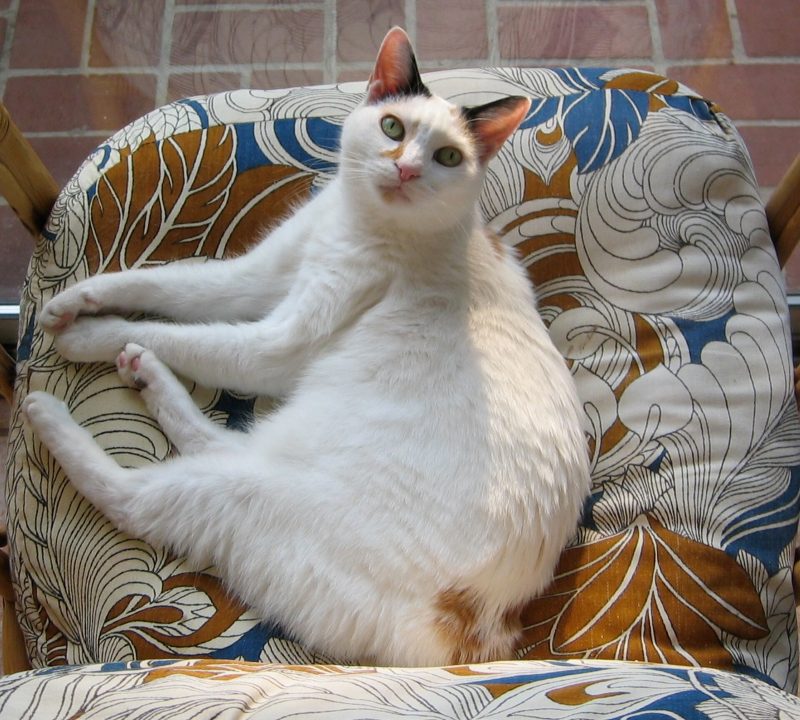
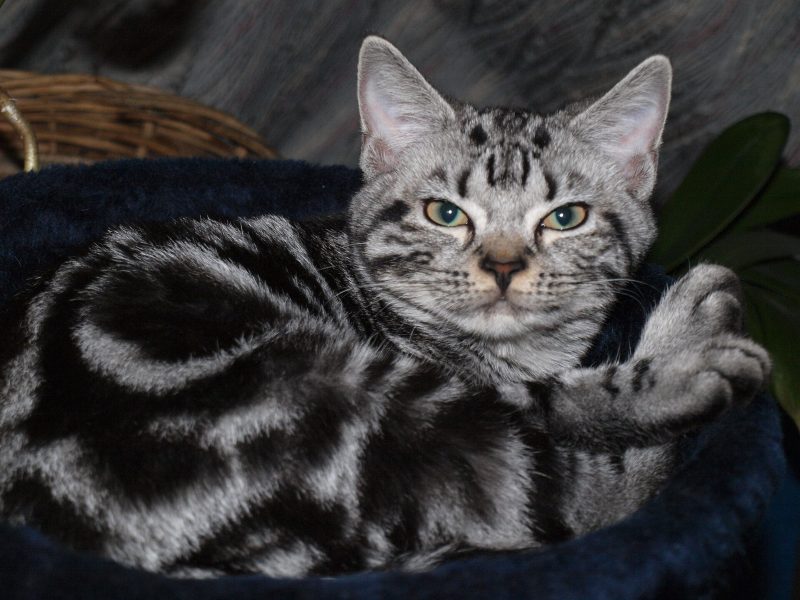
Breeds similar to the Manx
What Manx owners say
Real pets, photos, stories and tips from the SitterNation community — separate from the editorial guide above.
Log in to add your pet, photos, stories and tips.
Meet Manxs on SitterNation
No Manxs have joined yet. Owners can show their pet here from the pet's profile.
Manx community photos
No Manxs photos yet — be the first to share one.
Stories from Manx owners
No stories yet. What is life with yours really like?
Tips from Manx owners
No tips yet. One practical thing that works for you is enough.
Ask Manx owners
No questions yet. Ask the people who live with the breed.