Typical tendencies
Energy level
Always on; boredom turns into mischief.
Good with children
Gentle and tolerant around children.
Good with other pets
Coexists with other pets after a settling-in.
Shedding
Noticeable, with heavier seasonal blows.
Vocalization
A comment now and then.
Sociability
Follows the household from room to room.
More traits
Exercise needs
Adaptability
Grooming needs
Trainability
Intelligence
Family friendly
Friendly with strangers
Apartment friendly
Overview
The Turkish Angora is a slender, silky longhair with an outsized personality. It suits people who want a cat that participates: it will greet you at the door, supervise the cooking, ride on a shoulder and invent games with whatever is on the counter. It is not a cushion cat, and it tends to decide for itself when it will be held. Intelligent and quick to learn, it does best in a home with climbing space, daily play and a person who enjoys being managed by a cat.
The single coat is low-maintenance for a longhair, which makes it a sensible choice for owners who like the look but not the daily combing. Families with respectful children, apartment dwellers and people working from home all do well with the breed. Buyers of white kittens should ask about hearing tests, since deafness travels with blue eyes in white cats.
History & Origin
The Angora is one of the oldest longhaired breeds, taking its name from Ankara, the Turkish capital. Longhaired cats from the region reached France and England in the 1600s and were fashionable in European courts, but by the late 1800s British fanciers had crossed them so heavily into the developing Persian that the Angora nearly vanished as a distinct type.
In the early twentieth century Ankara Zoo began a program to preserve the white, often odd-eyed cats it regarded as the authentic breed. Cats from that program came to North America in the 1950s and 1960s, and the Cat Fanciers' Association recognized the white Turkish Angora for championship in the early 1970s; colored cats followed in 1978. Today the breed is recognized by CFA, TICA and FIFe. Genetic studies have since shown that North American lines and cats from Turkey form distinct populations, which keeps the debate over what a true Angora is very much alive.
Appearance
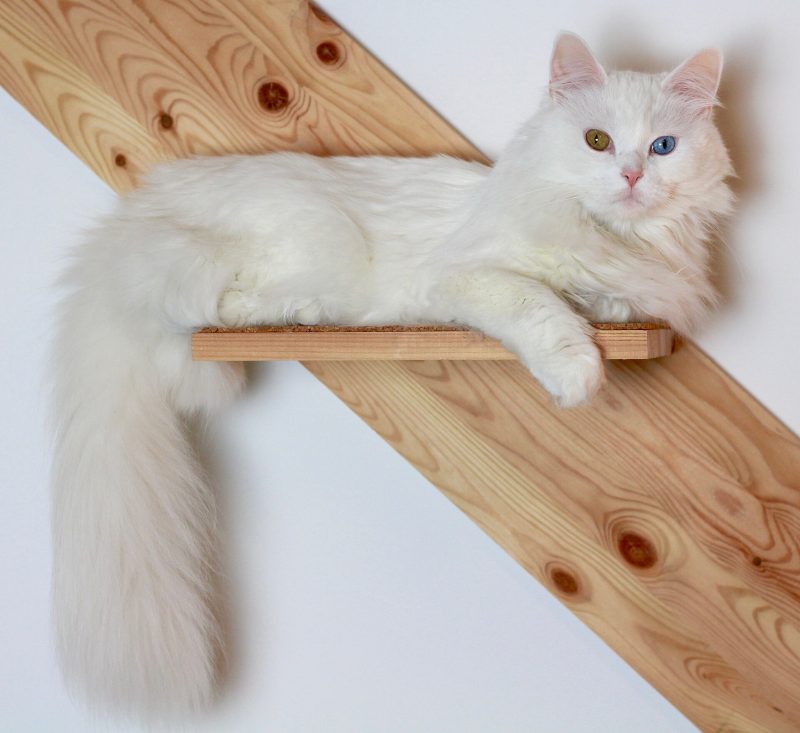
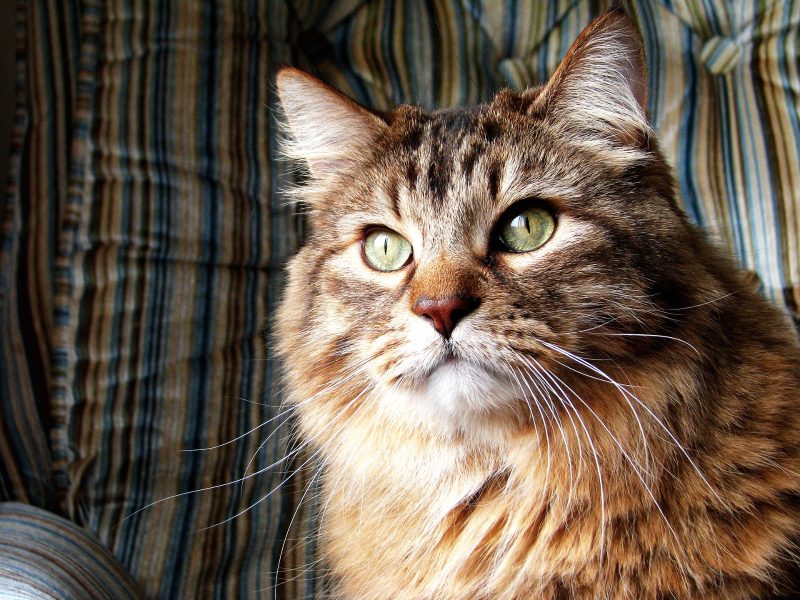
Think of a ballerina rather than a bruiser. The Turkish Angora is small to medium, fine-boned and long in body, with a slightly higher rear than front and a tail carried like a plume. The head is a smooth medium wedge with large, tall, pointed ears set high and close together, giving an alert, almost rabbit-like look. Eyes are large and almond shaped and can be blue, green, amber or one of each; odd-eyed whites are the classic image.
The coat is the breed's signature: a single layer with no undercoat, fine and silky, longer at the ruff, britches and tail and shorter over the body, so the cat never looks bulky. White is traditional, but black, blue, red, cream, tabby, tortoiseshell, smoke and bicolor are all shown. Compared with a Turkish Van it is lighter and finer, and compared with a Persian it has a normal, straight profile and far less fur.
Temperament & Personality
Owners describe the Angora as a cat with opinions. It is affectionate on its own terms, following its person from room to room, chirping at closed doors and settling beside rather than on a lap. Energy stays high well into adulthood: expect sprints across furniture, leaps to the top of the fridge and a toy delivered for a game of fetch.
It is a confident greeter with visitors, curious rather than shy, and usually friendly with children who play with it instead of carrying it about. With other animals it is sociable but likes to be in charge; a mellow dog or an easygoing cat is a better match than another dominant personality. The breed is moderately vocal, with a soft voice used purposefully. Left with nothing to do, an Angora will make its own entertainment, and that usually involves something breakable on a shelf.
Exercise & Activity
This is one of the more athletic longhairs, and twenty to thirty minutes of real play a day keeps it happy. Split it into two or three sessions with a wand toy, letting the cat stalk, chase, leap and finish with a catch. Angoras are enthusiastic climbers, so vertical space counts: a tall cat tree, a cleared bookshelf or wall shelves give the cat the high lookout it wants and keep it off your curtains. Many play fetch with a crumpled paper ball, and most enjoy puzzle feeders and treat balls that make them work for food.
The single coat means it handles warm rooms better than a double-coated breed, though white cats with pink ears can sunburn in strong window light.
Boredom shows as counter raids, knocked-over objects, pestering at night and nibbled houseplants
Rotate toys weekly so they stay novel
A window perch with a bird feeder outside is cheap enrichment
Training
The Angora learns fast and remembers what pays. Litter habits are usually reliable from the start; give one box per cat plus one, and keep them scooped daily, since a fastidious cat will protest a dirty tray. Scratching is best channeled early with a tall sisal post next to the sofa and a horizontal scratcher by the door.
Clicker training suits this breed: pair a click with a small treat, then teach sit, come, high five and jumping to a target, which also makes vet visits easier. Leave the carrier open in the living room with a soft bed inside so it becomes furniture rather than a threat. Harness walks are realistic for an Angora that is introduced to the harness as a kitten and allowed to drag the leash indoors first. The sticking point is willfulness: the cat will try the counter again tomorrow, so consistency from everyone in the house matters more than any single correction.
Grooming & Care
For a longhair, the Angora is easy. Because there is no undercoat, the coat rarely mats; a comb-through once or twice a week with a wide-toothed metal comb removes loose hair and keeps the ruff and tail tidy. Check behind the ears, under the arms and on the britches, where tangles start. Shedding is moderate, heavier in spring when the winter ruff thins, and the coat is noticeably lighter in summer.
Baths are not routine, but most Angoras tolerate water better than other cats, and a white coat that has gone grubby benefits from a wash with a cat shampoo followed by thorough drying. Wipe the corners of the eyes if tear staining shows on a white face.
Nails every two to three weeks
Teeth brushed daily if the cat allows, or several times a week
Ears checked monthly; clean only if dirty
Start all handling as a kitten and keep sessions short and rewarded
Health
The Turkish Angora is generally robust, with a lifespan commonly given as 12 to 18 years. The best-documented issue is hereditary deafness in white cats: the gene that produces the white coat and blue eyes also disrupts development of the inner ear, and roughly four in five white cats with two blue eyes are deaf, with odd-eyed cats often deaf on the blue-eyed side. A BAER hearing test, performed by a veterinary neurologist on kittens as young as a few weeks, is the only reliable way to confirm hearing, and some registries require it for white kittens.
A hereditary ataxia that leaves young kittens unsteady and shaky has been reported in the breed, and hypertrophic cardiomyopathy, the common feline heart-muscle disease, has been found in adults. Ask breeders whether they screen hearts by echocardiogram and whether they have seen ataxia in their lines. Deaf cats live full lives indoors but must never roam. For any murmur, breathing change or sudden wobbliness, see your vet.
Nutrition
Feed a complete, balanced food matched to life stage: kitten food until about twelve months, then an adult formula, with a senior diet later if your vet recommends one. The Angora is lean and active, so it is less prone to weight gain than many breeds, but neutered indoor cats still need measured portions rather than a free-filled bowl. Two or three small meals a day suit its busy metabolism, and a puzzle feeder for part of the ration doubles as enrichment.
Wet food adds water, which supports the kidneys and urinary tract; if you feed dry, keep fresh water in several places or use a fountain, as many Angoras like moving water. The silky coat benefits from a diet with adequate protein and essential fatty acids, and a hairball-control formula is rarely needed because the coat sheds so little undercoat. Keep treats under a tenth of daily calories and ask your vet before adding supplements.
Living With This Breed
An Angora adapts to apartments or houses as long as it can climb and has company for part of the day. It is a cat that wants in on everything, so a home office with a cat shelf beats a closed door. Indoor living is strongly recommended, and essential for a deaf white cat, which cannot hear traffic; a secure catio or harness walks provide outdoor time safely. It copes with a normal workday alone but dislikes long empty stretches, and a second cat or a mellow dog can help. Children who play with wand toys rather than scooping the cat up will have a devoted playmate. The breed is tidy and quiet for a longhair, and sheds less than a double-coated cat.
Climate: comfortable in most homes; shade white cats from strong sun
Escape habits: curious and fast at doors; screen windows
For sitters: expect a greeter who wants play, not just food; check high shelves and stow breakables; deaf cats need visual cues and should not be startled from behind
Interesting Facts
Ankara Zoo kept a breeding program of white Angoras through much of the twentieth century, prizing odd-eyed cats above all, and the first North American lines descended from zoo cats.
Legend places Angoras in the court of Marie Antoinette, and the claim that her cats sailed to America and became Maine Coons is a favorite breed myth with no evidence behind it.
Odd-eyed white Angoras are usually deaf on the side of the blue eye, a quirk of the same gene that colors the coat.
The Angora was so thoroughly crossed into early Persians that British fanciers once lumped both under the single heading of longhairs.
A 2012 genetic study found that cats sold as Turkish Angoras in North America cluster with European random-bred cats, while cats from Turkey group with Eastern Mediterranean populations.
Many Angoras enjoy water and will dip paws in a running tap or sit in an empty bathtub.
Breeds similar to the Turkish Angora
What Turkish Angora owners say
Real pets, photos, stories and tips from the SitterNation community — separate from the editorial guide above.
Log in to add your pet, photos, stories and tips.
Meet Turkish Angoras on SitterNation
No Turkish Angoras have joined yet. Owners can show their pet here from the pet's profile.
Turkish Angora community photos
No Turkish Angoras photos yet — be the first to share one.
Stories from Turkish Angora owners
No stories yet. What is life with yours really like?
Tips from Turkish Angora owners
No tips yet. One practical thing that works for you is enough.
Ask Turkish Angora owners
No questions yet. Ask the people who live with the breed.