Typical tendencies
Energy level
Always on; boredom turns into mischief.
Good with children
Patient with kids when well supervised.
Good with other pets
Coexists with other pets after a settling-in.
Shedding
Noticeable, with heavier seasonal blows.
Vocalization
A comment now and then.
Sociability
Likes being in the room with people.
More traits
Exercise needs
Adaptability
Grooming needs
Trainability
Intelligence
Family friendly
Friendly with strangers
Apartment friendly
Overview
The Turkish Van is a big, powerful, semi-longhaired cat with a chalk-white body, color on the head and tail, and an unusual relationship with water. It is intelligent, athletic and intensely loyal, but on its own terms: a Van wants to be near you, not necessarily on you, and it will tell you so. Males weigh 10 to 20 pounds, females 7 to 12, and the breed lives 12 to 17 years. It suits active households with room to run and climb, owners who enjoy an interactive cat, and homes with older children or respectful dogs. It is not a good match for a small apartment, a house full of toddlers or anyone who wants a quiet lap cat. Grooming is easier than the coat suggests. For sitters the key points are energy, climbing and the real possibility of finding the cat in the bathtub.
History & Origin
The Van is a natural breed from the rugged Lake Van region of eastern Turkey, where white cats with colored heads and tails have been kept for centuries and feature in local legend, including the story that a pair swam ashore from Noah's Ark near Mount Ararat. The Western breed dates from 1955, when British photographers Laura Lushington and Sonia Halliday, working in Turkey, were given two unrelated kittens and brought them home to England. Further imports followed in 1959, and the GCCF granted the breed championship status in 1969, first under the name Turkish Cat and later as Turkish Van to separate it from the Turkish Angora. A few cats reached the United States in the 1970s; the breeding population there dates from 1983, when Barbara and Jack Reark imported stock from France and the Netherlands. CFA accepted the Van in 1988 and granted championship status in 1994. FIFe and TICA recognize the breed as well.
Appearance
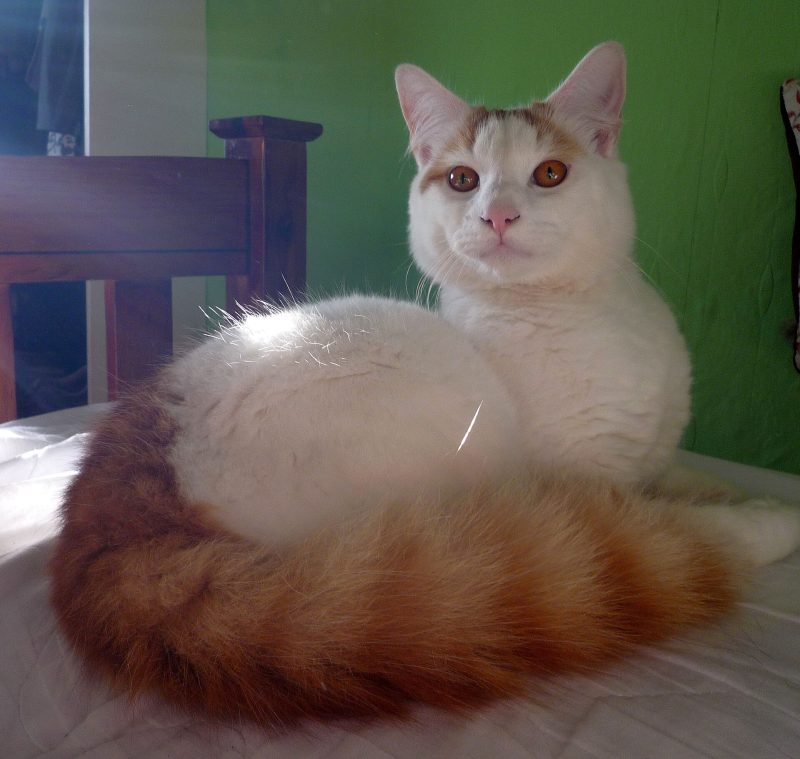
This is a substantial cat: long, broad-chested and heavily boned, with males often reaching 20 pounds and the breed taking three to five years to mature fully. The head is a broad wedge with a rounded muzzle, large ears set high and a slightly Roman profile. Eyes are large and oval in amber, blue or one of each. The coat is the breed's trademark: semi-long, silky, with a cashmere feel and no woolly undercoat, short in summer and much fuller in winter with a ruff and a plumed tail. The classic Van pattern is a white body with color confined to the head and tail, sometimes with a small spot or two on the body, in auburn most famously but also cream, black, blue, tortoiseshell and tabby. A pure white version, the Vankedisi, exists in some registries. The Turkish Angora is finer-boned and comes in many patterns; a Van-patterned domestic cat lacks the Van's size, coat and head.
Temperament & Personality
Van owners describe a cat that is affectionate, smart and opinionated. It bonds deeply with its family and follows people around, fetches, climbs to the highest point in any room, and comments on events in a voice some compare to a sheep. Many dislike being picked up or restrained but will choose to curl beside you or on your lap when the choice is theirs. Vans are playful into old age, highly athletic and famously drawn to water, from dripping taps to a full bath. With strangers they tend to be reserved at first; with other cats they want to be in charge; with dogs they often do well after careful introduction. They are best with older children who can respect a cat that does not like to be grabbed. Energy indoors is high, and a bored Van will make its own entertainment, often involving heights or liquids.
Exercise & Activity
A Van needs more activity than most cats: at least 30 to 45 minutes of vigorous play a day, split into several sessions, plus a home arranged for climbing. Tall cat trees, shelving routes and window perches are essential, and a secure catio or enclosed garden is ideal. Fetch is a favorite, as are chase games with wand toys and balls that skitter across hard floors. Water is enrichment in itself: a cat fountain, a shallow tub with floating toys or a dripping tap will occupy a Van for a long time. Puzzle feeders and training sessions give the intelligent mind a job. Boredom looks like knocked-over objects, raided sinks and a cat on top of the refrigerator. The winter coat copes well with cold; in hot weather provide shade and water.
Several daily play sessions, with fetch and climbing
Water play as safe, supervised enrichment
A running wheel or catio for the most active cats
Training
Vans are intelligent and respond well to short, positive sessions, though they decide for themselves when a lesson is over. Clicker training works for recall, sit, fetch on cue and tricks, with food or a favorite toy as the reward. Litter habits are reliable; large, uncovered boxes suit a big cat, scooped daily, one per cat plus one. Scratching is strong, so provide tall, sturdy sisal posts that will not wobble under 18 pounds, plus horizontal pads, and place them near sleeping spots. Carrier training matters because many Vans resist being picked up: leave the carrier open as a bed and feed treats inside. Harness training is achievable and gives a safe outdoor outlet; start indoors and keep early walks short. Socialize kittens to handling, visitors and other animals, and teach children to let the cat come to them rather than lifting it.
Grooming & Care
For a semi-longhaired cat the Van is easy. With no undercoat, the silky coat rarely mats, and a weekly combing with a wide-toothed steel comb removes dead hair and helps prevent hairballs. During the spring molt, when the heavy winter coat drops, comb every other day and expect a surprising volume of hair. Baths are seldom needed, though many Vans enjoy them, and the coat repels dirt and dries quickly. Trim nails every two to three weeks, check the ears monthly and wipe only the visible part, and brush teeth several times a week with cat toothpaste. White ears and noses can sunburn in strong sun, so give shade or window film. Look closely at the pale coat for fleas, which show up easily, and at the skin behind the ears for the first signs of tangles in winter.
Weekly comb, every other day during the spring molt
No professional grooming needed; baths optional
Sun protection for white ears in summer
Nails and teeth on the usual schedule
Health
The Turkish Van is a robust natural breed with no documented breed-specific genetic disorder and a lifespan of 12 to 17 years. The white coat comes from the piebald gene rather than the dominant white gene, and the CFA notes that hereditary deafness is not associated with the breed, though blue-eyed and odd-eyed cats of any breed are worth a hearing check as kittens. The conditions to watch are the general feline ones: hypertrophic cardiomyopathy, for which breeders may screen with echocardiograms since no breed-specific DNA test exists; obesity, a real risk in a large cat that matures slowly and may be overfed; dental disease; and arthritis in heavier, older cats. Pale skin on the ears and nose can sunburn. Ask your vet about an annual exam with weight tracking, a heart check and dental assessment, and senior bloodwork from about ten years old.
Nutrition
A Van grows for three to five years, so feed a kitten or growth formula longer than you would for a small breed and ask your vet when to switch to adult food. Choose a complete and balanced diet with a nutritional adequacy statement, measured into two or three meals a day. Despite its activity level, this breed gains weight readily once mature, and a 20-pound male is not necessarily a fat one, so judge by body condition rather than the scale: ribs easy to feel, a visible waist from above. Wet food adds water, which many Vans also drink enthusiastically from fountains. Treats stay under a tenth of daily calories. Hairball support matters during the spring molt. Sitters should measure portions exactly and keep food stored away, since a Van can open cupboards and lids. Sudden changes in thirst or appetite warrant a vet call.
Living With This Breed
This breed needs space. A house with climbing routes, or a large apartment fitted with shelves and a catio, suits it; a small flat does not. Vans cope with a workday alone if they have another pet or plenty to do, but they are social and can become destructive if bored. They do best with older children and with dogs introduced slowly; with other cats they expect to be in charge. The voice is moderate but persistent. Expect wet floors around sinks and bathtubs, and keep toilet lids down.
Sitters: a strong, athletic cat that dislikes being picked up
Supervise water play; keep tubs drained and lids closed
Secure high shelves and breakables
Do not let it out; it is fast, curious and not road-wise
Interesting Facts
The Van is nicknamed the swimming cat; founding breeders reported their cats paddling in pools and streams, and many modern Vans will join you in the bath.
Local tradition holds that the breed sailed on Noah's Ark and swam ashore when it grounded near Mount Ararat, close to Lake Van.
The pattern of color on the head and tail with a white body is called the Van pattern in every breed that carries it.
A full Van takes three to five years to mature, slower than almost any other breed.
The breed was first registered in Britain in 1969 as the Turkish Cat and renamed to avoid confusion with the Turkish Angora.
In Turkey the all-white, often odd-eyed Van Kedisi is protected and studied at a dedicated research center at the university in Van.
Breeds similar to the Turkish Van
What Turkish Van owners say
Real pets, photos, stories and tips from the SitterNation community — separate from the editorial guide above.
Log in to add your pet, photos, stories and tips.
Meet Turkish Vans on SitterNation
No Turkish Vans have joined yet. Owners can show their pet here from the pet's profile.
Turkish Van community photos
No Turkish Vans photos yet — be the first to share one.
Stories from Turkish Van owners
No stories yet. What is life with yours really like?
Tips from Turkish Van owners
No tips yet. One practical thing that works for you is enough.
Ask Turkish Van owners
No questions yet. Ask the people who live with the breed.