Typical tendencies
Energy level
Calm at home with short bursts of play.
Good with children
A famously patient playmate for kids.
Good with other dogs
Gets along with known, polite dogs.
Trainability
Learns, but on its own schedule.
Shedding
Noticeable, with heavier seasonal blows.
Apartment friendly
A natural fit for city living.
More traits
Exercise needs
Adaptability
Grooming needs
Drooling
Intelligence
Family friendly
Good with cats
Friendly with strangers
Sociability
Protectiveness
Prey drive
Overview
The Bulldog is a sofa companion with a prizefighter's face and a heart of butter. Calm, patient with children, modestly exercised and rarely noisy, it suits apartments, retirees, families and anyone who wants a dog that is happy to spend the evening beside them. It is not a dog for joggers, hot climates without air conditioning, tidy people who dislike drool and snoring, or budgets that cannot absorb veterinary bills, because the breed's shape brings breathing, skin, eye and joint problems and a shorter life than most. If you love the look, buy from a breeder who grades airways, screens hearts, knees and hips and breeds for open nostrils and a more moderate head, or adopt through a breed rescue. Keep the dog lean and cool, clean the folds daily, and you get a loyal, comic, surprisingly stubborn friend.
History & Origin
The Bulldog was bred in England for bull-baiting, a brutal spectacle recorded as early as the 1200s in which dogs were set on a tethered bull. The job called for a low, heavy dog with a wide jaw that could grip and hold, and a short, set-back nose that let it breathe while hanging on. When Parliament banned baiting in 1835 the breed lost its purpose and nearly vanished. Fanciers rescued it by breeding out ferocity and breeding in the affable, wrinkled companion we know; dog shows, which began in 1859, gave the new Bulldog a stage. The Bulldog Club was founded in England in 1875 and published the first standard, still the basis of today's. Bulldogs appeared at the first Westminster show in 1877, the AKC recognized the breed in 1886 and the Bulldog Club of America formed in Boston in 1890. The breed became a symbol of British tenacity during the Second World War and remains a top-ten breed in the United States.
Appearance
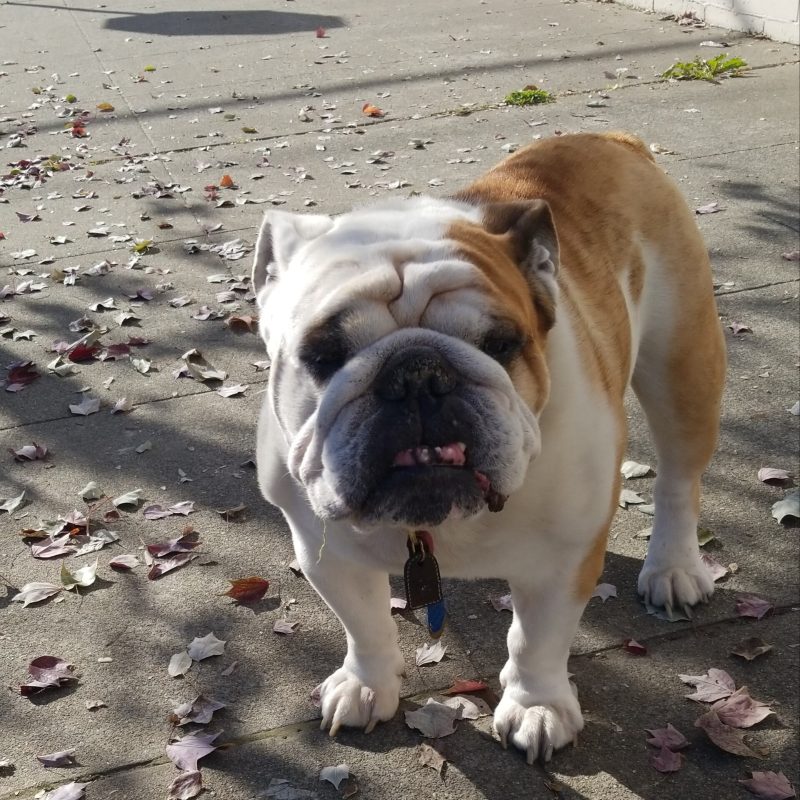
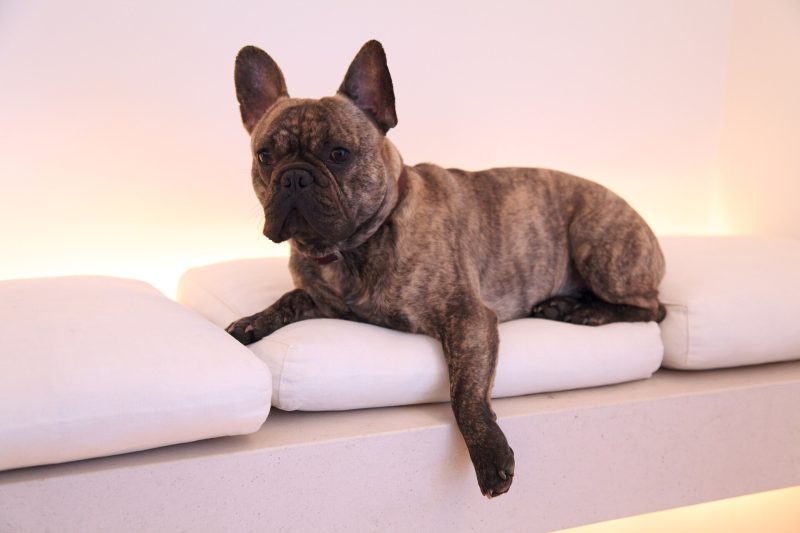
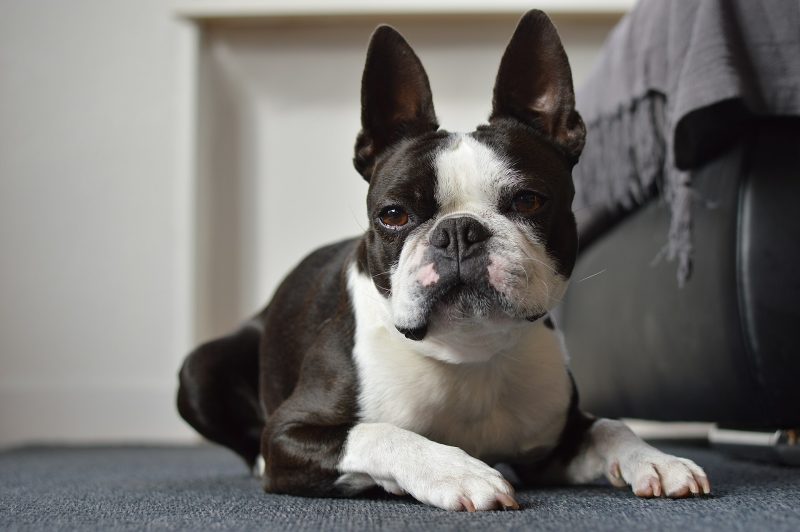
A Bulldog is a medium-sized, low-slung, extremely heavy dog for its height. Both sexes stand about 14 to 15 inches; males weigh 50 to 55 pounds and females 40 to 45. The head is massive and square with a short, upturned muzzle, a deep furrow between the eyes, heavy folds over the nose and loose flews hanging over a wide, undershot jaw. Small rose ears fold back, and the dark eyes sit low and wide apart. The chest is very broad, the shoulders heavy and set wide, the back short and arched in a 'roach', and the hindquarters lighter than the front, which gives the famous rolling gait. The tail is short and either straight or screwed, never carried up. The coat is short, smooth and fine in brindle, white, red, fawn, fallow and piebald. Compared with a French Bulldog, the Bulldog is roughly twice the weight with rose rather than bat ears; the American Bulldog is taller, leaner and longer-muzzled.
Temperament & Personality
Bulldogs are mellow, dependable and devoted. They are gentle with children, often tolerant to a fault, and most are friendly with visitors after a token inspection. They form strong attachments and like to be in physical contact, usually leaning on a leg or sprawled across a foot. Indoors they are quiet and sleep much of the day; outdoors they enjoy a stroll and a short play session before looking for shade. They are not watchdogs in the barking sense, but a Bulldog planted in a doorway has a certain persuasive presence. The breed is famously stubborn, which is mostly a slow, deliberate way of deciding whether your request is worth the effort. With other dogs Bulldogs are usually fine, though some males are scrappy with strange dogs, and most live happily with cats. They snore, snort, drool and pass gas with no embarrassment whatsoever. Separation is tolerated better than in many breeds, but they still prefer company.
Exercise & Activity
Bulldogs need modest but regular exercise: two or three leisurely walks a day of 15 to 20 minutes each plus a little indoor play is enough for most adults, and a daily routine helps prevent weight gain. The absolute rule is heat. A Bulldog's airway cannot shed heat efficiently, and the breed can overheat on a warm day with no exertion at all, so walk early or late in summer, carry water, and stay inside with the air conditioning when it is hot or humid. Watch for loud breathing, a wide, frothy tongue or reluctance to continue, and stop immediately. Always use a harness. Bulldogs cannot swim; their heavy heads and short legs sink them, so pools need fences and boats need life jackets. Puzzle toys, short training games and tug give the mind something to do.
Daily: 30–45 minutes of walking in short outings
Never: heat, long hikes, unsupervised water
Boredom shows as chewing, sulking and stubborn immovability
Training
Training a Bulldog is a lesson in motivation. They are not stupid; they are unhurried, and they weigh every request against the reward on offer. Food works best, used sparingly because of the breed's weight problems, with praise and play as backup. Keep sessions short, calm and consistent; repetition and shouting get you a dog lying down with its eyes closed. House training can take longer than average, so stick to a schedule and reward success outdoors. Teach loose-leash walking early, since 50 pounds of low-slung determination is hard to redirect, and teach the dog to stand for fold-cleaning and nail trims from puppyhood. Socialize with people and dogs while young; most Bulldogs are naturally easygoing, but some become possessive of toys and food, which should be addressed early with trading games. Recall is modest. Rally, trick training and a low-key version of scent work suit the breed; agility and endurance sports do not.
Grooming & Care
The short coat is the easy part: a weekly brush with a soft bristle brush or rubber mitt removes loose hair, and a bath every month or two keeps the skin clean. The folds are the work. Every day, wipe inside the nose rope and facial wrinkles with a damp cloth or vet-approved wipe and dry them completely, since trapped moisture breeds infection fast. Dogs with a screw tail often have a tail pocket that needs the same daily routine. Check the ears weekly and clean when needed. Trim nails every three to four weeks; Bulldogs do not wear them down. Brush teeth several times a week, since the undershot jaw crowds teeth and traps food. Keep an eye on the eyes for redness, discharge or a pink lump in the corner, and on the paws for interdigital cysts, which the breed is prone to.
Daily: wipe and dry face folds and tail pocket
Weekly: brush, check ears, eyes and paws
Every 3–4 weeks: nails
Health
Bulldogs typically live 8 to 10 years, shorter than most breeds their size, and almost every common problem traces to conformation. UK veterinary records put median longevity nearer 7 to 9 years. Brachycephalic obstructive airway syndrome (BOAS), with narrowed nostrils, an elongated soft palate and often a narrow trachea, causes noisy breathing, heat intolerance and sometimes collapse; corrective surgery helps many dogs. Hip dysplasia is extraordinarily common, with the breed topping OFA's rankings, and patellar luxation and cruciate ligament tears also occur. Eye problems include cherry eye, entropion, dry eye and corneal ulcers. Skin fold dermatitis, allergies, ear infections and interdigital cysts are routine, and pulmonic stenosis is the main heart concern. Most puppies are delivered by cesarean section because of the puppies' heads and the dam's narrow pelvis. Responsible breeders obtain a patella evaluation, a cardiac exam, a tracheal radiograph and, ideally, hip, elbow and eye screenings; airway grading schemes exist in several countries. See a vet urgently for breathing that worsens, collapse in heat, or an eye that is squinting or cloudy.
Nutrition
Weight control is the single most useful thing you can do for a Bulldog's breathing, joints and lifespan. Feed measured meals twice daily, no free-feeding, and keep treats to a tenth of daily calories or less; many Bulldogs are overweight without their owners noticing because the breed is naturally broad. Puppies should eat a large-breed or medium-breed growth formula to moderate growth until about 12 months, then switch to adult food on your vet's advice; seniors from about seven may need fewer calories. Food allergies are common and show as itchy skin, ear infections or loose stool; an elimination diet supervised by your vet is the way to find out. Bulldogs gulp air with their food, so a slow-feeder bowl helps with both speed and gas. A shallow, wide bowl suits the flat face. Keep fresh water available at all times, especially in warm weather, and ask your vet before adding supplements.
Living With This Breed
Bulldogs are ideal apartment dogs: quiet, calm and uninterested in marathons. They need air conditioning in warm climates and should never be left in a car or a sunny yard. They cope with a normal workday better than many breeds but still prefer company. They are superb with children and generally fine with other pets. Expect snoring you can hear through walls, drool on the furniture and a steady supply of gas. Stairs are hard on them, and most cannot climb into a car unaided. For sitters and daycare staff: keep the dog cool and calm, use a harness, limit play to short sessions, watch breathing closely, wipe and dry the folds, and keep the dog away from water without a life jacket. Know the nearest emergency vet.
No swimming, no heat, no long walks
Report noisy breathing or sudden lethargy immediately
Medication schedules for skin or eyes are common; follow them exactly
Interesting Facts
Handsome Dan, a Bulldog bought by a Yale student in 1889, is considered the first live college mascot in the United States; the line continues today.
The Bulldog has been the official mascot of the United States Marine Corps since the First World War, when German soldiers reportedly called Marines 'devil dogs'.
Uga, the University of Georgia's white Bulldog, has his own air-conditioned doghouse on the sideline and travels to games in a custom vehicle.
Bulldogs have won Best in Show at Westminster twice, in 1913 and 1955; the 1955 winner, Kippax Fearnought, went on to become a foundation sire in America.
The breed's rolling gait, undershot jaw and set-back nose were all once functional, designed to let a dog grip and breathe at the same time.
Winston Churchill was often compared to a Bulldog and the breed became a symbol of British defiance, although his own dogs were a Poodle and a cat.
Breeds similar to the Bulldog
What Bulldog owners say
Real pets, photos, stories and tips from the SitterNation community — separate from the editorial guide above.
Log in to add your pet, photos, stories and tips.
Meet Bulldogs on SitterNation
No Bulldogs have joined yet. Owners can show their pet here from the pet's profile.
Bulldog community photos
No Bulldogs photos yet — be the first to share one.
Stories from Bulldog owners
No stories yet. What is life with yours really like?
Tips from Bulldog owners
No tips yet. One practical thing that works for you is enough.
Ask Bulldog owners
No questions yet. Ask the people who live with the breed.