
Typical tendencies
Energy level
Calm at home with short bursts of play.
Good with children
Gentle and tolerant around children.
Good with other dogs
Enjoys most canine company.
Trainability
Picks up cues with steady, short sessions.
Shedding
Noticeable, with heavier seasonal blows.
Apartment friendly
A natural fit for city living.
More traits
Exercise needs
Adaptability
Grooming needs
Drooling
Intelligence
Family friendly
Good with cats
Friendly with strangers
Sociability
Protectiveness
Prey drive
Overview
The French Bulldog is the city dog of the moment, and for good reason: it is small enough for an apartment, quiet enough for neighbors, playful without needing a running track and devoted to whoever is on the sofa. Frenchies suit first-time owners, people who work from home or keep short hours, older adults and families with considerate children. They are a poor match for joggers, hot climates without air conditioning, households that are out all day or anyone who hopes to avoid veterinary bills: the flat face, compact spine and skin folds that give the breed its charm also bring real health costs. Choose a breeder who grades airways and screens spines, hips and hearts, or adopt through a breed rescue, keep the dog lean and cool, and you get a clownish, affectionate shadow with a famously expressive face.
History & Origin
The French Bulldog began in England. In the early 1800s lace workers around Nottingham kept small 'toy' Bulldogs as companions and ratters, and when the Industrial Revolution displaced them many emigrated to Normandy and took their dogs along. French buyers loved the little dogs, English breeders happily exported the undersized Bulldogs they did not want, and by the 1880s a distinct type had formed in Paris, popular with shopkeepers, cafe society and artists. The erect bat ear became its signature, though French and English fanciers argued over bat versus rose ears for years. Wealthy American tourists carried Frenchies home, and after a dispute at the 1897 Westminster show over which ear type should win, Americans formed the French Bull Dog Club of America and wrote a standard that allowed only the bat ear. The AKC recognized the breed in 1898, England's Kennel Club followed in 1905, and in 2022 the French Bulldog became the most registered breed in the United States.
Appearance
A Frenchie is a small, heavy-boned, muscular dog that looks like a Bulldog shrunk and squared off. Both sexes stand 11 to 13 inches at the shoulder; males weigh 20 to 28 pounds and females 16 to 24. The head is large and square with a short, upturned nose, a flat skull between the ears and soft wrinkles over the muzzle. The ears are the giveaway: broad at the base, rounded at the tip and carried upright, like a bat's. The body is compact with a slight rise over the loin, a wide chest, a short tail that may be straight or screwed, and sturdy legs. The coat is short, smooth and fine, in brindle, fawn, cream, white and pied patterns. Colors such as blue, merle and lilac are not recognized by the major registries and are often linked to health and breeding problems. Next to a Boston Terrier, a Frenchie is heavier, lower and wider with a flatter skull and rounder ears.
Temperament & Personality
French Bulldogs are affectionate, funny and people-centered. They want to be touching you, will follow you from room to room and tend to greet visitors with wiggles rather than barking; many make surprisingly good office dogs. Indoors they alternate between short bursts of play and long naps. They are alert and will announce a doorbell, but they are not watchdogs in any serious sense. Most are good with children who handle them gently, and they generally get along with other dogs and cats, though some males are bossy with other males. The breed has a stubborn streak and a sense of humor that can look the same from the outside. Frenchies do not do well alone for long stretches; separation distress is common. They also communicate constantly, with snorts, grunts, sighs and a vocabulary of looks, which owners either adore or should think hard about before committing.
Exercise & Activity
Frenchies need daily activity but not much of it: two or three short walks of 15 to 20 minutes plus some indoor play keeps most adults fit. The limiting factor is breathing. A flat-faced dog cannot cool itself efficiently by panting, so exercise in heat or humidity is genuinely dangerous; walk early or late in summer, carry water, and head home at the first sign of loud breathing, a bluish tongue or reluctance to move. Use a harness rather than a collar to keep pressure off the throat. Frenchies cannot swim reliably because of their heavy heads and short legs, so pools, lakes and boats require a life jacket and supervision. Mental work matters as much as mileage: short training games, sniffing walks and food puzzles keep a smart, bored dog from chewing.
Daily: 30–45 minutes total, split into short walks
Avoid: midday heat, long hikes, unsupervised water
Boredom shows as chewing, barking at windows and pestering
Training
French Bulldogs are smart enough to learn anything and stubborn enough to make you earn it. They respond to food, play and praise and shut down under harsh handling, so keep sessions short, upbeat and rewarding. House training is the breed's notorious weak spot; stick to a strict schedule, reward outside every time and expect progress to take months rather than weeks. Crate training helps with this and with separation anxiety, which is common enough that building comfort with alone time should begin in puppyhood. Teach a reliable 'leave it' early; Frenchies eat things off the sidewalk. Socialize widely with people, dogs and city noises, because a confident Frenchie is a joy and an anxious one can become reactive. Most are not strong on recall and should stay leashed in unfenced areas. Trick training, rally and nose work suit the breed far better than endurance sports and give that busy mind something to do.
Grooming & Care
Coat care is minimal: a weekly rub with a soft brush or grooming mitt removes loose hair, and a bath every month or two is plenty unless allergies call for medicated shampoo on a schedule your vet sets. The real work is in the folds. Wipe the nose wrinkle and any facial folds every day or two with a damp cloth or vet-approved wipe, then dry them thoroughly, because trapped moisture breeds yeast and bacteria. Dogs with a screw tail often have a tail pocket that needs the same routine. Check the ears weekly; the big upright ears collect dust and are prone to infection in allergic dogs. Trim nails every three to four weeks since Frenchies do not wear them down, and brush teeth several times a week because crowded jaws invite dental disease. Watch the eyes for redness or squinting, which needs prompt attention.
Daily: wipe and dry folds
Weekly: brush, check ears and skin
Every 3–4 weeks: nails
Health
The French Bulldog's expected lifespan is often given as 10 to 12 years, though a large 2024 UK study put the breed's median nearer 10, and most of its health problems trace to its shape. Brachycephalic obstructive airway syndrome (BOAS) covers narrow nostrils, an overlong soft palate and a narrow windpipe; signs are noisy breathing, snoring, exercise and heat intolerance, and in severe cases collapse. Surgery can help, and breeders can have breeding stock graded under respiratory function schemes. The screw tail is linked to hemivertebrae, and the breed has a high rate of intervertebral disc disease, which can cause sudden pain or hind-limb weakness. Skin fold dermatitis, allergies, chronic ear infections, cherry eye, corneal ulcers, patellar luxation and hip dysplasia are all common. Most litters are delivered by cesarean section. Responsible breeders use OFA hip and patella evaluations, a cardiac exam, an eye exam by a veterinary ophthalmologist and DNA panels, plus airway grading where available. See a vet urgently for breathing that gets worse, collapse, or any sign of back pain or weak hind legs.
Nutrition
Keeping a Frenchie lean is the most effective health decision you can make, because every extra pound makes breathing and spinal problems worse. Feed measured meals twice a day, skip free-feeding and keep treats under a tenth of daily calories. Puppies do well on a complete small- or medium-breed puppy food until around 12 months; adults move to a maintenance diet and seniors, around seven, to a lower-calorie formula if activity drops. Food allergies and sensitivities are common in the breed and show up as itchy skin, ear infections or loose stool; if you suspect one, ask your vet about an elimination diet rather than switching foods at random. Frenchies gulp air when they eat, which adds to gassiness, so a slow-feeder bowl or scatter feeding helps. Flat-faced dogs may find shallow, wide bowls easier. Always have fresh water available, especially in warm weather, and ask your vet before adding supplements.
Living With This Breed
French Bulldogs are tailor-made for apartments and small homes: little barking, modest exercise needs and a strong preference for the couch. They need air conditioning in warm climates and should never be left in a parked car or a sunny yard. They want company; a Frenchie left alone eight hours a day is often an unhappy, destructive one, so plan for a midday visit or daycare. They do well with gentle children and most pets. Stairs and jumping off furniture are hard on their spines, so ramps and lifting help. Snoring is loud and constant. For sitters and daycare staff: watch breathing closely during play, keep sessions short and cool, use a harness, dry the face folds after meals and water, and know the nearest emergency vet.
Life jacket near any water
No off-leash time in unfenced areas; recall is unreliable
Report noisy breathing or reluctance to walk promptly
Interesting Facts
The French Bulldog overtook the Labrador Retriever as the most registered breed in the United States in 2022, ending the Lab's 31-year run.
The breed's ancestors were English: undersized Bulldogs kept by Nottingham lace makers who emigrated to France during the Industrial Revolution.
The bat ear almost did not survive; English fanciers preferred rose ears, and it took American breeders writing a bat-ear-only standard in the 1890s to settle the matter.
A French Bulldog named Gamin de Pycombe was aboard the Titanic; his owner had insured him for a sum that would be worth tens of thousands of dollars today.
Frenchies rarely bark but 'talk' constantly in snorts, grumbles and yodels, and their big ears move independently to track sounds.
Most French Bulldogs cannot swim and should wear a life jacket near water, and most are born by cesarean section because of the puppies' large heads.
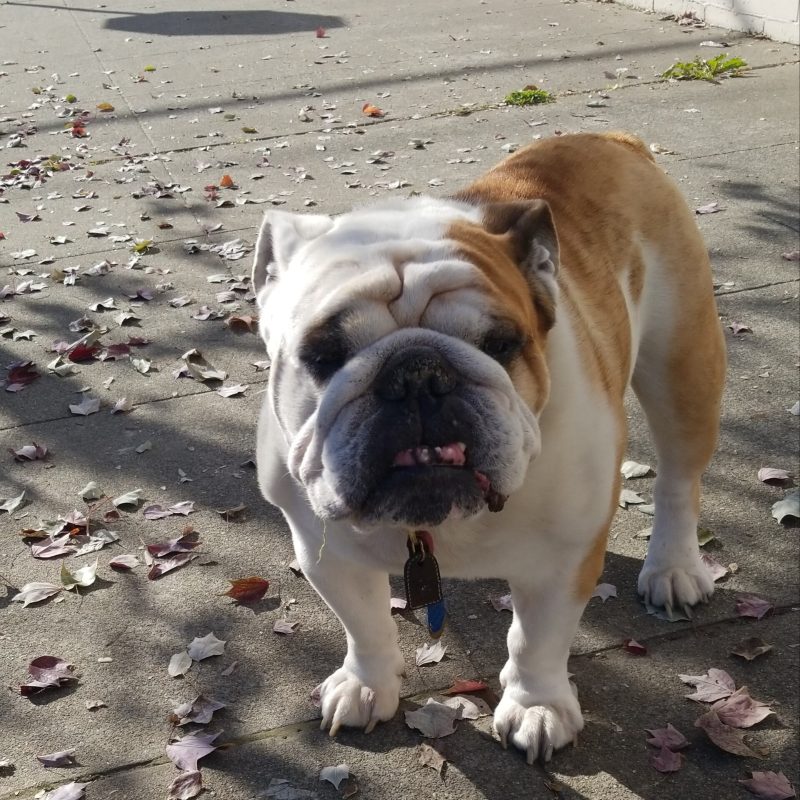
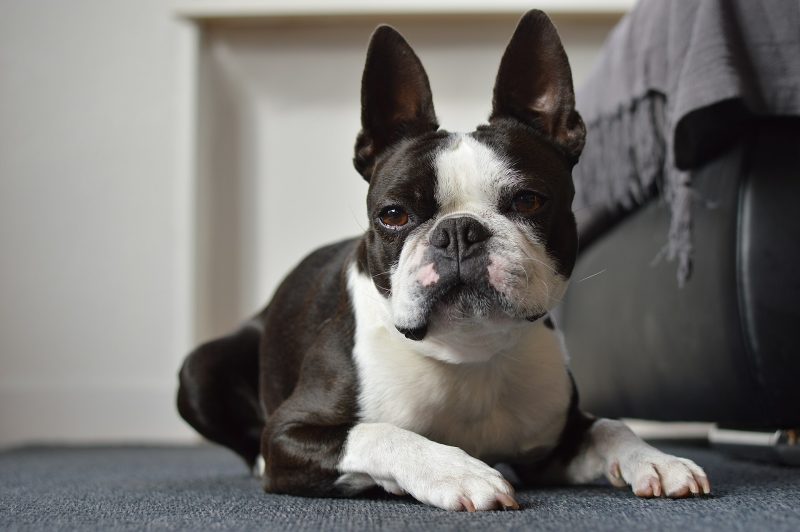
Breeds similar to the French Bulldog




What French Bulldog owners say
Real pets, photos, stories and tips from the SitterNation community — separate from the editorial guide above.
Log in to add your pet, photos, stories and tips.
Meet French Bulldogs on SitterNation
No French Bulldogs have joined yet. Owners can show their pet here from the pet's profile.
French Bulldog community photos
No French Bulldogs photos yet — be the first to share one.
Stories from French Bulldog owners
No stories yet. What is life with yours really like?
Tips from French Bulldog owners
No tips yet. One practical thing that works for you is enough.
Ask French Bulldog owners
No questions yet. Ask the people who live with the breed.