Typical tendencies
Energy level
Needs a real outlet most days.
Good with children
A famously patient playmate for kids.
Good with other dogs
Enjoys most canine company.
Trainability
Quick to learn and keen to please.
Shedding
A light scatter, easy to keep up with.
Apartment friendly
A natural fit for city living.
More traits
Exercise needs
Adaptability
Grooming needs
Drooling
Intelligence
Family friendly
Good with cats
Friendly with strangers
Sociability
Protectiveness
Prey drive
Overview
The Boston Terrier is a small, smart, tuxedo-marked companion developed in the United States, and it earned the nickname American Gentleman for good reason. Bostons are cheerful, affectionate and well-mannered, lively enough to play fetch and gentle enough for a lap, and they adapt readily to apartments, city streets and family chaos. They are easy to groom, moderate to exercise and friendly with strangers, children and other pets. The limits come from the flat face: Bostons overheat easily, snore, and have eye and breathing concerns, and their short coat leaves them cold in winter. They suit first-time owners, families with kids, seniors and urban dwellers who want a dog that is up for anything within reason. They do not suit hot climates without air conditioning or people who want a long-distance running partner.
History & Origin
The Boston Terrier is one of the few breeds created entirely in the United States. Around 1870 a Bostonian named Robert Hooper acquired a dog called Judge, a cross between an English Bulldog and the now-extinct white English Terrier, who weighed about 30 pounds and had a dark brindle coat with a white blaze. Judge was bred to a small white female and their descendants, further reduced in size and possibly refined with French Bulldog blood, became known around Boston as round heads or bull terriers. By the late 1880s a group of fanciers was exhibiting the dogs; after objections from Bull Terrier owners they renamed their breed the Boston Terrier and organized the Boston Terrier Club of America in 1891. The AKC recognized the breed in 1893, making it one of the earliest American-developed breeds in the registry, after only a few such as the Chesapeake Bay Retriever and American Foxhound. Bostons were among the most popular dogs in America through the early 1900s, and Massachusetts named the Boston Terrier its official state dog in 1979.
Appearance
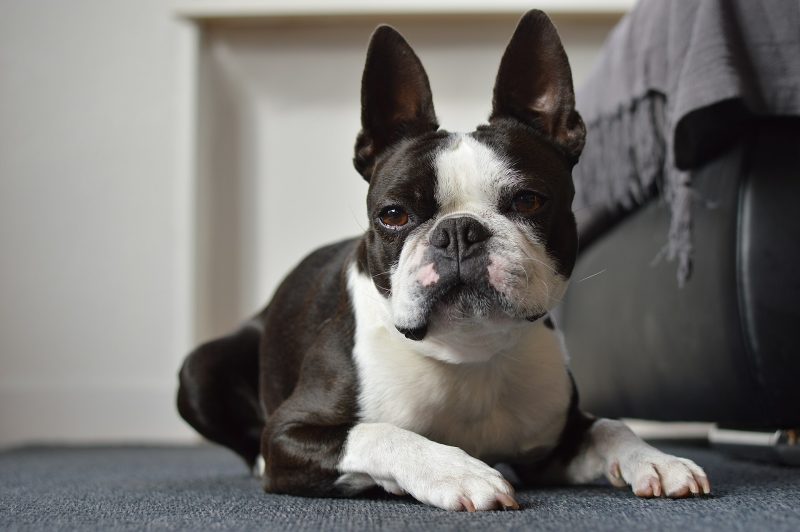
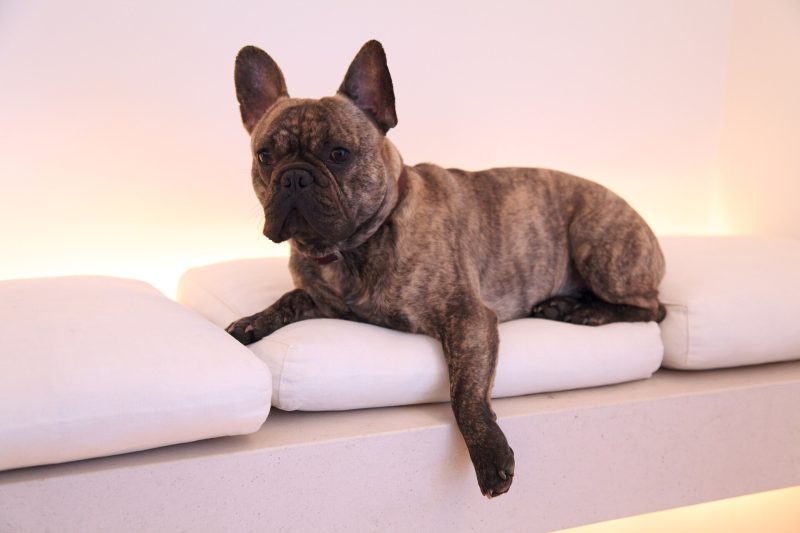
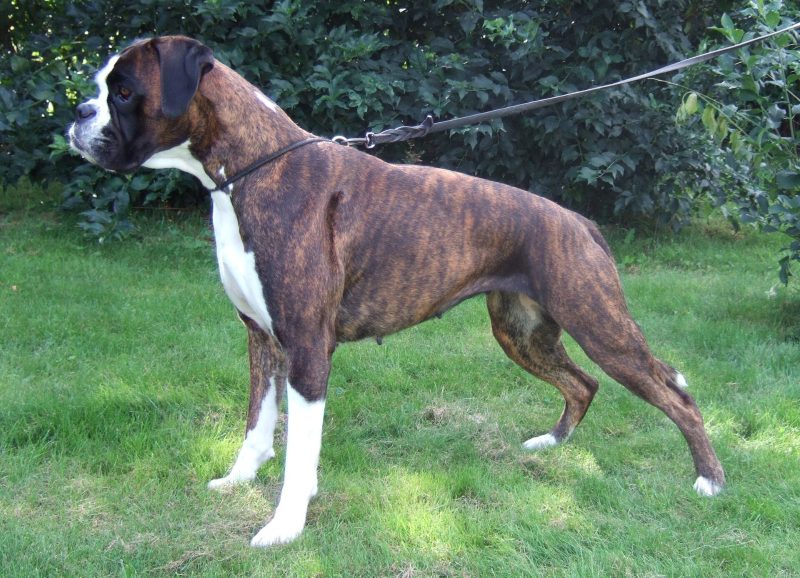
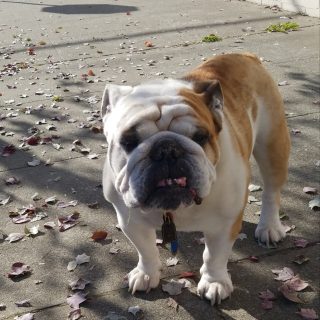
A Boston Terrier is a compact, square, well-balanced dog, 15 to 17 inches tall and 12 to 25 pounds, shown in three weight classes but always looking sturdy rather than fragile. The head is square with a short, broad muzzle, a flat skull, large round dark eyes set wide apart and small erect ears, natural or cropped, that give an alert expression. The tail is naturally short, either straight or screwed. The coat is short, smooth and fine. The markings are essential to the breed: brindle, seal (black with a red cast in sunlight) or black, each with white on the muzzle band, a blaze between the eyes and the forechest, ideally extending to a white collar and front legs, which produces the tuxedo look. Bostons are often mistaken for French Bulldogs, which are heavier, lower, bat-eared and come in many colors, and for small Boxers, which are far larger with a different head.
Temperament & Personality
Bostons are friendly, bright and people-oriented, with a sense of humor that shows in their expressive faces. They are lively without being hyperactive: happy to play fetch or run an agility course, equally happy to snooze on a lap. They greet strangers warmly, are typically excellent with children, and get along with other dogs and cats. They want to be with their people and do not do well as backyard dogs; many follow their owners from room to room and some develop separation anxiety. They are alert and will bark at the door but are not aggressive or yappy by nature. Some males are scrappy with other males, and the terrier name is partly earned in the determination they bring to a game of tug. Stubborn moments happen, usually in housetraining or when a squirrel is involved.
Exercise & Activity
Bostons need roughly 30 to 60 minutes of activity a day, divided into a couple of walks and a vigorous play session. They love fetch, tug, agility, rally and flyball and are capable athletes in short bursts. Long-distance running and intense exercise in heat are off the table because the short muzzle limits cooling: walk early or late in summer, carry water, and stop at the first sign of loud panting or a bluish tongue. Cold is uncomfortable too, so a sweater or coat helps in winter. Indoor play and training games fill in on bad-weather days. A bored Boston chews, barks and gets into things; a well-exercised one is a model housemate.
Two walks plus a game of fetch or tug daily
No exertion in heat; a coat for cold
Short bursts of sport suit the breed well
Training
Boston Terriers are intelligent and eager to please, and they take to training quickly with food, toys and praise. They are sensitive to tone and do best with upbeat, consistent sessions kept short. Housetraining can take longer than expected, so use a schedule, a crate and frequent trips out. Teach a sit for greetings early because Bostons jump with enthusiasm, and a reliable leave-it since they investigate everything with their mouths. Socialize puppies widely with people, dogs and city noise; most Bostons are naturally confident but early exposure keeps them that way. They excel in agility, obedience, rally, flyball and therapy work, where their size and temperament are ideal. Some can be stubborn about recall when distracted and a few are scrappy with other dogs; manage both with training rather than punishment. Sitters should be told the dog's cues and any no-jump rule.
Grooming & Care
Grooming a Boston is simple. Brush weekly with a soft bristle brush or grooming mitt to remove loose hair and distribute skin oils; shedding is light to moderate. Bathe every month or two or when dirty. The important routine is the face: wipe the large eyes daily and check them for redness or cloudiness, since Boston eyes are vulnerable to scratches and ulcers, and clean the shallow fold above the nose to prevent irritation. Check the erect ears weekly, trim nails every two to three weeks and brush teeth several times a week since small mouths crowd teeth. Bostons are prone to skin allergies, so note any itching or redness and mention it to your vet.
Weekly brushing, bath every 4 to 8 weeks
Daily eye check and face wipe
Nails every 2 to 3 weeks, teeth most days
Health
Boston Terriers generally live 11 to 13 years. The flat face brings brachycephalic obstructive airway syndrome, ranging from snoring and snorting to real difficulty in heat or under anesthesia; the parent club now offers respiratory function grading at its events. The prominent eyes are prone to corneal ulcers, cherry eye, dry eye and glaucoma, and the breed has two forms of hereditary cataract, including a juvenile form detectable by DNA test. Deafness in one or both ears occurs, especially in dogs with excess white, and puppies can be BAER tested. Patellar luxation is common in small breeds and is screened by palpation. The corkscrew tail is linked to hemivertebrae, malformed spinal bones that occasionally cause neurological problems. Large heads mean many litters are born by cesarean. Allergies and skin problems are frequent. The breed's CHIC program asks for a CAER eye exam, patella evaluation and BAER hearing test, and the health committee recommends the juvenile cataract DNA test. Ask your vet about airway assessment and see them for any eye squinting.
Nutrition
Feed a complete small-breed diet matched to life stage, in two measured meals a day. Bostons are enthusiastic eaters and gain weight easily, and extra pounds make breathing and heat tolerance worse, so measure portions, keep treats modest and watch the waistline; a lean Boston should show a tuck behind the ribs. Many Bostons gulp air while eating, which contributes to the breed's famous flatulence; a slow-feeder bowl and smaller meals help, and a sudden increase in gas or loose stools is worth a diet review with your vet. Dogs with food allergies may need a limited-ingredient or prescription diet. Fresh water should always be available, particularly in warm weather. Sitters should follow the owner's portions, use the slow feeder if one is provided and skip table scraps.
Living With This Breed
A Boston Terrier is a near-perfect apartment and city dog: small, moderately quiet, friendly with neighbors and content with walks and play. It should live indoors; it cannot handle heat or cold outdoors for long and it craves company. It tolerates a normal workday alone once settled but prefers a midday visit or a dog-friendly workplace. It is excellent with children and most pets. Expect snoring, snorting and gas as part of the package. Daycare and group boarding suit most Bostons well, with heat precautions on summer days.
Sitters: no walks in the heat of the day, watch for heavy panting, bring water
Check eyes after play and report squinting
Use a harness rather than a collar to ease pressure on the airway
Interesting Facts
Recognized by the AKC in 1893, the Boston Terrier was one of the earliest American-made breeds in the registry, preceded by only a few such as the Chesapeake Bay Retriever.
Boston University's mascot is a Boston Terrier named Rhett, and the breed has been the official state dog of Massachusetts since 1979.
Sergeant Stubby, the most decorated dog of the First World War, was a Boston Terrier type who served with the 102nd Infantry in France.
The breed's tuxedo markings earned it the nickname American Gentleman, and its manners were said to match.
The original stud dog, Hooper's Judge, weighed about 30 pounds, roughly twice the size of a typical modern Boston.
Breeds similar to the Boston Terrier
What Boston Terrier owners say
Real pets, photos, stories and tips from the SitterNation community — separate from the editorial guide above.
Log in to add your pet, photos, stories and tips.
Meet Boston Terriers on SitterNation
No Boston Terriers have joined yet. Owners can show their pet here from the pet's profile.
Boston Terrier community photos
No Boston Terriers photos yet — be the first to share one.
Stories from Boston Terrier owners
No stories yet. What is life with yours really like?
Tips from Boston Terrier owners
No tips yet. One practical thing that works for you is enough.
Ask Boston Terrier owners
No questions yet. Ask the people who live with the breed.