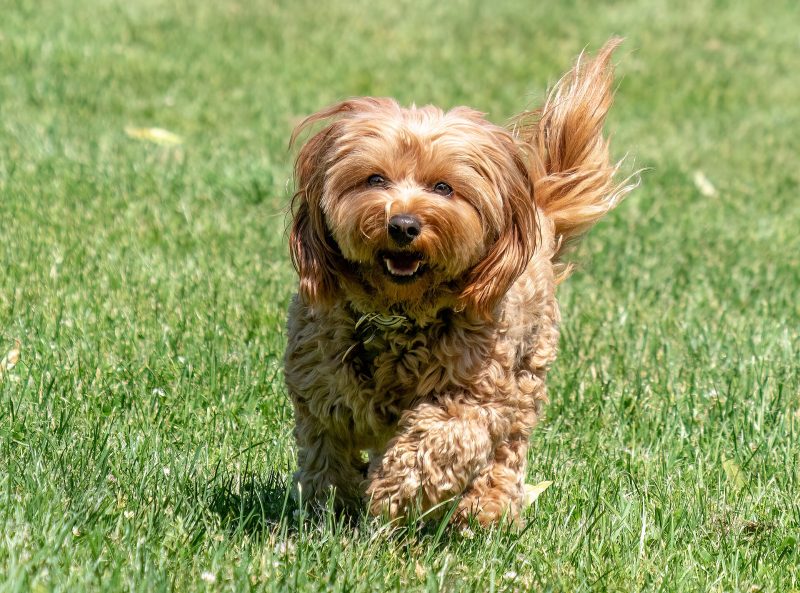
Typical tendencies
Energy level
Ready to go when you are, settles after.
Good with children
A famously patient playmate for kids.
Good with other dogs
Loves every dog at the park.
Trainability
Lives for the lesson; a trainer's dream.
Shedding
A light scatter, easy to keep up with.
Apartment friendly
A natural fit for city living.
More traits
Exercise needs
Adaptability
Grooming needs
Drooling
Intelligence
Family friendly
Good with cats
Friendly with strangers
Sociability
Protectiveness
Prey drive
Overview
The Cavapoo is a cross between a Cavalier King Charles Spaniel and a Miniature or Toy Poodle, bred to put the Cavalier's sweet, cuddly temperament into a smaller-shedding package. It is not a recognized breed and has no standard, so dogs vary in size, coat and personality, but the typical Cavapoo is a small, soft, affectionate companion that loves laps, children and other pets and asks for only modest exercise.
It suits first-time owners, apartment dwellers, seniors and families with gentle children, and it is one of the easiest small dogs to live with provided someone is home much of the day. It is not a dog for long solo hours, not a guaranteed allergy solution and not a low-grooming dog. Above all, the Cavalier parent brings serious inherited heart and neurological disease, so the breeder's health testing matters more for this cross than for most; choose carefully or adopt through a rescue that knows its dogs.
History & Origin
The Cavapoo belongs to the second wave of designer crosses that followed the Labradoodle. In the late 1990s breeders in Australia, where the cross is called the Cavoodle, began pairing Cavalier King Charles Spaniels with small Poodles, and American breeders soon followed, all looking for a toy-sized companion with the Cavalier's famously gentle nature and the Poodle's curly, lower-shedding coat and sharper mind. There was also a health motive: the Cavalier carries a heavy burden of heart disease, and some hoped that outcrossing to a Poodle would dilute it.
The cross became hugely popular in Australia in the 2000s, helped by celebrity owners, and spread through the United States and Britain in the 2010s, where it now ranks among the most sought-after small dogs. No kennel club recognizes the Cavapoo, there is no breed club with authority over breeders, and most litters are first crosses or backcrosses rather than multigenerational lines. Its history, in other words, is still being written by individual breeders, which is why their standards matter so much.
Appearance
Without a standard, size follows the parents. Most Cavapoos stand 9 to 14 inches and weigh 9 to 20 pounds, with dogs from Toy Poodles at the small end and those from Miniature Poodles larger. The build is compact and slightly longer than tall, with a rounded head, a muzzle a little longer than a Cavalier's but shorter than a Poodle's, large, dark, round eyes with a soft, pleading expression and long, feathered drop ears. The tail is usually natural and carried happily.
The coat is soft and medium-length, ranging from gentle waves in first crosses to tight curls in Poodle backcrosses; a few dogs inherit the Cavalier's straighter, silkier, more shedding coat. Colors reflect both parents: apricot, red, cream, chocolate and black from the Poodle side, and the Cavalier's ruby, Blenheim (chestnut and white), tricolor and black-and-tan patterns. A Cockapoo is similar in size but usually has a longer muzzle and a leggier frame; a purebred Cavalier has a flat, silky coat and a flatter skull.
Temperament & Personality
Gentleness is the point of this cross, and most Cavapoos deliver it. The Cavalier contributes a soft, affectionate, endlessly tolerant nature and a strong wish to be touching a person at all times; the Poodle adds playfulness, alertness and quick intelligence. The result is a dog that is good with children, other dogs and cats, friendly to strangers after a polite hello, and happy to spend the evening in a lap. Energy is moderate: lively at the park, calm at home.
As with every cross, individuals vary. Dogs with more Poodle in them can be more sensitive, reactive or vocal, and surveys of doodle owners report that these crosses are not reliably calmer than their parent breeds. The most common problem is separation anxiety, because a Cavapoo is bred from two breeds that hate being alone. Prey drive is low to mild; watchdog ability is a bark at the door followed by a greeting. Early socialization keeps the natural friendliness from tipping into timidity.
Exercise & Activity
A Cavapoo needs a modest 30 to 45 minutes of exercise a day: a couple of walks, a game of fetch down the hallway or in the yard and some play with a person cover it. It is not a running partner, though a fit adult enjoys a longer weekend walk, and many Cavapoos like water and will paddle happily. Mental work matters: short training games, puzzle feeders and hide-and-seek with treats keep the Poodle brain busy and prevent the clingy restlessness that comes with boredom.
The Cavalier parent is a flat-faced breed, and some Cavapoos inherit a shorter muzzle that makes heat hard to handle, so exercise in cooler hours in summer and watch for noisy breathing. Cold is fine with a sweater for the smallest dogs. Puppies should play on their own terms rather than being walked long distances. Too little exercise shows up as whining, barking and following you from room to room.
30 to 45 minutes a day of walks and play
Short training games for mental stimulation
Avoid heat; watch breathing in shorter-faced dogs
Training
Cavapoos are willing, sweet-natured students that learn quickly for treats and praise. The Cavalier's wish to please and the Poodle's cleverness make basic manners easy, and many go on to trick training, rally and therapy-dog work, for which their gentle temperament is ideal. Use positive methods only; both parents are soft dogs that shut down under harsh handling. Keep sessions short and upbeat.
The common sticking points are housetraining, which can take months with a small, easily distracted dog and needs a strict schedule and a crate or pen, and separation anxiety, which is best prevented by teaching the puppy to rest alone for short, gradually lengthening periods from the first week. Teach a "quiet" cue early if the dog is a door barker, and practice recall around other dogs, since a Cavapoo will trot off to make friends. Socialize widely before 16 weeks and get the puppy used to brushing, combing and clipper noise, because grooming will be a lifelong routine. Puppy classes are a good start for first-time owners.
Grooming & Care
The Cavapoo's soft coat is low-shedding but high-maintenance. Wavy and curly coats mat easily and close to the skin, particularly behind the ears, under the collar, in the armpits and on the hindquarters. Brush thoroughly every two or three days with a slicker brush and then comb to the skin with a steel comb; daily brushing is wise during the coat change at 8 to 12 months. Most owners have a professional groomer clip the coat every 6 to 8 weeks, keeping the face trimmed so the eyes stay clear, and bathe at home only when the dog is dirty.
The heavy, feathered ears from the Cavalier side trap moisture and are prone to infection; check them weekly, clean when needed and dry them after baths or swims. Wipe tear stains daily on lighter-colored dogs. Trim nails every three to four weeks and brush teeth daily, since small mouths crowd teeth and periodontal disease is common.
Brush and comb to the skin every 2 to 3 days
Professional clip every 6 to 8 weeks
Weekly ear checks; daily tooth brushing
Health
Cavapoos typically live 12 to 15 years and inherit the risks of both parents; research on doodle crosses has not found them healthier than purebreds overall, though one survey found fewer slipping kneecaps than in Poodles. The Cavalier side is the serious one. Mitral valve disease, a degeneration of a heart valve, affects about half of Cavaliers by age five and nearly all by old age and is their leading cause of death; it appears in Cavapoos too. Syringomyelia, a painful spinal-cord condition linked to a skull malformation, is also inherited from the Cavalier. Both parents contribute hip dysplasia, luxating patellas, progressive retinal atrophy and cataracts; the Cavalier adds dry eye, allergic skin disease and episodic falling, and the Poodle adds Addison's disease and epilepsy at low rates. Ear infections and dental disease are common in the cross.
Ask a breeder for a cardiologist heart exam on both parents (ideally with the Cavalier parent's heart clear past age five), hip and patella evaluations, an ophthalmologist eye exam and DNA results for PRA-prcd and the Cavalier's episodic-falling and dry-eye mutations. For your own dog, keep it lean, schedule yearly heart checks from age one and ask your vet about any cough, exercise intolerance, neck scratching or limping.
Nutrition
Feed a complete and balanced small-breed diet for the right life stage: puppy formula until about 12 months, then adult food, in two measured meals a day; very small puppies should eat three or four times a day to keep blood sugar steady. Cavaliers are famous for gaining weight, and the Cavapoo inherits that appetite, so measure every portion, keep treats to a tenth of daily calories and feel for ribs under the coat. Extra weight makes heart disease, knee problems and breathing issues worse.
Choose a kibble sized for small mouths, and consider dental diets or chews to slow tartar. Some Cavapoos have sensitive stomachs or food-related skin and ear trouble; if that is your dog, ask your vet about diet before trying elimination plans or supplements on your own. Fresh water should always be available, and dogs on heart medication later in life may need dietary adjustments that your vet will guide.
Living With This Breed
The Cavapoo is an easy housemate: small, quiet apart from an alert bark, clean once housetrained and content in an apartment, a condo or a house with a yard. It travels well and settles anywhere its people are. It is gentle with children who are gentle back, friendly with other dogs and usually fine with cats. The one thing it cannot do is spend long days alone; this is a cross built from two of the most people-dependent breeds there are, and it does best with someone home or a companion animal.
Keep it cool in summer and warm in winter, and keep an eye on its weight. For a pet sitter or daycare, expect a dog that wants to be in your lap and may whine when first left; a calm routine, a walk and some play settle most. Keep ears dry after water, brush during any longer stay, and know whether the dog has a heart condition and any medication schedule.
Ideal apartment and family dog
Must not be left alone for long hours
Know the dog's heart history and medications
Interesting Facts
In Australia the cross is the Cavoodle, and Julia Gillard was given a Cavoodle puppy for her fiftieth birthday in 2011, while she was prime minister.
Breeders describe litters by generation: F1 is Cavalier times Poodle, F1b is an F1 bred back to a Poodle; neither predicts coat type or shedding reliably.
No kennel club recognizes the Cavapoo, so there is no standard, no closed registry and no official size category.
The Cavalier parent's heart disease is so prevalent that breed-club protocols advise breeding only dogs with clear hearts whose own parents were still murmur-free at five years old.
Studies measuring dog allergen in homes have found no evidence that Poodle crosses produce less of it, so a Cavapoo is a gamble for allergy sufferers.
A 2025 UK veterinary study ranked Cavapoos highest of the breeds examined for bouts of acute diarrhea, a reminder that a cross can have quirks of its own.
What Cavapoo owners say
Real pets, photos, stories and tips from the SitterNation community — separate from the editorial guide above.
Log in to add your pet, photos, stories and tips.
Meet Cavapoos on SitterNation
No Cavapoos have joined yet. Owners can show their pet here from the pet's profile.
Cavapoo community photos
No Cavapoos photos yet — be the first to share one.
Stories from Cavapoo owners
No stories yet. What is life with yours really like?
Tips from Cavapoo owners
No tips yet. One practical thing that works for you is enough.
Ask Cavapoo owners
No questions yet. Ask the people who live with the breed.