Typical tendencies
Energy level
Always on; boredom turns into mischief.
Good with children
Gentle and tolerant around children.
Good with other dogs
Gets along with known, polite dogs.
Trainability
Quick to learn and keen to please.
Shedding
Noticeable, with heavier seasonal blows.
Apartment friendly
Needs space and a garden to be happy.
More traits
Exercise needs
Adaptability
Grooming needs
Drooling
Intelligence
Family friendly
Good with cats
Friendly with strangers
Sociability
Protectiveness
Prey drive
Overview
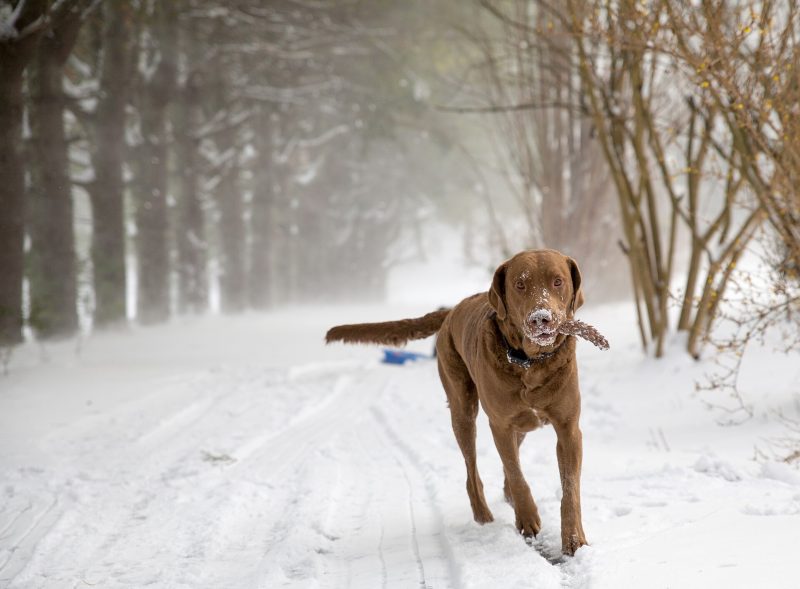
The Chesapeake Bay Retriever is the retriever for people who find Labradors a little too easy. Built in the 1800s to fetch hundreds of ducks a day from the near-freezing water of Maryland's great estuary, the Chessie is tougher, more independent and more protective than its Golden and Labrador cousins. It loves its own family deeply, is politely reserved with everyone else, and has the stamina to hunt, swim or hike all day.
This is a dog for active owners who enjoy training and can give it a job: fieldwork, dock diving, tracking, long swims or serious daily running. It is not a good first dog, a casual apartment companion or a pet for a household that is away all day. In return for structure and exercise you get a loyal, sensible, weatherproof partner that will guard the house and grin at you when you come home.
History & Origin
The breed's founding story begins in 1807, when an English ship foundered off the Maryland coast and two Newfoundland-type puppies, a red male called Sailor and a black female called Canton, were rescued and given to local families on opposite shores of the Chesapeake Bay. Their descendants were crossed with the area's working dogs, probably including Irish Water Spaniels, Flat-Coated and Curly-Coated Retrievers and some hounds, by the wealthy duck clubs that lined the bay. The goal was a retriever that could break ice, swim through heavy chop and keep working in brutal cold.
By the 1870s a recognizable regional type existed, shown under names like the Chesapeake Bay Ducking Dog, and the American Kennel Club accepted the breed in 1878, making it one of the first registered in the United States. The American Chesapeake Club was founded in 1918 and the Chessie became Maryland's official state dog in 1964. It remains one of the few retriever breeds developed entirely in America and is still used in the duck blinds where it started.
Appearance
The Chessie is a sturdy, medium-large retriever with none of the polish of a show Golden. Males stand 23 to 26 inches and weigh 65 to 80 pounds; females are 21 to 24 inches and 55 to 70 pounds. The body is slightly longer than tall, with a deep, broad chest, strong hindquarters that stand as high as or a touch higher than the shoulders, and large webbed feet. The head is broad with a medium stop, small hanging ears and clear yellowish or amber eyes that are a hallmark of the breed.
The coat sets it apart from every other retriever. It is short, no more than about an inch and a half long, harsh and distinctly oily, with a dense woolly undercoat, and it tends to wave over the neck, shoulders, back and loin while staying straight on the legs and face. Water beads off it like a duck's feathers. Colors are solid brown, sedge (a reddish yellow) and deadgrass (faded tan to dull straw), chosen to blend into a marsh; a small white spot on the chest or toes is allowed.
Temperament & Personality
Chessies are affectionate, loyal and emotionally complex. With their own people they are devoted and often clownish, famous for a toothy "smile" offered as a greeting or an apology. With strangers they are polite but reserved, and they take guarding the home and family seriously, which makes them better watchdogs than most sporting breeds. Early socialization is essential so that reserve does not harden into suspicion.
They are bright and willing but have a strong, independent mind and will test a soft handler. Energy is high outdoors and moderate indoors once needs are met; an under-exercised Chessie is restless and destructive. Most are good with children in their own family, especially active older kids, though they can be bossy with small ones. They tend to be fine with household cats they grow up with and selective with unfamiliar dogs, particularly same-sex dogs. This is a thinking, serious retriever rather than a happy-go-lucky one.
Exercise & Activity
Plan on at least an hour of hard exercise every day, and more for young adults. Swimming is the breed's favorite thing in the world and the best possible outlet; a Chessie will happily break ice to retrieve in January. Running, hiking, bike-jogging and long games of fetch all work, and structured sports such as retriever field trials, hunt tests, dock diving, tracking, agility and obedience give the busy brain something to do. Mental work matters as much as mileage: scent games, retrieving drills and new environments tire them out.
The oily double coat shrugs off cold and wet but holds heat, so in hot weather exercise early and late and provide water to swim or wade in. Young puppies should get free play and short walks rather than forced running until their joints mature.
Boredom shows up as chewing, digging, counter-surfing and barking.
A securely fenced yard is a tool, not a substitute for exercise.
Training
Chessies learn quickly and remember everything, including the things you wish they would forget. They respond best to a confident, consistent handler who uses rewards, clear rules and plenty of retrieving as a paycheck. Harsh corrections backfire; the breed is sensitive beneath its tough exterior and will shut down or dig in. Keep sessions short and purposeful, because repetitive drilling bores them and a bored Chessie starts improvising.
Start early and keep going. Puppy classes and wide exposure to people, dogs, places and noises build the stable adult you want, and a reliable recall is non-negotiable for a dog with this much drive and stamina. Common sticking points include mouthiness in puppies, possessiveness over retrieved objects and a tendency to guard the house too eagerly; address each calmly and early. Owners who enjoy fieldwork or dog sports find that a Chessie with a job is a different and much easier animal than one without.
Grooming & Care
The coat is low-maintenance by design. Brush once a week with a rubber curry or a firm bristle brush to lift dead hair and spread the natural oils, and more often in spring and fall when the undercoat sheds in earnest. Bathing is the one thing to go easy on: soap strips the oil that keeps the dog warm and dry, so bathe only a few times a year and never right before cold-water work. A rinse with plain water after swimming in salt or chlorinated water is plenty. The oily coat has a distinct musky smell that owners come to accept.
Never blow-dry or brush the coat flat; the wave is correct and the texture matters more than shine. Dry the ears after every swim and check them weekly for redness or odor. Trim nails every few weeks and brush teeth regularly.
Shedding is moderate year-round and heavy twice a year.
Check the belly and feet for ticks and burrs after fieldwork.
Health
The Chesapeake is a generally sound breed with a lifespan of 10 to 13 years, but several inherited conditions are known and most can be screened for. Hip and elbow dysplasia occur, and responsible breeders submit OFA or PennHIP hip evaluations and OFA elbow evaluations on breeding stock. Progressive retinal atrophy of the prcd type, exercise-induced collapse and degenerative myelopathy are all caused by known gene variants, so DNA tests for all three are part of the parent club's recommended panel along with an annual eye exam by a veterinary ophthalmologist for cataracts and other hereditary eye disease.
Other conditions seen in the breed include hypothyroidism, a chondrodystrophy gene linked to intervertebral disc disease, a rare ectodermal dysplasia that causes fragile skin, seasonal alopecia and epilepsy. As with any deep-chested dog, bloat is possible. Ask the breeder for the parents' test results, and ask your vet about weight, joint care and any wobbliness after hard exercise, which should be investigated rather than ignored.
Nutrition
Feed a complete diet matched to life stage and workload. Puppies do best on a large-breed growth formula that keeps them lean while the skeleton develops; ask your vet when to switch to adult food. Working adults that hunt or train hard in cold water burn far more calories than a pet doing a daily walk, so adjust portions with the season and the job rather than feeding the same scoop year-round. A dog in field condition should have a visible waist and easily felt ribs under that thick coat.
Chessies are enthusiastic eaters and will gain weight if allowed, which stresses hips and elbows. Measure meals, count treats and avoid free feeding. Split the daily ration into two meals and avoid vigorous exercise or swimming right after eating to lower bloat risk. Coat condition is a good barometer of nutrition; a dull, flaky coat is worth a conversation with your vet.
Living With This Breed
A Chessie belongs in a house with a yard and an owner who is outdoors a lot. Apartment life is possible only for a dedicated athlete who runs or swims the dog daily. Cold, wet climates are ideal; hot ones need careful management. They want to be with their people and do poorly left alone for long workdays, so plan for a midday walker or daycare that can handle a strong, selective dog.
With their own children they are patient and protective; with visiting kids and strange adults they are watchful, so introductions should be managed. Expect barking at arrivals, some wet-dog smell and a dog that considers the pond, pool or bathtub fair game.
For sitters and daycare staff:
Introduce yourself calmly and let the dog approach; do not rush it.
Walk on a secure harness or collar; the prey and water drive is strong.
Offer swimming or long walks, not just yard time.
Ask about resource guarding before handling toys or bowls.
Interesting Facts
The breed descends from two shipwrecked puppies, Sailor and Canton, rescued off Maryland in 1807 and raised on opposite shores of the bay.
It has been the official state dog of Maryland since 1964 and is the mascot of the University of Maryland, Baltimore County.
Theodore Roosevelt kept a Chessie named Sailor Boy at the White House.
The Chesapeake Bay sits on the Atlantic Flyway and hosts roughly a third of the waterfowl wintering on the East Coast, which is why the duck clubs needed such a tireless dog.
Old-timers claimed a good Chessie could retrieve 300 ducks in a single day; whether or not that is true, the breed's cold-water stamina is unmatched.
The oily coat and the famous Chessie "smile" are both breed signatures; the toothy grin is a greeting, not a threat.
Breeds similar to the Chesapeake Bay Retriever
What Chesapeake Bay Retriever owners say
Real pets, photos, stories and tips from the SitterNation community — separate from the editorial guide above.
Log in to add your pet, photos, stories and tips.
Meet Chesapeake Bay Retrievers on SitterNation
No Chesapeake Bay Retrievers have joined yet. Owners can show their pet here from the pet's profile.
Chesapeake Bay Retriever community photos
No Chesapeake Bay Retrievers photos yet — be the first to share one.
Stories from Chesapeake Bay Retriever owners
No stories yet. What is life with yours really like?
Tips from Chesapeake Bay Retriever owners
No tips yet. One practical thing that works for you is enough.
Ask Chesapeake Bay Retriever owners
No questions yet. Ask the people who live with the breed.