Typical tendencies
Energy level
Always on; boredom turns into mischief.
Good with children
A famously patient playmate for kids.
Good with other dogs
Loves every dog at the park.
Trainability
Quick to learn and keen to please.
Shedding
Noticeable, with heavier seasonal blows.
Apartment friendly
Needs space and a garden to be happy.
More traits
Exercise needs
Adaptability
Grooming needs
Drooling
Intelligence
Family friendly
Good with cats
Friendly with strangers
Sociability
Protectiveness
Prey drive
Overview
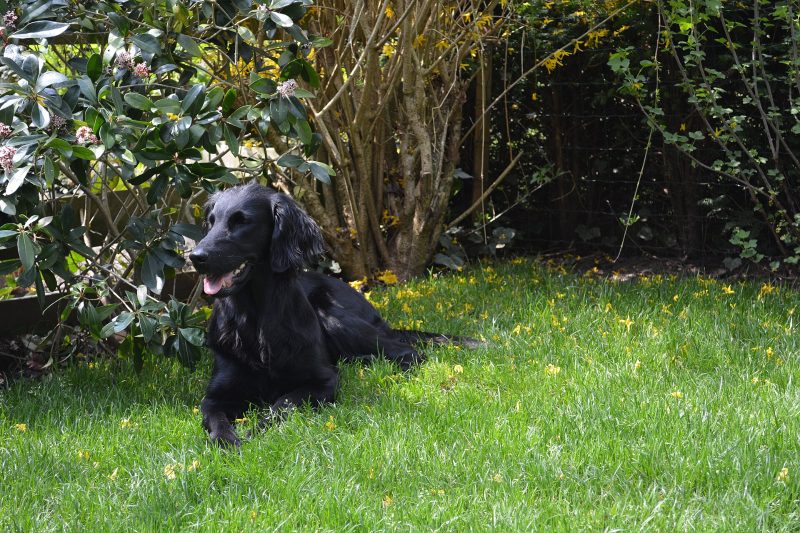
The Flat-Coated Retriever is the glossy black (or liver) cousin of the Labrador and the Golden, and the one that never quite grows up. Bred as a gamekeeper's all-round retriever in Victorian England, it is an exuberant, sociable, endlessly optimistic dog that greets strangers as friends, adores children and wants to carry something in its mouth at all times. Fanciers call it the Peter Pan of retrievers because the puppy spirit lasts into old age.
That energy is also the catch. A Flat-Coat needs real daily exercise, a job for its brain and people who are home; it is not a dog for a quiet apartment or a long working day alone. The breed sheds moderately and grooms easily. The hard truth is the lifespan: 8 to 10 years on average, with cancer the main reason. For an active family who understands that and wants a joyful, affectionate, trainable sporting dog, few breeds are as much fun to live with.
History & Origin
Retrievers took shape in Britain in the mid-1800s, when breeders combined the St. John's water dogs brought over on Newfoundland fishing boats with setters, spaniels and a little working collie to produce dogs that would fetch shot game on land and from water. The wavy-coated version of that mix, soon called the Wavy-Coated Retriever, was refined by S.E. Shirley, the sportsman who founded the Kennel Club in 1873, into a type with a flatter coat and a distinctive long, clean head. H.R. Cooke's Riverside kennel then dominated the breed for half a century, and by 1900 the Flat-Coat was the gamekeeper's standard dog across England.
The AKC registered the breed in 1915, but the Labrador and the Golden soon took over the shooting field and the show ring, and by the end of World War II the Flat-Coat was close to disappearing. Stanley O'Neill led the small group who rebuilt it, and one of his liver bitches went to Ohio in 1953 to start the modern American population. The Flat-Coated Retriever Society of America formed in 1960. The breed has never been numerous since, which its admirers consider a feature.
Appearance
A Flat-Coated Retriever is a lean, elegant gundog that looks lighter than a Labrador and longer than a Golden. Males stand 23 to 24.5 inches at the shoulder and weigh 60 to 80 pounds; females run 22 to 23.5 inches and 55 to 70 pounds. The head is the breed's signature: long and clean, with the skull and muzzle on the same plane and only a slight stop, giving a one-piece look that fanciers prize. Ears are small and lie close, and the dark eyes have a famously bright, friendly expression. The tail is carried straight and level and seldom stops moving.
The coat is moderately long, straight and flat-lying, with a protective undercoat and feathering on the ears, chest, legs and tail. It comes in two colors only, solid black and solid liver, and it gleams when the dog is in condition. A black Lab has a short coat and a broader head; a Golden is cream to red and heavier in build; a Curly-Coated Retriever has tight curls. The Flat-Coat's long head and shining flat coat set it apart at once.
Temperament & Personality
The breed standard describes the Flat-Coat as confident, happy and outgoing with a tail that is always wagging, and the dog delivers. Flat-Coats love people, every person, and treat strangers as friends they have not met yet, which makes them hopeless guard dogs and wonderful hosts. They are gentle with children and tolerant of toddler handling, though a bouncing 70-pound dog needs supervision around small kids. With other dogs they are playful and easygoing, and most live peaceably with cats, especially when raised together.
Indoors a well-exercised Flat-Coat is affectionate and a little silly, prone to carrying shoes and leaning on laps; outdoors it switches on and goes. The breed is more independent than a Golden and keeps a sense of humor that can look like mischief. It is emotionally sensitive, takes harsh words to heart and wants to be with its family, so long days alone produce a dog that digs, chews or finds a way out. Maturity comes late, around three, and never entirely.
Exercise & Activity
Plan on at least 60 to 90 minutes of vigorous exercise a day for an adult Flat-Coat. Retrieving is the obvious outlet: a long session of fetch on land or, better, into water does more for this breed than any walk. Swimming is a passion and the dog will find water you did not know was there. Hiking, jogging once the dog is grown, field training, agility, dock diving and scent work are all welcome, and a mix of activities keeps the breed engaged. Mental work counts, so add training games and food puzzles.
Flat-Coats handle cold and wet with ease but can overheat in summer under the black coat; exercise early and late and use water as the cooling-off. Puppies should have free play and short retrieves, not forced running, until the joints mature at 12 to 18 months.
A bored Flat-Coat digs, chews, counter-surfs and escapes.
Even in old age, most want their daily retrieve.
Training
Flat-Coats are bright, eager and food- and toy-motivated, and they learn quickly when training is a game. Reward-based methods are the only ones worth using; the breed is sensitive and loses enthusiasm under correction, and enthusiasm is the whole point of a Flat-Coat. Keep sessions short and lively, end on a success and expect the dog to add a flourish of its own now and then. Puppy classes and wide early socialization build on the breed's natural friendliness.
The sticking points are exuberance and attention span. Jumping up to greet, mouthing in puppyhood and grabbing anything carriable all need redirecting into a sit and a legitimate toy. A reliable recall is important because the breed ranges when retrieving; practice it constantly and reward generously. Impulse control exercises help a dog that lives at full throttle. Many Flat-Coats excel in field trials, hunt tests, obedience, agility and therapy work, and a job of some kind is the surest route to a calm house dog.
Grooming & Care
The Flat-Coat is an easy breed to keep tidy. Brush once or twice a week with a pin brush or slicker, paying attention to the feathering on the ears, chest, legs and tail, where burrs collect and mats form. Shedding is moderate year-round and heavier in spring and fall, when more frequent brushing helps. Bathe every month or two, or after a swim in anything doubtful, and dry the feathering fully. Light trimming of the ears, feet and tail tip keeps the outline neat, but the body coat is never clipped.
The hanging ears trap moisture, so check and clean them weekly and always after swimming to head off infections. Trim nails every few weeks and brush teeth several times a week.
Rinse salt or chlorine out of the coat after a swim.
Check between the toes and in the feathering for grass seeds in summer.
A grooming session doubles as a weekly check for lumps, which matters in this breed.
Health
The Flat-Coated Retriever's average lifespan of 8 to 10 years is shorter than its cousins', and cancer is the reason. The breed has an unusually high rate of histiocytic sarcoma, an aggressive tumor that most often appears in the muscle or around a joint of a limb but can also arise in the spleen, lungs or elsewhere; lymphoma, hemangiosarcoma and other soft-tissue cancers are also seen. There is no screening test for histiocytic sarcoma, so breeders study pedigrees and support the long-running tumor surveys funded by the parent clubs. Any new lump, limp or unexplained lethargy in a Flat-Coat deserves a prompt veterinary visit.
Beyond cancer the breed is fairly sound. Hip dysplasia and luxating patellas occur at modest rates, and glaucoma linked to abnormal drainage in the eye, called goniodysgenesis, is checked with a gonioscopy exam. Bloat is a risk in a deep-chested dog. The Flat-Coated Retriever Society of America asks breeders for OFA hip and patella evaluations and an annual eye exam by a veterinary ophthalmologist, with elbow, cardiac, thyroid and gonioscopy testing commonly added. Ask your vet about a preventive gastropexy and about regular senior checks.
Nutrition
Flat-Coats are active dogs with good appetites, and the goal is to keep them lean, which supports the joints and is one of the few things an owner can do that may help against disease in general. Feed a complete diet suited to life stage, measure meals and adjust to condition; you should see a waist from above and feel the ribs easily. Working dogs in the field season need noticeably more than a pet in winter.
Puppies should grow on a large-breed growth food that keeps calcium and calories moderate, so the skeleton develops slowly. Split the adult ration into two meals, avoid one large meal a day and keep hard exercise an hour away from feeding to reduce bloat risk; a slow feeder helps a dog that gulps. Use part of the daily kibble as training rewards, since this breed will work for every piece. Fresh water should always be available, especially after swimming and retrieving. Ask your vet before adding supplements.
Living With This Breed
A Flat-Coat needs a house with a fenced yard and a family that likes the outdoors; it is not an apartment dog and not a dog for people who are gone all day. It copes with cold and rain happily and with heat less well. The breed is excellent with children and other dogs and usually fine with cats, and its friendliness extends to burglars. Barking is moderate. Escape is a risk if the dog is bored, and a swimmable body of water nearby is an irresistible attraction.
Time alone should be limited to a few hours, with a midday walk or daycare on long days; this is a dog that was bred to work beside a person. For sitters and daycare staff, the main things to know are the energy, the retrieving obsession, the water-seeking and the habit of carrying items around.
Needs a secure fence and a leash near traffic.
Expect a greeting that involves a shoe or a toy.
Keep an eye out for new lumps and mention them to the owner.
Interesting Facts
The breed is called the Peter Pan of retrievers because its puppy-like enthusiasm lasts into old age.
Before the Labrador took over, the Flat-Coat was the gamekeeper's dog of choice across Edwardian England.
S.E. Shirley, the man who shaped the breed, also founded the Kennel Club in 1873 and served as its first chairman.
Flat-Coats won Best in Show at Crufts in 1980 and again in 2011, each time charming the crowd with a wagging tail in the ring.
The breed comes in only two colors, black and liver; a yellow Flat-Coat occasionally appears but cannot be shown.
The one-piece head, with skull and muzzle on the same plane, is so distinctive that judges can pick a Flat-Coat from a silhouette.
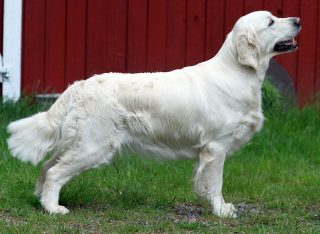
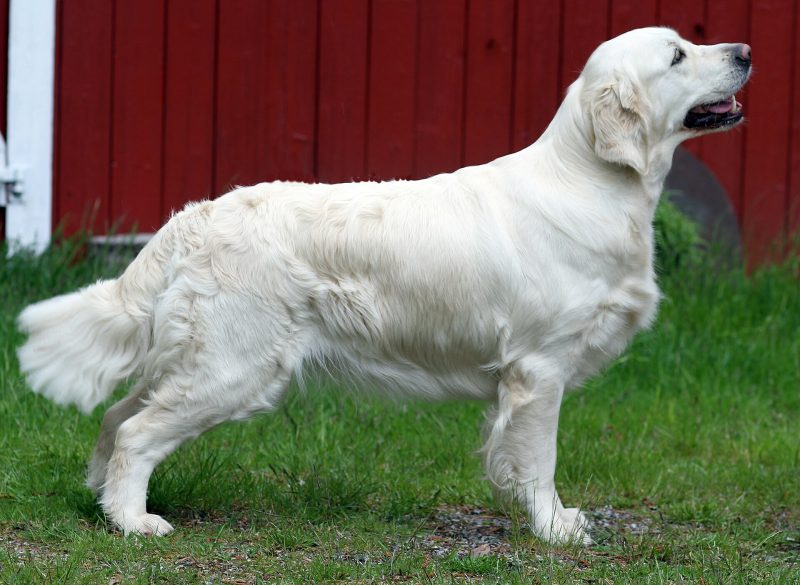
Breeds similar to the Flat-Coated Retriever
What Flat-Coated Retriever owners say
Real pets, photos, stories and tips from the SitterNation community — separate from the editorial guide above.
Log in to add your pet, photos, stories and tips.
Meet Flat-Coated Retrievers on SitterNation
No Flat-Coated Retrievers have joined yet. Owners can show their pet here from the pet's profile.
Flat-Coated Retriever community photos
No Flat-Coated Retrievers photos yet — be the first to share one.
Stories from Flat-Coated Retriever owners
No stories yet. What is life with yours really like?
Tips from Flat-Coated Retriever owners
No tips yet. One practical thing that works for you is enough.
Ask Flat-Coated Retriever owners
No questions yet. Ask the people who live with the breed.