Typical tendencies
Energy level
Always on; boredom turns into mischief.
Good with children
Patient with kids when well supervised.
Good with other dogs
Gets along with known, polite dogs.
Trainability
Picks up cues with steady, short sessions.
Shedding
Keep the lint roller within reach.
Apartment friendly
Can manage in a flat with plenty of outings.
More traits
Exercise needs
Adaptability
Grooming needs
Drooling
Intelligence
Family friendly
Good with cats
Friendly with strangers
Sociability
Protectiveness
Prey drive
Overview
The Dalmatian is the only breed developed to trot beside horse-drawn coaches for hours, and it has never forgotten it. Behind the famous spots is a lean, muscular athlete with enormous stamina, a quick mind and a strong need to be part of the family's daily business. It is loyal, playful and dignified, reserved with strangers and devoted to its own people.
This breed suits runners, hikers, cyclists and anyone with the time to exercise a dog hard every day and train it with patience. It does well with active older children and with other dogs, and it makes a dependable watchdog. It is a poor match for a sedentary household, for people who want an easy first dog, or for anyone who buys on looks after a film. Two inherited issues, deafness and urate bladder stones, make choosing a breeder who tests, and a vet who knows the breed, especially important.
History & Origin
Few breeds have murkier origins. Spotted dogs appear in European art for centuries, and church chronicles from the Croatian region of Dalmatia described a white, black-spotted hunting dog in the early 1700s, which is where the name comes from and why Croatia is the recognized country of origin. By 1790 the English naturalist Thomas Bewick was calling it the "Dalmatian or Coach Dog", and in Regency England the breed found its signature job: running alongside carriages, clearing the road and guarding the horses and luggage at inns overnight. The same instinct made it the companion of horse-drawn fire engines, which is how it became the firehouse mascot of American cities.
The Dalmatian was first shown in England in 1862, and the world's first breed club formed there in 1890. The AKC entered the breed in its stud book in 1888, and the Dalmatian Club of America was founded in 1905; it still runs road trials that test the old coaching instinct. Dodie Smith's 1956 novel and Disney's 1961 film made the breed famous, and each subsequent release has brought a boom in puppies followed by a wave of surrenders.
Appearance
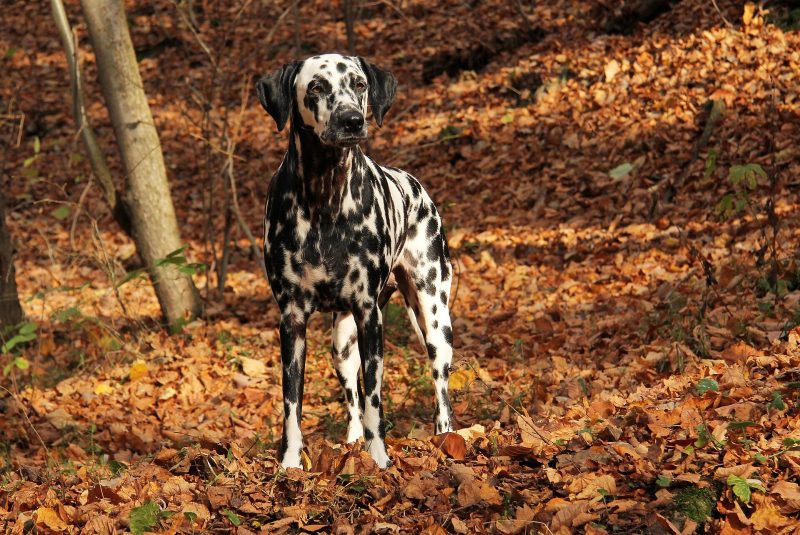
The Dalmatian is a clean-lined, medium-large dog built for endurance trotting. Height is 19 to 24 inches at the shoulder, with most dogs between 19 and 23, and weight runs 50 to 70 pounds for males and 45 to 60 for females. The body is square and muscular with a deep chest, a level back and strong hindquarters; the head is long with a flat skull, a moderate stop, round eyes and high-set ears that lie close to the head. The eyes are brown, blue or one of each, and the nose matches the spot color.
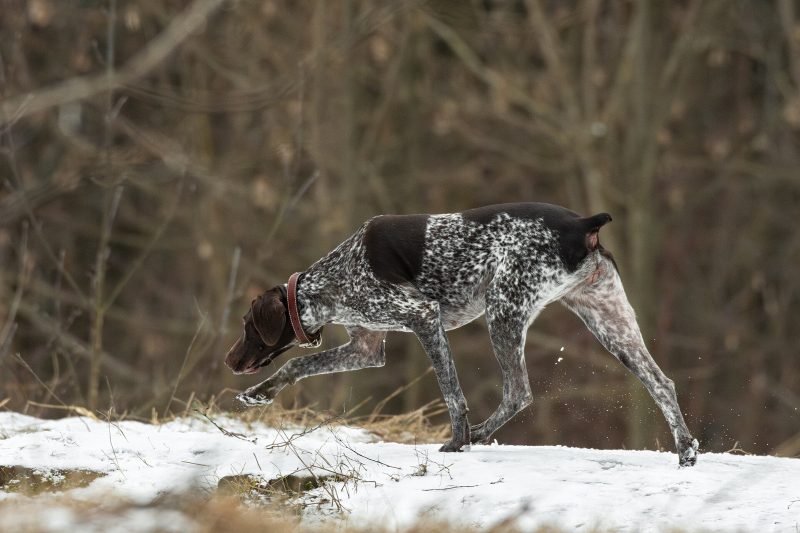
The coat is short, dense, fine and glossy, and it sheds year-round. Puppies are born pure white; spots begin to show at around two weeks and keep developing for months. The ground color is pure white with round, well-defined spots the size of a dime to a half-dollar in black or in liver, a deep reddish brown. Spots should be spread evenly and never merge into large patches. A Dalmatian is distinguished from a spotted Pointer or German Shorthaired Pointer by its uniform round spots, longer ears and the easy, far-reaching trot.
Temperament & Personality
Dalmatians are bright, high-spirited and deeply attached to their people. At home they are affectionate and often clownish, leaning on legs, shadowing you from room to room and trying to climb into laps that cannot hold them. They have long memories, a sense of humor and a stubborn streak. With strangers they are reserved and watchful, a leftover from guarding coaches, and they make alert watchdogs without being aggressive when properly socialized. Poorly bred or under-socialized dogs can be nervous or sharp.
Energy is very high outdoors and moderate indoors once exercised; an under-exercised Dal is restless, mouthy and destructive. They are generally good with children in their own family, though their size and bounce suit older kids better than toddlers. Most live well with other dogs and were historically kept with horses, which they still tend to adore. Cats and small animals are usually fine when raised together, with supervision. Deaf dogs, which occur in the breed, need their own training approach.
Exercise & Activity
A Dalmatian was built to cover 20 miles beside a coach and needs something like that outlet. Plan on a minimum of one to two hours of real exercise a day: running, cycling with the dog alongside, long hikes, swimming or hard games of fetch, not a stroll around the block. Many Dals make superb running partners once mature and can keep pace with a bicycle for miles. Dog sports such as agility, flyball, rally, road trials and canine fitness work give the body and brain a job together.
Hold off on repetitive road running until the growth plates close, around 18 months to two years, and build mileage gradually. The short coat offers little protection from cold or rain, so a coat helps in winter, and white skin sunburns in strong sun.
Boredom produces chewing, digging, fence jumping and constant pestering.
A tired Dalmatian is a lovely housemate; an under-exercised one is a hurricane.
Training
Dalmatians are intelligent and learn fast, but they are also independent, sensitive and easily bored, which makes them a challenge for inexperienced owners. Reward-based training with food, play and praise works; harsh handling makes them shut down or dig in. Keep sessions short, varied and upbeat, and expect a dog that will test whether rules apply today. Consistency across the whole household is essential.
Socialization is the most important investment you will make. Expose puppies calmly and widely to people, children, other dogs, traffic, vet handling and new places so the breed's natural reserve becomes confidence rather than suspicion. Mouthiness, jumping and pulling on leash are common adolescent problems and respond to patient management. A solid recall is worth months of work given the breed's stamina and curiosity. Deaf or unilaterally deaf Dalmatians train very well with hand signals, vibration collars and visual markers; ask the breeder for BAER results so you know what you are working with.
Grooming & Care
The Dalmatian's coat is easy to care for but sheds constantly, and the short white hairs weave into fabric like needles. A weekly session with a rubber curry comb or hound mitt pulls out dead hair and keeps the coat gleaming; during heavier spring and fall sheds do it every other day. Baths are needed only every couple of months or when muddy, because the coat is naturally clean and nearly odorless.
The hanging ears should be checked and wiped weekly. Nails grow quickly and must be trimmed every few weeks, since a trotting dog with long nails loses its gait. Brush teeth several times a week. Some Dals have sensitive skin and seasonal allergies, so watch for redness, scratching or recurring ear trouble and talk to your vet.
Lint rollers and a good vacuum are part of the deal.
Wipe the belly and feet after walks on salted or treated roads.
Health
Dalmatians typically live 11 to 13 years and are hardy, but two inherited conditions define breed health. Congenital deafness affects a substantial share of puppies in one or both ears, and the only reliable way to know is a BAER hearing test, which responsible breeders perform on every puppy before placement; the parent club requires BAER results, OFA hip evaluations and an eye exam by a veterinary ophthalmologist for its health certification. Blue eyes are linked with higher deafness risk, while dogs born with a solid-colored patch have a lower risk, although patches disqualify a dog in the show ring.
The second is hyperuricosuria. Every traditional Dalmatian carries a gene variant that makes it excrete high levels of uric acid, which can form urate crystals and bladder stones, most often in males, sometimes causing a dangerous urinary blockage. A backcross project introduced the normal gene and these low-uric-acid Dalmatians have been AKC-registrable since 2011. Other issues include skin allergies, hypothyroidism, epilepsy, hip dysplasia at low rates and copper-associated liver disease. Ask your vet about urine checks and bring straining or bloody urine in immediately.
Nutrition
Diet matters more for a Dalmatian than for most breeds because of the uric acid defect. Vets usually recommend a diet that is moderate in high-quality protein and low in purines, the compounds that break down into uric acid; organ meats, game, sardines and other purine-rich foods are typically avoided, while eggs, dairy and most vegetables are low. Plenty of water is the single most useful habit: a well-hydrated dog produces dilute urine in which crystals struggle to form, so keep bowls full, add water to meals and give frequent chances to urinate. Ask your vet which food suits your individual dog, especially if stones have ever been found.
Beyond that, feed a complete diet in two measured meals, keep the dog lean and athletic, and scale portions to the day's mileage. Puppies should grow slowly on a large-breed or all-life-stages food. Treats count; choose low-purine options.
Living With This Breed
A Dalmatian needs a home with room to move and people with time to move with it. A house with a securely fenced yard is ideal; an apartment works only for a committed runner. They want to be inside with the family, not kenneled outdoors, and they do poorly left alone all day. Temperate climates suit them; both heat and cold call for precautions because of the thin coat.
They live well with active children, other dogs and often horses, and with cats they know. Shedding is heavy and permanent. Barking is moderate but they will announce visitors. Some are escape artists when bored.
For sitters and daycare staff:
Confirm whether the dog is deaf in one or both ears and how it is cued.
Offer a real run, not just a yard break, and keep water available at all times.
Give frequent potty breaks; holding urine raises stone risk.
Check with the owner before offering any treats or table food.
Interesting Facts
Puppies are born completely white; the spots arrive at around two weeks and keep appearing for months.
The breed is the traditional mascot of fire departments because it once ran ahead of horse-drawn engines and calmed the horses in the station.
Dalmatians still escort the Budweiser Clydesdales on parade.
The 1961 Disney film and its sequels each triggered a puppy boom followed by a flood of shelter surrenders, a cautionary tale about buying a breed off the screen.
Croatia is the recognized country of origin; the earliest clear descriptions come from church records in Dalmatia in the 1700s.
Old English nicknames included the Plum Pudding Dog, because the spots looked like the fruit in a Christmas pudding.
Breeds similar to the Dalmatian
What Dalmatian owners say
Real pets, photos, stories and tips from the SitterNation community — separate from the editorial guide above.
Log in to add your pet, photos, stories and tips.
Meet Dalmatians on SitterNation
No Dalmatians have joined yet. Owners can show their pet here from the pet's profile.
Dalmatian community photos
No Dalmatians photos yet — be the first to share one.
Stories from Dalmatian owners
No stories yet. What is life with yours really like?
Tips from Dalmatian owners
No tips yet. One practical thing that works for you is enough.
Ask Dalmatian owners
No questions yet. Ask the people who live with the breed.