Typical tendencies
Energy level
Ready to go when you are, settles after.
Good with children
Fine with calm, respectful older kids.
Good with other dogs
Selective; careful introductions needed.
Trainability
Learns, but on its own schedule.
Shedding
Barely a hair on the sofa.
Apartment friendly
Settles well into smaller homes.
More traits
Exercise needs
Adaptability
Grooming needs
Drooling
Intelligence
Family friendly
Good with cats
Friendly with strangers
Sociability
Protectiveness
Prey drive
Overview
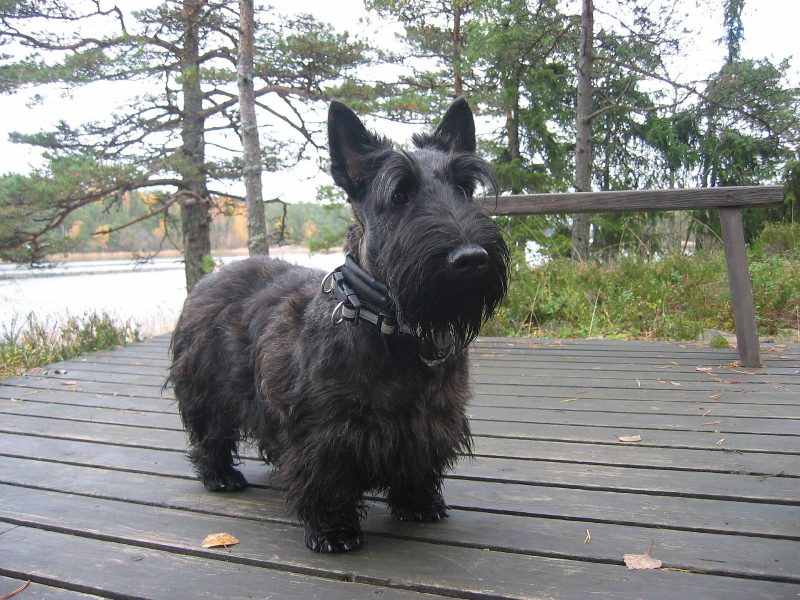
The Scottish Terrier is a small dog with a large opinion of itself. Short-legged, bearded and built like a brick, the Scottie was bred to go to ground after badgers and foxes in the Highlands, and it still carries that independence, courage and single-mindedness into the living room. It is dignified rather than cuddly, devoted to its own people, aloof with strangers and completely uninterested in pleasing anyone for its own sake.
Scotties suit adults and families with older children who appreciate a thinking dog with a dry sense of humor and who do not mind a terrier's stubbornness. They fit well in apartments and townhouses if walked daily, and they are tidy, light shedders. They are a poor choice for households with cats, rodents or small pets, for people who want instant obedience, and for anyone unwilling to pay for regular professional grooming. Managed well, a Scottie is a loyal, funny companion for 12 to 14 years.
History & Origin
Rough-coated earth dogs have worked the Scottish Highlands for centuries, killing rats, foxes, badgers and otters on farms and estates, and writers were describing them as early as the 1400s. For most of that time the various Highland terriers were lumped together, and the dog we now call the Scottish Terrier was sorted out from its Cairn, Skye and West Highland cousins only in the second half of the 1800s. In the 1870s breeders around Aberdeen exhibited a distinct type that briefly took the name Aberdeen Terrier. The first written standard appeared in 1880, the Scottish Terrier Club of England formed in 1881 and the Scottish club followed in 1888.
The first Scotties reached the United States in 1883, and the AKC registered the breed in 1885 with a dog named Prince Charlie. The Scottish Terrier Club of America was founded in 1900. Popularity peaked in the 1930s and 1940s, when the Scottie silhouette decorated everything from advertising to fabric and President Franklin Roosevelt's Fala became the most famous dog in America.
Appearance
The Scottie is a compact, heavy-boned terrier on short legs, standing about 10 inches at the shoulder and weighing 19 to 22 pounds for males and 18 to 21 for females. It is longer than tall, with a deep, broad chest that hangs low between the front legs, a short, level back and a carrot-shaped tail carried upright. The head is long for the size of the dog, with a flat skull, a strong muzzle, a large black nose and small, almond-shaped dark eyes under bushy eyebrows. The ears are small, pointed and erect.
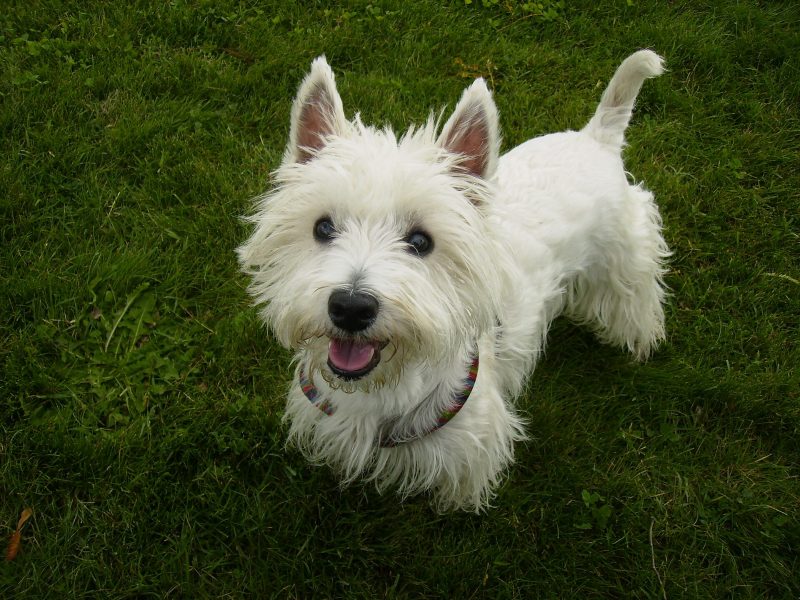
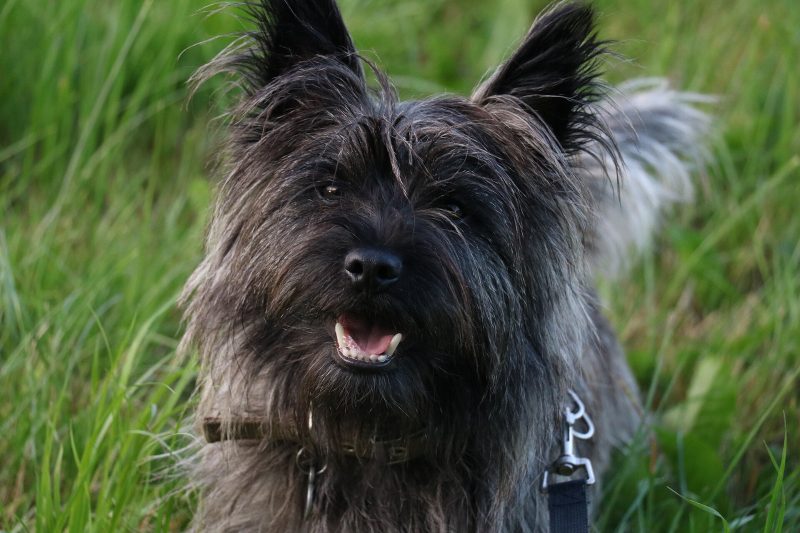
The coat is a hard, wiry outer jacket about two inches long over a soft, dense undercoat, with longer furnishings forming the distinctive beard, eyebrows, leg hair and skirt. Colors are black, which most people picture, plus wheaten, a pale gold, and brindle in shades from silver to dark red. Compared with a West Highland White Terrier it is darker, longer-headed and heavier; next to a Cairn it is bigger-boned, longer in body and more sculpted.
Temperament & Personality
Scotties are bold, independent and self-contained. They love their families but express it on their own terms, following you from room to room and settling nearby rather than demanding a lap. With strangers they are reserved and sometimes standoffish, and they make serious little watchdogs with a surprisingly deep bark. The breed's historic nickname, the Diehard, describes the stubborn determination that shows up whether the dog is digging for a mole or refusing to come inside.
Indoors they are calm and moderately active; outdoors they are busy hunters who investigate every hole and chase anything that moves. Prey drive is very strong, so cats, rabbits and rodents are generally not safe, and many Scotties are scrappy with unfamiliar dogs, especially of the same sex. They are best with older children who respect their space and dislike being grabbed or teased. Some are sensitive and sulk when scolded; most are happiest as the only dog or with a calm companion.
Exercise & Activity
A Scottie needs a moderate amount of exercise delivered with some variety: one or two brisk walks totaling 45 to 60 minutes a day, plus play that lets it dig, chase and tug. A game of fetch in a fenced yard, a flirt pole or a session of earthdog, barn hunt or scent work satisfies the hunting brain better than extra mileage. The short legs are not built for jogging or long bike rides, but a Scottie will happily hike for an hour or two on a cool day.
Keep them on leash or inside a secure fence at all times; a Scottie on a scent will not come back, and it will dig under a fence if it finds something interesting there. They tolerate cold weather well and heat poorly, so summer walks go early and late. Swimming is a bad idea; the heavy front and short legs make them poor swimmers.
Bored Scotties dig craters, bark at everything and become territorial.
Puppies should avoid stairs and jumping until their joints mature.
Training
Scotties are intelligent, and that is the problem. They learn quickly, decide for themselves whether an exercise is worthwhile, and remember any inconsistency. Successful training is short, varied and interesting, with food rewards, a cheerful voice and the dog convinced the whole thing was its idea. Repetitive drilling bores them into shutting down, and harsh handling turns them stubborn or defensive. Aim for sessions of ten to fifteen minutes and quit while the dog is still engaged.
Socialize early and thoroughly so the natural aloofness does not become suspicion, and introduce other dogs carefully to limit later scrappiness. Recall is unreliable in most Scotties because of prey drive, so train it anyway and manage with a leash. House training can be slow; a strict schedule and crate help. Resource guarding, digging and barking at passersby are the common sticking points. Many Scotties enjoy and excel at earthdog trials, barn hunt, scent work and agility once they decide the game is worth playing.
Grooming & Care
The Scottie's coat needs real commitment. Brush and comb two or three times a week, working through the beard, leg furnishings and skirt where food, mud and tangles collect, and wash the beard after meals. The outer coat is traditionally hand-stripped, pulling out dead hair to keep the texture hard and the colors rich; started in puppyhood and done every month or two, it keeps the breed's correct look. Most pet owners instead have a professional groomer clip the coat every six to eight weeks, which is easier but gradually softens the texture and lightens the color.
Bathe only when needed with a mild shampoo, since over-washing softens the jacket. Shedding is light. Trim nails every few weeks, check the erect ears weekly and brush the teeth regularly.
Budget for a groomer who knows terrier trims; a generic clip loses the outline.
Dry the beard and feet thoroughly in winter to prevent skin irritation.
Health
Scotties typically live 12 to 14 years, and the parent club runs one of the most organized health programs in the terrier world. Its current certification requires a DNA test for von Willebrand disease type III, a bleeding disorder; a DNA test for craniomandibular osteopathy, a painful bone growth of the jaw in puppies; and a veterinary patella evaluation for luxating kneecaps. Optional screens include a thyroid panel, an eye exam by a veterinary ophthalmologist, a bile acid test for liver shunts, a urine protein check for kidney disease and radiographs for Legg-Calvé-Perthes disease.
Two other conditions are closely associated with the breed. Scottie cramp is a harmless but alarming inherited movement disorder in which an excited dog goes stiff or somersaults for a minute and then recovers; there is no DNA test yet. Far more serious is bladder cancer: Scotties develop transitional cell carcinoma of the urinary tract many times more often than other breeds, usually in later life. Ask your vet about periodic urine screening for older dogs, and have blood in the urine or straining checked immediately. Cerebellar abiotrophy, allergies and Cushing's disease also occur.
Nutrition
Scotties are easy keepers that run to fat if indulged, and extra weight strains the long back and short legs. Feed a complete adult diet in two measured meals a day and adjust to activity; many breeders find that a moderate-protein food suits the breed well, and a healthy coat with no flaking or itching is a good sign the diet is working. Puppies should eat a small or medium-breed growth food on a schedule rather than free-fed.
Treats should be small and counted, and the beard makes food theft easy to spot and hard to prevent. Because the breed is prone to bladder cancer and some dogs form urinary stones, ample fresh water and regular opportunities to urinate are sensible habits; some veterinarians also suggest adding vegetables to the diet, which has been associated with lower cancer risk in the breed. Ask your vet before changing foods or adding supplements, and keep an eye on the waistline under all that hair.
Living With This Breed
A Scottie adapts well to apartments, townhouses and houses alike, as long as it gets daily walks and has somewhere to dig that you do not mind losing. It is quiet indoors and tolerant of a few hours alone, which suits working owners better than many small breeds. Cool climates suit it; hot ones require care. Expect barking at the door and at squirrels, and a fence inspected for weak points.
It is best with adults and older children and is not a dog for homes with cats, rabbits or hamsters. Unfamiliar dogs may be challenged regardless of size. Guests should let the dog make the first move.
For sitters and daycare staff:
Walk on leash only; the recall is not to be trusted.
Keep away from small animals and avoid rough group play with pushy dogs.
Do not grab, lift suddenly or reach over the head; approach calmly.
Rinse and dry the beard after meals and wet walks.
Interesting Facts
Fala, Franklin D. Roosevelt's Scottie, traveled with the president through World War II and is the only presidential pet with a statue at a presidential memorial in Washington.
The breed has won Best in Show at Westminster eight times, more than any breed except the Wire Fox Terrier, from Tickle Em Jock in 1911 to Sadie in 2010.
A Scottie has been a Monopoly token since the 1950s and consistently ranks as the most popular piece in player polls.
The nickname Diehard is credited to the first Earl of Dumbarton, who is said to have named his regiment after his fearless terriers.
Humphrey Bogart and Bette Davis both owned Scotties during the breed's 1930s heyday, and President George W. Bush kept Barney and Miss Beazley at the White House.
Along with a Westie, the Scottie fronts the Black and White whisky label, one of the most recognizable dog pairings in advertising.
Breeds similar to the Scottish Terrier
What Scottish Terrier owners say
Real pets, photos, stories and tips from the SitterNation community — separate from the editorial guide above.
Log in to add your pet, photos, stories and tips.
Meet Scottish Terriers on SitterNation
No Scottish Terriers have joined yet. Owners can show their pet here from the pet's profile.
Scottish Terrier community photos
No Scottish Terriers photos yet — be the first to share one.
Stories from Scottish Terrier owners
No stories yet. What is life with yours really like?
Tips from Scottish Terrier owners
No tips yet. One practical thing that works for you is enough.
Ask Scottish Terrier owners
No questions yet. Ask the people who live with the breed.