Typical tendencies
Energy level
Needs a real outlet most days.
Good with children
Gentle and tolerant around children.
Good with other dogs
Gets along with known, polite dogs.
Trainability
Picks up cues with steady, short sessions.
Shedding
A light scatter, easy to keep up with.
Apartment friendly
Settles well into smaller homes.
More traits
Exercise needs
Adaptability
Grooming needs
Drooling
Intelligence
Family friendly
Good with cats
Friendly with strangers
Sociability
Protectiveness
Prey drive
Overview
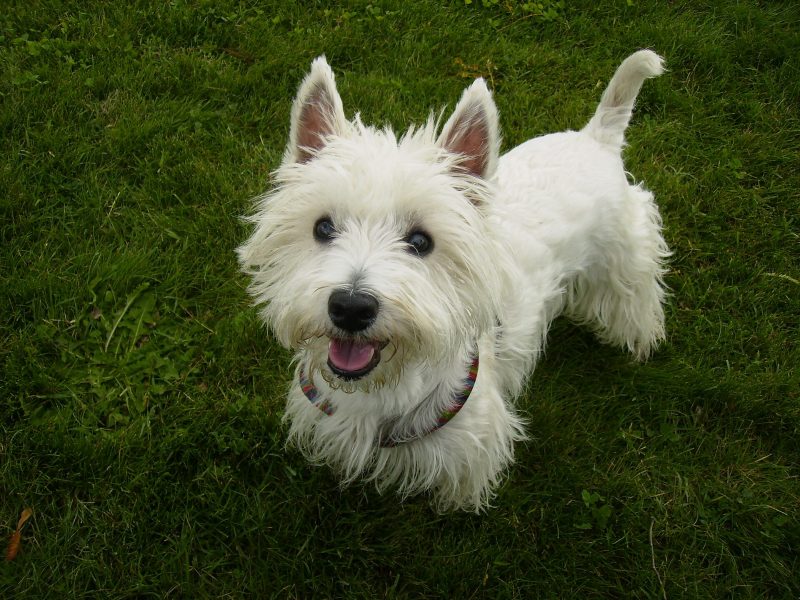
The West Highland White Terrier, the Westie, is a small, sturdy earthdog from Scotland with a harsh white coat, a jaunty carriage and a conviction that it is a much larger dog. It was bred to go underground after foxes and badgers, and the modern pet still digs, barks and chases with enthusiasm. It is also cheerful, sociable and portable, which is why it has been one of the most popular small terriers for a century.
Westies suit active households, including apartments, that want a confident little dog with personality rather than a lapdog. They are good with older children and generally friendly with strangers, but they need real exercise, consistent training and a coat routine that includes regular trimming. They are not a match for homes with rodents or rabbits, and their skin can be a long-term project. With a lifespan of 13 to 15 years, a Westie is a long and lively commitment.
History & Origin
Small, rough-coated terriers worked the farms and estates of the Scottish Highlands for centuries, bolting foxes, badgers and otters from rocky dens and killing vermin. White pups turned up in these litters from time to time, and white terriers from Argyll were recorded as early as the reign of James VI. The breed as we know it is credited to Colonel Edward Donald Malcolm of Poltalloch in Argyll. Legend says that after one of his reddish terriers was shot in mistake for a fox, he resolved to breed only white dogs that could never be confused with quarry.
Similar white strains were kept at Roseneath by the Duke of Argyll and at Pittenweem, and the dogs went by those names before the breed settled on West Highland White Terrier. The first breed clubs formed in Scotland and England in 1905, the Kennel Club recognized the breed in 1907 and it appeared at Crufts the same year. The American Kennel Club registered it in 1908 as the Roseneath Terrier and adopted the present name in 1909, the year the West Highland White Terrier Club of America was founded.
Appearance
A Westie is a compact, well-balanced terrier with a deep chest, short straight legs and a straight tail carried up like a carrot. Males stand about 10 to 11 inches at the shoulder and weigh 15 to 20 pounds; females are around 9 to 10 inches and 13 to 16 pounds. The head is rounded and framed by a ruff of longer hair, with a short, strong muzzle, a large black nose, small erect ears and dark, almond-shaped eyes set under heavy brows that give the typical piercing, inquisitive look.
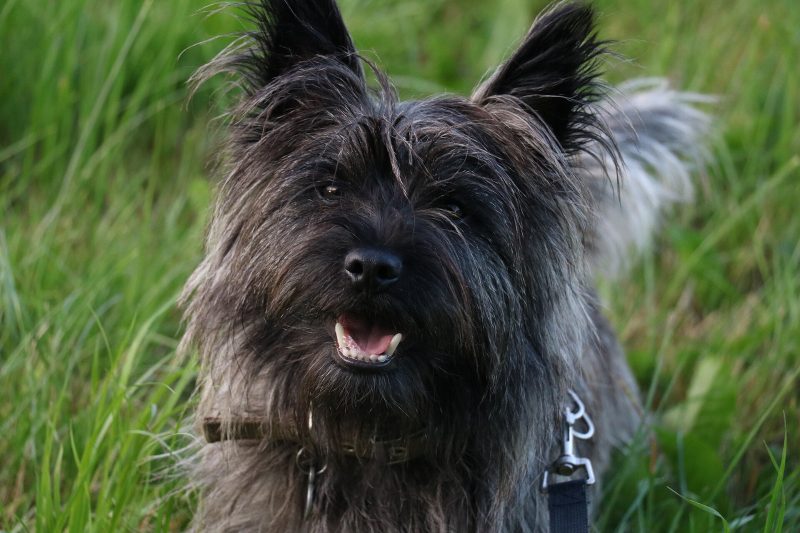
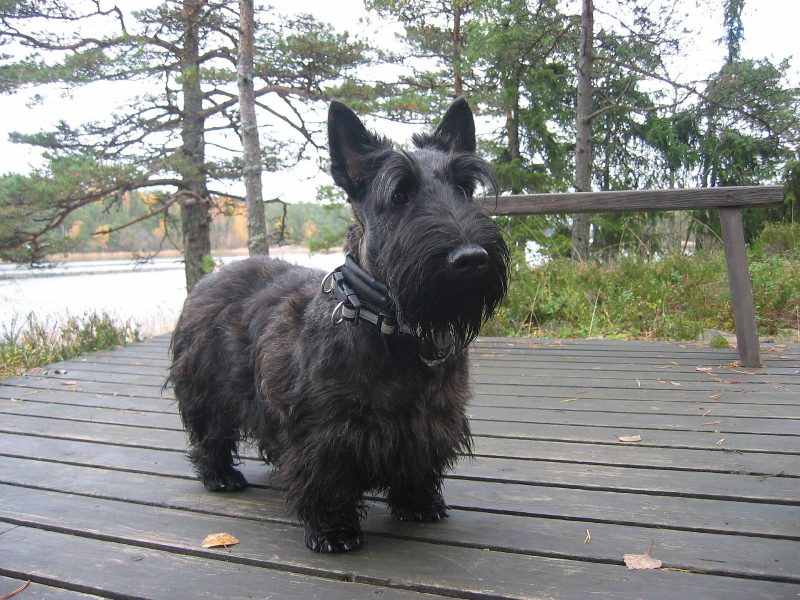
The coat is double: a hard, straight outer coat about two inches long over a soft, dense undercoat. It is always white, though a faint wheaten tinge sometimes appears. Show dogs are hand-stripped into a tidy outline with a fuller head and skirt; pets are usually clipped shorter. A Cairn Terrier comes in every color but white and has a shaggier look; a Scottish Terrier is longer, lower and darker; a Bichon or Maltese has soft, silky or curly hair rather than a harsh coat.
Temperament & Personality
Westies are self-assured, busy and good-humored. They greet the world with confidence, enjoy company and are generally friendly with strangers once they have announced them. Indoors they are lively but settle well; outdoors the terrier switches on, and everything from a leaf to a squirrel becomes a project. They are affectionate without being clingy and like to be involved in whatever the family is doing.
The breed's independent streak shows in a strong will, a tendency to bark at noises and a serious prey drive that makes small pets unsafe. Most Westies get on with other dogs, though some are scrappy and will not back down from a bigger dog. They are usually good with children who treat them respectfully but will not tolerate ear-pulling or being carried about, and some guard food and toys. Westies are not timid; a nervous or snappy one is poorly bred or poorly socialized. Expect a dog that thinks for itself and lets you know what it thinks.
Exercise & Activity
A Westie needs about an hour of activity a day and will take more. Two brisk walks with plenty of sniffing, plus a vigorous game of fetch or tug in the yard, keep most adults happy. They enjoy hiking, are quick enough for agility and shine at earthdog trials and scent work, which let them do what they were bred for in a controlled setting. Off-leash exercise belongs behind a fence; a Westie on a scent or a squirrel has no interest in your opinion.
The weatherproof coat means cold and rain are no obstacle, but white dogs can burn in strong summer sun and the breed overheats if pushed on hot days. Puppies should have free play rather than long marches until their joints mature at about a year.
A bored Westie digs craters, barks at nothing and redecorates the sofa.
Fences should be checked for gaps at ground level; this is a tunneling breed.
Short training games count as exercise for a terrier brain.
Training
Westies are bright and learn quickly, but they are terriers: they want to know what is in it for them and lose interest the moment training becomes a drill. Keep sessions short, playful and well rewarded with food or a tug toy, and change the exercise before the dog gets bored. Harsh corrections produce a stubborn, resentful dog; a Westie works for a partner, not a boss. Housetraining can take patience and a consistent schedule.
Start socialization early so the puppy's natural confidence extends to strange dogs, children and handling, and teach the puppy to accept grooming and nail trims from the first week. Barking is the main management problem; teach a quiet cue early and reward silence rather than shouting over the noise. Work on recall relentlessly, then still use a long line in open spaces. Resource guarding should be prevented by trading rather than grabbing. Many Westies excel at agility, rally and earthdog tests, where their drive becomes an asset.
Grooming & Care
The harsh white coat is lower maintenance than it looks but is not maintenance-free. Comb and brush two or three times a week, paying attention to the leg furnishings, beard and skirt where mats form, and wipe the beard after meals. Westies shed little, but dead hair stays in the coat until it is removed. Show dogs are hand-stripped, pulling out the dead outer coat so a new hard coat grows in; most pet owners have the dog clipped every six to eight weeks instead, which softens the texture over time but is far easier to live with.
Bathe only when needed, since over-washing dries the skin, and use a gentle shampoo; many Westies have sensitive skin. Check ears weekly, trim nails every few weeks and brush teeth regularly, because small dogs lose teeth early.
Watch for redness, scratching or dark staining on the feet and belly, which often signal allergies.
Keep hair around the eyes short so it does not irritate them.
Health
Westies are robust little dogs, but they are strongly predisposed to skin disease. Atopic dermatitis affects roughly a quarter of the breed, producing itchy feet, ears, armpits and belly that need lifelong management, and a severe form of generalized skin thickening is unique to Westies. Craniomandibular osteopathy, sometimes called Westie jaw, is an inherited bone disorder that causes painful jaw swelling in puppies and usually resolves by a year; a DNA test identifies carriers. Legg-Calve-Perthes disease, a deterioration of the hip in young dogs, and luxating patellas are the main orthopedic issues. Older Westies are prone to a progressive pulmonary fibrosis that causes breathing difficulty, and to chronic hepatitis, sometimes linked to copper storage. White shaker syndrome, Addison's disease, dry eye and cataracts also appear.
Breeders typically screen hips, patellas and eyes through the OFA and use the available DNA tests. Typical lifespan is 13 to 15 years. See your vet about persistent scratching, lameness in a young dog, a swollen jaw, a new cough or exercise intolerance.
Nutrition
A Westie does well on a complete and balanced food for small breeds, fed as measured meals twice a day. Puppies should eat a small-breed growth formula until about a year old. Westies are efficient eaters and gain weight easily, and the coat hides it, so judge condition by feel: you should find a waist and easily feel the ribs. A 17-pound dog needs surprisingly little food, and treats add up fast.
Diet matters more than usual in this breed because of the skin. Dogs with suspected food allergies may need a strict elimination diet trial, which only works if it is supervised by a vet and followed exactly for several weeks. Dogs diagnosed with copper-associated liver disease are usually managed partly through a diet low in copper, again under veterinary direction. Some owners find that omega-3 supplementation helps skin condition; ask your vet before adding anything. Avoid frequent diet changes in a dog with a sensitive gut, and keep fresh water available at all times.
Living With This Breed
Westies adapt to almost any home, from a city apartment to a farm, as long as they get out every day. They are tidy, shed little and are small enough to travel easily. Barking is the main consideration for close neighbors, and digging for anyone who values a lawn. The breed copes with a workday alone better than many small dogs, especially with a morning walk first, but it is sociable and happiest in company.
Westies fit families with school-age children and other dogs of similar energy. Cats raised with the dog are usually fine; rabbits, hamsters and birds are not.
Sitters should keep the dog leashed outside fenced areas and watch for holes under fences.
Note any skin medication or special diet; allergic Westies often have a routine.
A Westie may guard a food bowl or toy; feed separately from other dogs.
Daycare usually goes well; the breed enjoys a busy, social day.
Interesting Facts
A Westie has been the face of Black & White Scotch whisky since the 1890s, paired with a Scottish Terrier on the label.
Westies have won Best in Show at Westminster twice, in 1942 and 1962, and at Crufts three times, most recently in 2016.
The breed was briefly registered in America as the Roseneath Terrier before taking its present name in 1909.
Breed lore holds that Colonel Malcolm switched to white dogs after a favorite reddish terrier was shot by mistake for a fox.
A Westie has been the face of Cesar dog food in the United States for decades, one of the most familiar breed mascots in pet advertising.
A Westie's carrot-shaped tail was traditionally left long so a hunter could pull the dog back out of a burrow.
Breeds similar to the West Highland White Terrier



What West Highland White Terrier owners say
Real pets, photos, stories and tips from the SitterNation community — separate from the editorial guide above.
Log in to add your pet, photos, stories and tips.
Meet West Highland White Terriers on SitterNation
No West Highland White Terriers have joined yet. Owners can show their pet here from the pet's profile.
West Highland White Terrier community photos
No West Highland White Terriers photos yet — be the first to share one.
Stories from West Highland White Terrier owners
No stories yet. What is life with yours really like?
Tips from West Highland White Terrier owners
No tips yet. One practical thing that works for you is enough.
Ask West Highland White Terrier owners
No questions yet. Ask the people who live with the breed.