Typical tendencies
Energy level
Ready to go when you are, settles after.
Good with children
Gentle and tolerant around children.
Good with other dogs
Enjoys most canine company.
Trainability
Picks up cues with steady, short sessions.
Shedding
Barely a hair on the sofa.
Apartment friendly
A natural fit for city living.
More traits
Exercise needs
Adaptability
Grooming needs
Drooling
Intelligence
Family friendly
Good with cats
Friendly with strangers
Sociability
Protectiveness
Prey drive
Overview
The Shih-Poo crosses a Shih Tzu with a Toy or Miniature Poodle to make a small, easygoing lap dog with a soft, fluffy coat and an affectionate, slightly comic personality. It suits apartment dwellers, retirees, families with gentle children and anyone who wants a low-key companion that enjoys a short walk and a long cuddle. Most Shih-Poos are friendly with people and other pets, adaptable to new routines and content with modest exercise.
It is a cross rather than a breed, with no standard and no kennel-club recognition, and puppies in one litter can differ in size, coat and face shape. The Shih Tzu side can bring a short muzzle with breathing and eye issues, the Poodle side a curly coat that mats without regular brushing, and either side a stubborn streak at house-training time. A Shih-Poo also dislikes long hours alone. Choose a breeder who tests both parents, or adopt one of the many in rescue.
History & Origin
The Shih-Poo is a product of the North American designer-dog boom, bred deliberately from the 2000s and perhaps a little earlier, after the Cockapoo, Maltipoo and other small Poodle crosses had shown there was demand. Breeders paired Shih Tzus with Toy and Miniature Poodles to combine the Shih Tzu's calm, affectionate lap-dog nature with the Poodle's intelligence and curlier, lower-shedding coat, and to produce a puppy marketed as allergy-friendly. There is no founding breeder on record and no first litter anyone can document; the cross is also sold as Shihpoo, Shoodle and Pooshi.
No kennel club recognizes the Shih-Poo. The American Kennel Club registers the Shih Tzu and the Poodle separately, there is no written standard, and the cross cannot compete in conformation. Designer-dog registries will record a litter for a fee, which says nothing about quality. Most Shih-Poos are first-generation crosses; F1b dogs bred back to a Poodle have curlier, more predictable coats.
Appearance
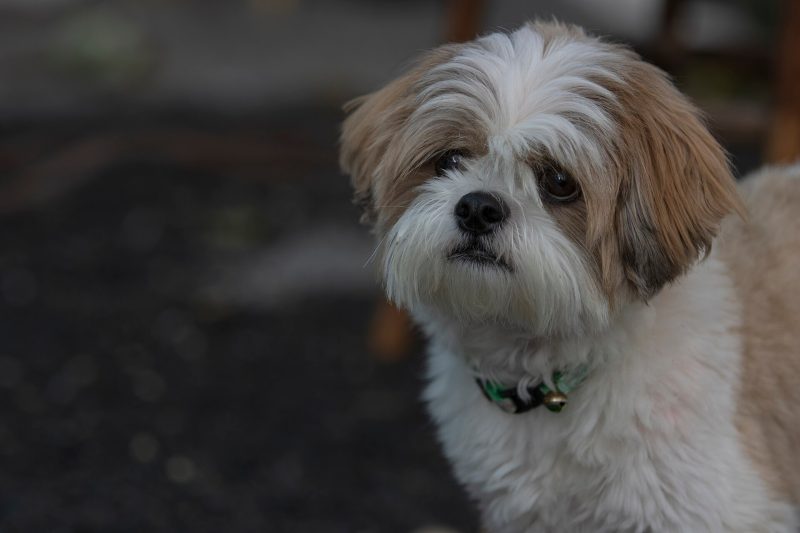
A Shih-Poo is a small, sturdy dog standing 8 to 13 inches and weighing 8 to 18 pounds, with Toy Poodle crosses at the small end and Miniature Poodle crosses at the large end. The body is compact and slightly longer than tall. The head varies: some puppies get the Shih Tzu's round skull, short muzzle and large, prominent eyes, while others inherit the Poodle's longer nose, and the difference matters for breathing and eye health. Ears are dropped and well feathered.
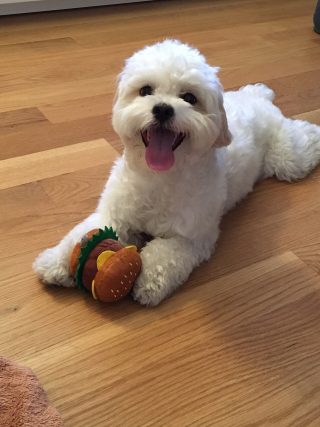
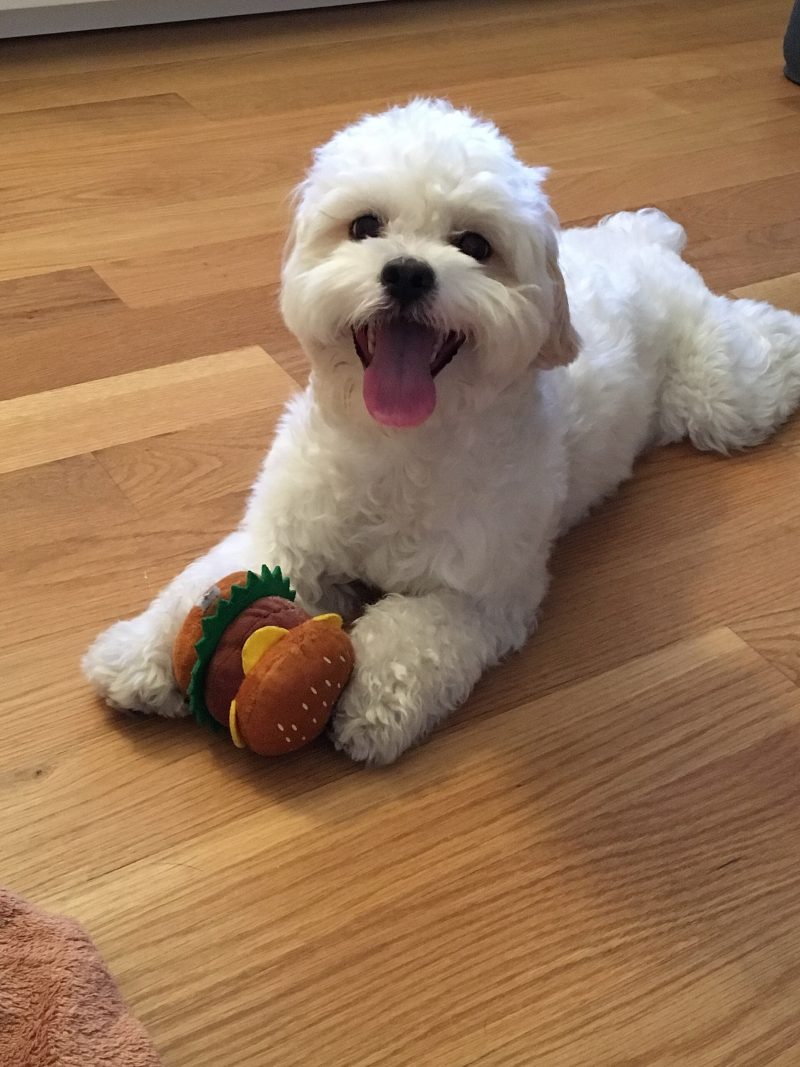
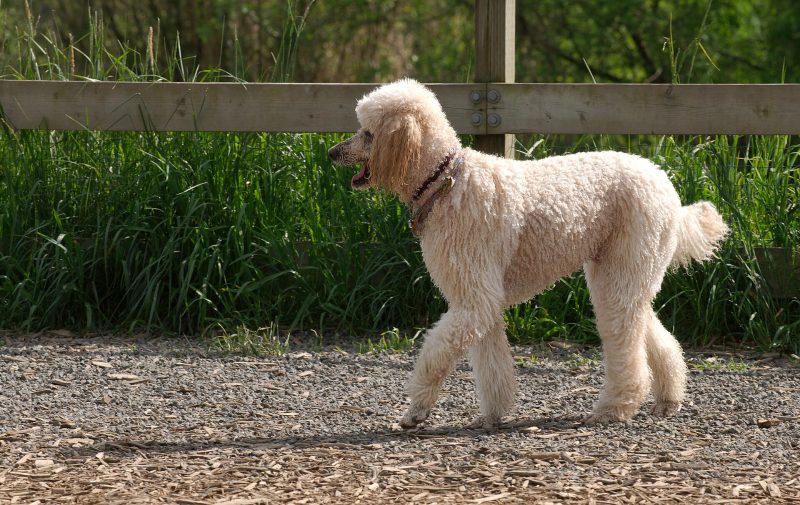
The coat is soft and fluffy and ranges from nearly straight to curly, usually medium length unless kept in a puppy clip. White, cream, apricot, black, brown, brindle and parti coats all occur, and many puppies lighten with age. Beside a Shih Tzu, a Shih-Poo is curlier and often longer in the muzzle; beside a Toy Poodle it is rounder-faced, broader and more teddy-bear-like.
Temperament & Personality
Shih-Poos are affectionate, easygoing and a little clownish. The Shih Tzu side brings a calm, companionable nature bred over centuries for palace laps; the Poodle side brings playfulness, alertness and a quicker mind. Indoors most are relaxed lap dogs that follow their people from room to room and nap through the afternoon; outdoors they are curious, sociable and happy to meet everyone on the block.
They are usually good with children who handle them gently, friendly with other dogs and tolerant of cats, with little prey drive. Strangers get a few barks and then a wag. Some Shih-Poos are more independent and stubborn, in the Shih Tzu manner, while Poodle-leaning dogs are more sensitive and eager to please. Because they bond closely, many dislike being alone for long and can become clingy or vocal. As with any cross, temperament varies within a litter, so meet the parents.
Exercise & Activity
A Shih-Poo needs about 30 minutes of gentle activity a day: a couple of short walks plus some indoor play is plenty. Poodle-leaning dogs enjoy longer outings and a game of fetch; Shih Tzu-leaning dogs would rather stroll and sniff. Neither needs a jogging partner.
A shorter muzzle limits panting, so avoid exertion in heat and humidity, walk early and late in summer and stop at the first sign of loud breathing. Cold is tolerable in a sweater for short trips. Mental games, such as food puzzles and short trick sessions, satisfy the Poodle brain. A bored Shih-Poo barks, chews and shadows you.
Use a harness rather than a collar to protect the windpipe and the prominent eyes.
Keep puppies off stairs and high furniture to protect small joints and backs.
Skip the walk on very hot days and play indoors instead.
Training
Shih-Poos are bright enough to learn quickly and stubborn enough to decide not to, depending on which parent they take after. Reward-based training with small treats, praise and play works best; harsh corrections make them shut down or dig in. Keep sessions short and cheerful.
House-training is the usual challenge. Both parents are known for slow progress, especially in rain or cold, so set a strict schedule, use a crate or pen, reward every success outdoors and expect the process to take months rather than weeks. Teach a quiet cue early to manage alert barking, and practice short, calm absences from the start so the dog learns to be alone. Handle feet, ears and face daily to make grooming easy later. Socialize puppies to people, children, larger dogs and car travel between 8 and 16 weeks. Many Shih-Poos enjoy rally, trick training and therapy-dog visits, where their calm, friendly manner shines.
Grooming & Care
The coat sheds very little, so loose hair stays put and mats unless it is brushed out. Brush every day or two with a slicker brush and finish with a metal comb to the skin, especially behind the ears, under the legs and around the collar. Curlier coats mat faster than straighter ones. Most owners keep a short puppy clip and visit a professional groomer every four to eight weeks.
The face needs daily attention. Keep hair trimmed away from the prominent eyes, wipe tear stains on light coats, and check the eyes for redness or squinting, since the Shih Tzu side is prone to scratches and dry eye. Clean the folded ears weekly and dry them after baths. Brush the teeth daily if possible; small mouths crowd teeth.
Bathe every three to four weeks with a mild dog shampoo.
Trim nails every three to four weeks.
Start grooming routines in puppyhood so the dryer and clippers are familiar.
Health
A Shih-Poo can inherit problems from either parent, and crossing does not cancel them. From the Shih Tzu come brachycephalic airway syndrome in short-muzzled dogs, eye disease including dry eye, corneal ulcers and injuries to the prominent eyes, intervertebral disc disease, patellar luxation, hip dysplasia, inherited kidney dysplasia, umbilical hernias and dental disease. From the Toy and Miniature Poodle come progressive retinal atrophy (prcd-PRA), patellar luxation, Legg-Calve-Perthes disease, epilepsy and collapsing trachea.
Ask a breeder for ACVO eye exams and veterinary patellar evaluations on both parents, hip results where available, a prcd-PRA DNA result on the Poodle, and a cardiac evaluation; some breeders also test for the gene linked to disc disease. A Shih-Poo with a longer muzzle usually breathes more easily, but ask your vet to assess the airway. Lifespan is typically 13 to 17 years, among the longest of the small crosses. See your vet promptly for noisy breathing, squinting or a cloudy eye, a skipping hind leg, back pain or excessive drinking.
Nutrition
Shih-Poos are small, so portion control matters. Feed a small-breed puppy food in three or four small meals a day until about six months, because tiny puppies can run low on blood sugar between meals; most adults do well on two measured meals a day. Ask your vet when to switch to adult food, usually around 9 to 12 months.
Both parents gain weight easily on a lap-dog lifestyle, and extra pounds strain small knees, the back and the airway of a short-muzzled dog. Measure every portion, keep treats to a tenth of daily calories and weigh the dog monthly. Small kibble suits a crowded mouth, and dental chews help between cleanings; shallow bowls are easier for a flat face. Because the Shih Tzu side carries a risk of inherited kidney disease, mention excessive thirst or urination to your vet early. Fresh water should always be available, and many Shih-Poos appreciate a little moisture added to dry food.
Living With This Breed
A Shih-Poo is an ideal apartment and small-home dog, quiet enough for neighbors if alert barking is managed and happy with a daily walk around the block. It adapts well to travel and new routines and tolerates most climates when protected from heat; air-conditioning is important for short-muzzled dogs in hot regions. Long days alone suit it poorly, so homes with someone around, or with sitters and daycare, are best.
Gentle children, other small dogs and cats make good companions. Supervise play with large dogs, since an 8-pound dog is easily hurt, and keep it away from pools, because most are weak swimmers.
For sitters: keep walks short in heat, use the harness and check the eyes daily.
Brush during the stay and wipe the face after meals.
Follow the feeding schedule; small dogs should not skip meals.
Interesting Facts
The Shih Tzu half of the cross was bred as a palace lap dog in imperial China, while the Poodle half retrieved ducks for hunters in Europe.
Shih-Poo, Shihpoo, Shoodle and Pooshi all name the same cross; none is official because no registry recognizes it.
Shih-Poos are among the longer-lived small dogs, with lifespans of 13 to 17 years common.
Many Shih-Poo puppies change color as they grow, with dark coats fading to silver or cream.
A Shih-Poo's muzzle length is a lottery: siblings from one litter can have a flat Shih Tzu face or a longer Poodle nose.
The friendly, unflappable temperament makes Shih-Poos frequent visitors at nursing homes as therapy dogs.

What Shih-Poo owners say
Real pets, photos, stories and tips from the SitterNation community — separate from the editorial guide above.
Log in to add your pet, photos, stories and tips.
Meet Shih-Poos on SitterNation
No Shih-Poos have joined yet. Owners can show their pet here from the pet's profile.
Shih-Poo community photos
No Shih-Poos photos yet — be the first to share one.
Stories from Shih-Poo owners
No stories yet. What is life with yours really like?
Tips from Shih-Poo owners
No tips yet. One practical thing that works for you is enough.
Ask Shih-Poo owners
No questions yet. Ask the people who live with the breed.