Typical tendencies
Energy level
Needs a real outlet most days.
Good with children
A famously patient playmate for kids.
Good with other dogs
Selective; careful introductions needed.
Trainability
Picks up cues with steady, short sessions.
Shedding
A light scatter, easy to keep up with.
Apartment friendly
Settles well into smaller homes.
More traits
Exercise needs
Adaptability
Grooming needs
Drooling
Intelligence
Family friendly
Good with cats
Friendly with strangers
Sociability
Protectiveness
Prey drive
Overview
The Staffordshire Bull Terrier is a compact, muscular English dog with a famously soft spot for people. Standing 14 to 16 inches and weighing 24 to 38 pounds, a Stafford is small enough for an apartment and tough enough for a long hike, and it spends most of its day trying to be as close to its family as possible. The breed is affectionate, playful and patient with children, and in Britain it is one of the most popular terriers. The trade-offs are real: many Staffords are selective about other dogs, they can be stubborn, and in some places the breed is caught up in breed-specific laws and insurance restrictions. It suits active families and first-time owners who will train and socialize early, and it does not suit anyone who wants a dog that is left alone for long days or that mingles freely at dog parks.
History & Origin
The Stafford descends from the bull-and-terrier crosses of early 1800s England, when Bulldogs were bred to local terriers to produce a smaller, quicker dog after bull baiting was outlawed in 1835. In the mining and ironworking towns of Staffordshire and the Black Country, these dogs were kept by working families and bred for gameness as much as for companionship. By the early 1900s the Stafford had become a distinct type, separate from the white show Bull Terrier. In 1935 fanciers meeting at the Old Cross Guns pub in Cradley Heath formed a breed club and wrote a standard, and The Kennel Club recognized the breed that year. The first English champions, Lady Eve and Gentleman Jim, were crowned in 1939, and the FCI followed in 1954. The breed reached the United States later: the AKC admitted it to the stud book in 1974, and Staffords began competing in the Terrier Group in 1975.
Appearance
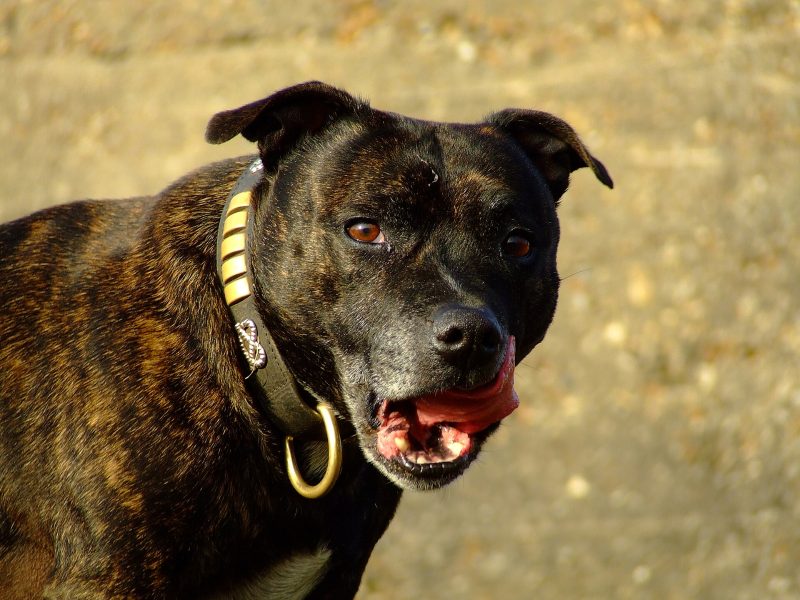
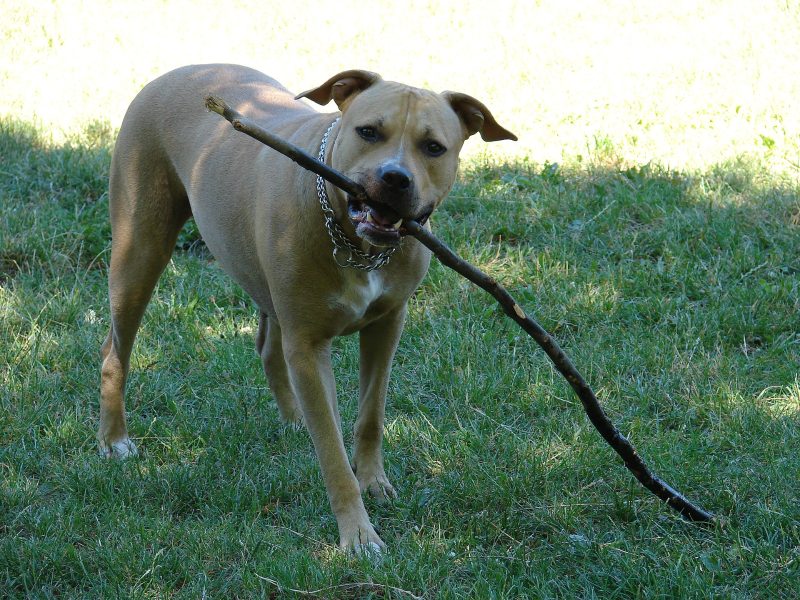
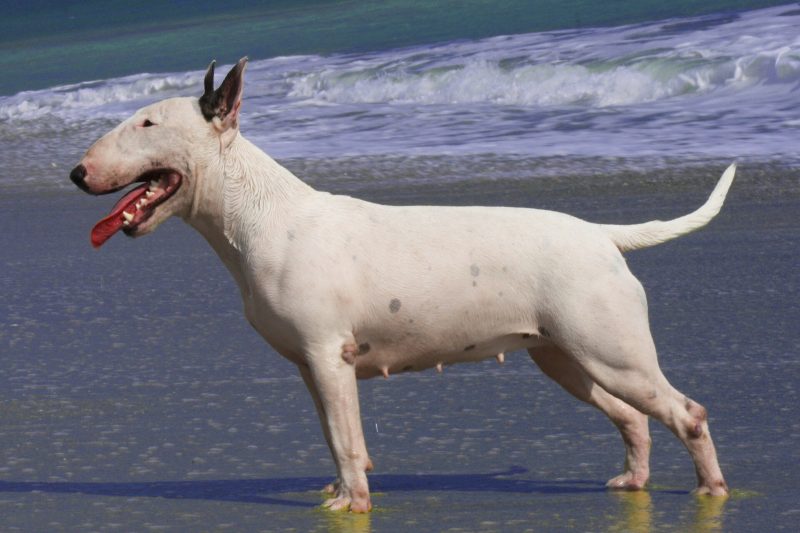
A Stafford looks like a lot of dog packed into a small frame. It is short-coupled and broad, with a deep chest, well-sprung ribs, strong hindquarters and a surprisingly agile gait. The head is broad and short with pronounced cheek muscles, a distinct stop and a short muzzle, and the ears are small and either rose-shaped or half-pricked. Dark, round eyes give an open, friendly expression, and the tail is medium length and carried low. The coat is smooth, short and close-lying, in red, fawn, white, black, blue or any shade of brindle, each of which may be combined with white. Compared with the American Staffordshire Terrier it is several inches shorter and much lighter, and compared with the Bull Terrier it has a conventional head rather than the egg-shaped profile.
Temperament & Personality
The Stafford is a people dog first and a terrier second. It greets visitors with a wagging whole body, leans on anyone who sits down, and wants to be involved in everything the family does. The breed standard calls for a dog that is bold and reliable, and most Staffords live up to it: they are confident, rarely nervous and generally quiet, barking mainly in play or to announce a visitor. With children they are patient and affectionate, although their enthusiasm can bowl over toddlers. Their weak point is other dogs. Many Staffords are friendly with dogs they know but will not back down if challenged, and some have a strong chase instinct toward cats and small animals. Indoors they are calm once exercised; outdoors they switch on and play hard. Left alone for long periods they become destructive and vocal.
Exercise & Activity
Plan on 60 minutes or more of activity a day, split into two brisk walks and a play session. Staffords love tug, fetch, flirt-pole games and anything that lets them use their strength, and they do well in agility, scent work, weight pull and rally. They are heat sensitive because of their short muzzle and dense build, so in summer walk early or late, bring water and watch for heavy panting. Their thin coat also means they feel the cold, so a coat helps on winter walks. Training games and puzzle feeders tire the mind, which matters as much as the body with this breed.
A bored Stafford chews furniture, digs and barks
Keep most play on leash or in a secure yard; recall around other dogs is unreliable
Avoid off-leash dog parks unless the individual dog is proven sociable
Training
Staffords are bright, food-motivated and eager to be with you, which makes them very trainable, but they are also strong-willed and easily distracted by other dogs. Positive, reward-based training with short sessions works best; harsh handling produces a dog that shuts down or pushes back. Start socialization early and keep it going into adulthood, with calm exposure to many people, dogs and environments. Teach a solid leave-it and a reliable settle, and work loose-leash walking from the beginning because a pulling Stafford is a handful. Mouthiness in puppies is common and should be redirected to toys. Adolescent dogs may start posturing at other dogs; manage that with distance and reward rather than confrontation. Sitters should ask about the dog's cues, leash habits and how it reacts to strange dogs before the first walk.
Grooming & Care
This is one of the easiest coats to care for. A weekly going-over with a rubber grooming mitt or soft brush removes loose hair and keeps the coat glossy; shedding is light to moderate with a heavier drop in spring and fall. Bathe only when the dog is dirty, because the thin coat dries quickly and over-bathing strips the skin's oils. Staffords are prone to skin irritation and allergies, so check the belly, armpits and feet for redness during grooming. Clean the ears every week or two, trim nails every two to three weeks and brush teeth several times a week.
Weekly brushing, occasional bath
Watch skin for redness, hot spots or hair loss
A coat for cold weather, shade and water in heat
Health
Staffords typically live 12 to 14 years and are a comparatively healthy breed. The two inherited conditions responsible breeders screen for by DNA test are L-2-hydroxyglutaric aciduria, a metabolic disorder that causes seizures, tremors and wobbly movement, and juvenile hereditary cataracts, which can blind a dog by two or three years old. The parent club also recommends an eye exam for persistent hyperplastic primary vitreous, hip and elbow evaluations, a patella check, a cardiac exam, and BAER hearing testing in some lines. Skin problems are common, including allergies and, in young dogs, demodectic mange, and dogs bred from two blue parents have more skin trouble. Mast cell tumors occur more often than in the general dog population, so have any lump checked. Ask your vet about screening results from the breeder, and see them promptly for lameness, eye cloudiness or unexplained wobbliness.
Nutrition
Feed a complete, balanced diet matched to life stage, measured out in two meals a day for adults and three or four for puppies. Staffords are enthusiastic eaters and gain weight easily, and a heavy Stafford is harder on joints and worse in the heat, so measure portions, count treats and keep an eye on the waistline. You should be able to feel the ribs under a light layer of fat. Because the breed is prone to skin allergies, some dogs do better on a limited-ingredient diet; discuss any itching or recurring ear problems with your vet before changing food. Fresh water should always be available, especially after play. Sitters should stick to the owner's portions and avoid table scraps, which can upset sensitive stomachs and encourage begging.
Living With This Breed
A Stafford adapts well to an apartment as long as it gets its daily exercise, and it is generally quiet indoors. It must live inside with its family; it is not a yard dog and it dislikes being alone for long stretches. It is excellent with children and good with other pets it grows up with, but new dogs and cats should be introduced carefully. Breed-specific legislation is a practical consideration. The Stafford is not banned under the UK Dangerous Dogs Act, but some cities, counties and housing providers elsewhere restrict bull-and-terrier breeds, and some insurers exclude them, so check local rules and your policy before adopting or moving.
Sitters: walk on leash with a secure harness, avoid dog parks, no exercise in heat
Daycare may suit a sociable individual; many do better with one-on-one care
Expect leaning, cuddling and a strong wish to be on the couch
Interesting Facts
The Staffordshire regiments have kept a bull terrier mascot since 1882, and since 1949 a line of Staffords named Watchman has carried on the tradition.
The breed club was founded in 1935 at the Old Cross Guns pub in Cradley Heath, and the first champions, Lady Eve and Gentleman Jim, were crowned in 1939.
In 2018 more than 180,000 people signed a petition opposing calls to ban the Stafford, and the UK government confirmed it had no plans to add the breed to the Dangerous Dogs Act.
Staffords have topped Terrier Group registrations at The Kennel Club for years, with around 5,000 puppies registered annually.
Gentleman Jim and Lady Eve, the first champions, both gained their titles in 1939, just before shows stopped for the Second World War.
Cooper, adopted by Staffordshire Police in 2018, was the force's first Stafford police dog.
Breeds similar to the Staffordshire Bull Terrier
What Staffordshire Bull Terrier owners say
Real pets, photos, stories and tips from the SitterNation community — separate from the editorial guide above.
Log in to add your pet, photos, stories and tips.
Meet Staffordshire Bull Terriers on SitterNation
No Staffordshire Bull Terriers have joined yet. Owners can show their pet here from the pet's profile.
Staffordshire Bull Terrier community photos
No Staffordshire Bull Terriers photos yet — be the first to share one.
Stories from Staffordshire Bull Terrier owners
No stories yet. What is life with yours really like?
Tips from Staffordshire Bull Terrier owners
No tips yet. One practical thing that works for you is enough.
Ask Staffordshire Bull Terrier owners
No questions yet. Ask the people who live with the breed.