Typical tendencies
Energy level
Needs a real outlet most days.
Good with children
Gentle and tolerant around children.
Good with other dogs
Gets along with known, polite dogs.
Trainability
Quick to learn and keen to please.
Shedding
Barely a hair on the sofa.
Apartment friendly
Fine in a flat if exercise is kept up.
More traits
Exercise needs
Adaptability
Grooming needs
Drooling
Intelligence
Family friendly
Good with cats
Friendly with strangers
Sociability
Protectiveness
Prey drive
Overview
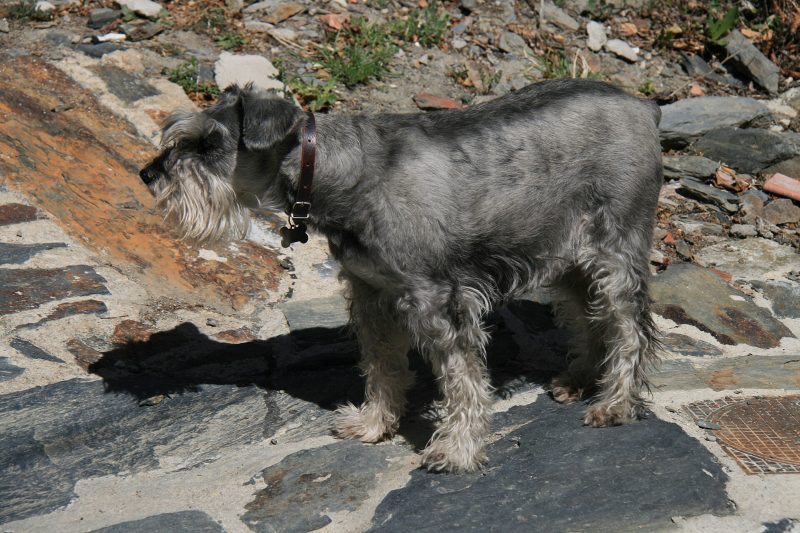
The Standard Schnauzer is the original schnauzer, a square, bearded, mid-sized German farm dog that guarded the cart, cleared the stable of rats and kept an eye on everything in between. Males stand 18.5 to 19.5 inches and weigh 35 to 50 pounds, females slightly less, and the breed is long-lived at 13 to 16 years. Standards are alert, athletic and very smart, with a strong protective streak and a habit of talking back. They suit experienced, active owners who enjoy training, want a reliable watchdog and are willing to pay for or learn coat care. They are not a good fit for people who want a soft, easygoing dog or who cannot commit to daily exercise and mental work, and their wariness with strangers means they need thorough socialization. Done right, a Standard is a loyal, playful, wonderfully sensible family dog that barely sheds.
History & Origin
Wire-coated pinscher-type dogs worked on farms in Bavaria and Wurttemberg for centuries, hunting rats, herding and driving stock to market and guarding the farmer's cart while he did business. Dogs of this type appear in German paintings from the 1400s and 1500s, including works by Albrecht Durer. The breed entered the show ring in 1879, when a dog called Schnautzer won the Wire-haired Pinscher class at an international show in Hanover; a first standard followed in 1880 and the name Schnauzer, from the German for snout, gradually replaced Wire-haired Pinscher. A German pinscher club was founded in 1895, and the Pinscher-Schnauzer-Klub still governs the breed in Germany. During World War I, Standard Schnauzers served as dispatch carriers and Red Cross aides. The first American registration came in 1904, the Wire-haired Pinscher Club of America was founded in 1925 and split in 1933 into separate Standard and Miniature clubs, and the AKC moved the Standard from the Terrier Group to the Working Group in 1945. The Giant and Miniature Schnauzers were both developed from the Standard.
Appearance
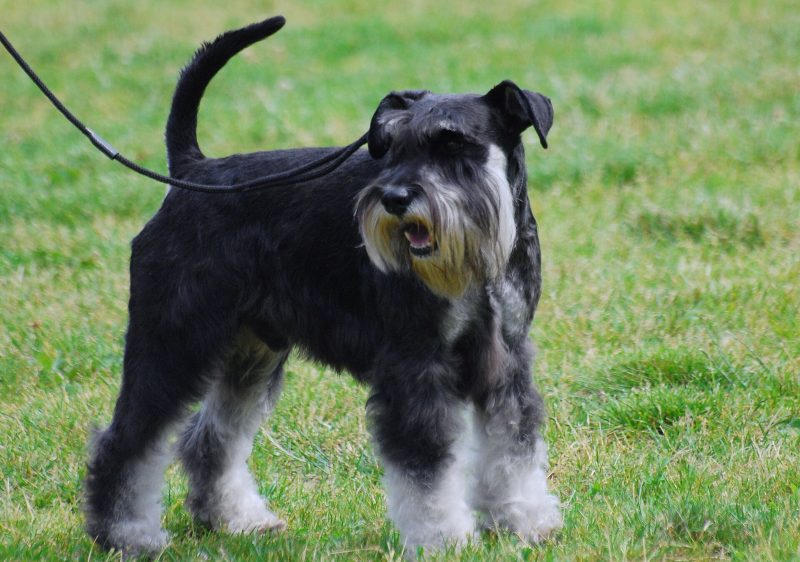
A Standard Schnauzer is a robust, square dog whose height equals its length, with a strong neck, a short straight back and a high-set tail. The rectangular head carries the breed's trademarks: arched, bushy eyebrows and a thick beard and mustache that make the muzzle look even stronger. Eyes are dark and oval, and the ears are V-shaped and fold forward, or stand erect where cropping is still practiced. The coat is a harsh, tight wire over a soft undercoat, kept short on the body and longer on the legs, face and underline. There are two colors: pepper and salt, in which each hair is banded light and dark to give an overall gray with a darker mask, and solid black. The Standard is the middle schnauzer, clearly bigger and sturdier than a Miniature and much smaller than a Giant, and next to a German Pinscher it has the same outline but a wire coat and furnishings.
Temperament & Personality
Standards are confident, lively and highly intelligent, with a sense of humor and a strong will. They bond tightly with their family, follow people from room to room and are typically patient and playful with children in their own household. They are natural guardians: watchful, territorial and reserved with strangers, barking to announce visitors and then accepting them once the family does. That protectiveness needs guidance so that it stays sensible rather than suspicious. Prey drive is real, and cats and small pets are safest when the dog is raised with them; some Standards are also pushy with unfamiliar dogs of the same sex. They are moderate barkers and have a long memory, both for lessons and for grudges. Indoors a well-exercised Standard is calm and companionable; a bored one digs, barks and redecorates. They thrive as part of the household and do not do well kenneled or ignored.
Exercise & Activity
A Standard Schnauzer needs a solid hour of exercise a day, and it would happily take more. Brisk walks, jogging, hiking, swimming and fetch all suit the breed, and it excels in agility, obedience, rally, herding, tracking, barn hunt and scent work. This is one of the most versatile performance dogs around, and a job of some kind keeps it content. Puzzle toys and training games count toward the daily total. The wire coat handles cold and wet well, while summer exercise should be moved to the cool hours. Use a well-fitted harness or collar; a Standard pulls hard when it spots a squirrel.
Fenced yard time is a bonus, not a substitute for walks and training
Boredom shows as digging, barking and chewing
Sitters should expect a strong, alert dog on leash and keep a firm hold near wildlife
Training
Standard Schnauzers learn quickly and remember everything, which cuts both ways: they pick up commands fast and also learn how to get around them. They respond to confident, consistent, reward-based training with food and play, and they lose respect for handlers who are inconsistent or heavy-handed. Keep sessions short and varied, because repetition bores them and a bored Standard improvises. Begin socialization early and keep it going through adolescence, with plenty of friendly strangers, calm dogs and new places, so that the breed's natural wariness becomes discernment rather than suspicion. Teach a quiet cue early, along with leave-it, loose-leash walking and a reliable recall. Puppies are mouthy and bossy, and clear household rules matter from the start. Many Standards love advanced work, from obedience titles to tracking, and the mental effort is the best cure for mischief.
Grooming & Care
The Standard's wire coat sheds very little but needs regular attention. Brush and comb it two or three times a week, paying attention to the leg furnishings, beard and underline, where mats form. Wash and comb the beard after meals, since it traps food and water. Pet dogs are usually clipped every six to eight weeks, which keeps them tidy but gradually softens the coat and fades the pepper-and-salt color; show dogs are hand-stripped two or three times a year to keep the harsh texture. Bathe monthly or as needed. Trim nails every two to three weeks, check and clean the folded ears every week or two and brush teeth several times a week. The eyebrows and beard need shaping to keep the breed's look.
Brush two or three times weekly; beard wiped daily
Clip or hand-strip every six to twelve weeks, depending on the method
Minimal shedding, no seasonal coat blow
Health
Standard Schnauzers are a sturdy breed and commonly live 13 to 16 years. The parent club recommends three screenings for breeding dogs: a hip evaluation through OFA or PennHIP, an eye examination by a veterinary ophthalmologist and a DNA test for the form of dilated cardiomyopathy found in the breed, a heart muscle disease that can cause weakness, collapse or sudden death in young adults and is now largely avoidable through testing. Other concerns include hypothyroidism, which is seen across all three schnauzer sizes and shows as weight gain, hair loss and lethargy, cataracts and retinal problems, pulmonic stenosis and other heart murmurs that a vet may detect in puppies, hemophilia A, a bleeding disorder, bladder stones and hair follicle infections of the skin. Ask your vet about any coughing, fainting, exercise intolerance, straining to urinate or unusual bruising, and ask breeders to show hip, eye and cardiomyopathy results.
Nutrition
Feed a complete and balanced food suited to the dog's age and activity, in two measured meals a day for adults and three or four smaller meals for puppies. Standards are athletic and usually keep a good weight when they work, but middle-aged and less active dogs gain easily, and extra weight stresses the hips and heart. Measure portions, keep treats to a tenth of daily calories and look for a visible waist and easily felt ribs. Some Standards bolt their food; a slow-feeder bowl or puzzle feeder helps and doubles as mental work. Because bladder stones occur in the breed, your vet may recommend a particular diet and plenty of water if a dog has formed stones, and hypothyroid dogs need their weight watched closely. Wipe the beard after meals. Sitters should feed the owner's portions and avoid rich treats, which can upset a Standard's stomach.
Living With This Breed
A Standard Schnauzer can live in an apartment with an owner who commits to a daily hour of exercise and training, but a house with a fenced yard is a more natural fit for a dog that likes to patrol. It must live indoors as part of the family and copes with a few hours alone once trained, though it will announce every delivery. Standards are good with respectful children, usually fine with cats and dogs they grow up with and wary of strangers until introduced, so visitors and sitters should be welcomed by the family first. The coat is fine in cold, wet climates and the breed handles heat with sensible care. Fences should be solid, because a Standard will chase a cat or rabbit over a low one.
Sitters: arrange a proper introduction with the owner present before the first solo visit
Expect alert barking at the door; a quiet cue helps
Daycare suits well-socialized Standards; some are selective about unfamiliar dogs
Interesting Facts
The name comes from the German word for snout, and Schnautzer was the name of the dog that won the Wire-haired Pinscher class at Hanover in 1879.
Albrecht Durer is believed to have owned a dog of this type, and similar bearded dogs appear in his work from the late 1400s.
Standard Schnauzers carried messages and helped the Red Cross find the wounded during World War I.
Both the Miniature and the Giant Schnauzer were bred from the Standard, which is why it is called the original schnauzer.
A Standard Schnauzer, Ch. Parsifal di Casa Netzer, won Best in Show at Westminster in 1997.
The AKC listed the breed with the terriers until 1945, when it was moved to the Working Group where it remains.
Breeds similar to the Standard Schnauzer
What Standard Schnauzer owners say
Real pets, photos, stories and tips from the SitterNation community — separate from the editorial guide above.
Log in to add your pet, photos, stories and tips.
Meet Standard Schnauzers on SitterNation
No Standard Schnauzers have joined yet. Owners can show their pet here from the pet's profile.
Standard Schnauzer community photos
No Standard Schnauzers photos yet — be the first to share one.
Stories from Standard Schnauzer owners
No stories yet. What is life with yours really like?
Tips from Standard Schnauzer owners
No tips yet. One practical thing that works for you is enough.
Ask Standard Schnauzer owners
No questions yet. Ask the people who live with the breed.