Typical tendencies
Energy level
Ready to go when you are, settles after.
Good with children
Gentle and tolerant around children.
Good with other dogs
Enjoys most canine company.
Trainability
Picks up cues with steady, short sessions.
Shedding
A light scatter, easy to keep up with.
Apartment friendly
Settles well into smaller homes.
More traits
Exercise needs
Adaptability
Grooming needs
Drooling
Intelligence
Family friendly
Good with cats
Friendly with strangers
Sociability
Protectiveness
Prey drive
Overview
The Tibetan Terrier is a shaggy, mid-sized companion with a big heart and a mind of its own. Despite the name, it has no terrier blood and none of the terrier's digging, ratting intensity; it was a monastery and farmstead companion in the Himalayas, kept for luck, watchfulness and company. What you get today is a sensitive, affectionate dog that bonds hard to its family, keeps a polite distance from strangers until introduced, and enjoys a good walk or hike without demanding a marathon.
The breed suits households that are home a fair amount, enjoy grooming or will budget for a groomer, and like a dog with opinions. It adapts well to apartments if walked daily, is gentle with respectful children and usually easygoing with other pets. The two things that trip up new owners are the coat, which mats quickly without regular combing, and the breed's dislike of being left alone for long stretches.
History & Origin
The Tibetan Terrier comes from the high plateaus of Tibet, where its ancestors are thought to have lived alongside monks and farming families for well over a thousand years. Tibetans called the dog the Tsang Apso, roughly "shaggy dog of Tsang province," and treated it as a bringer of good fortune: it was given as a gift rather than sold, and mistreating one was said to invite bad luck. Around monasteries and villages it kept watch, helped move flocks and reportedly scrambled down slopes to retrieve dropped items.
The breed reached the West through Dr. Agnes Greig, a British surgeon in northern India who was given a puppy by a grateful patient in 1922. She obtained a mate from Tibet and later founded her Lamleh line in England. The Kennel Club of India settled the name and standard in 1930, and Britain's Kennel Club followed in the late 1930s. The first dogs arrived in the United States in 1956, the American parent club formed in 1957, and the AKC recognized the breed in 1973, placing it in the Non-Sporting Group because it is not a true terrier.
Appearance
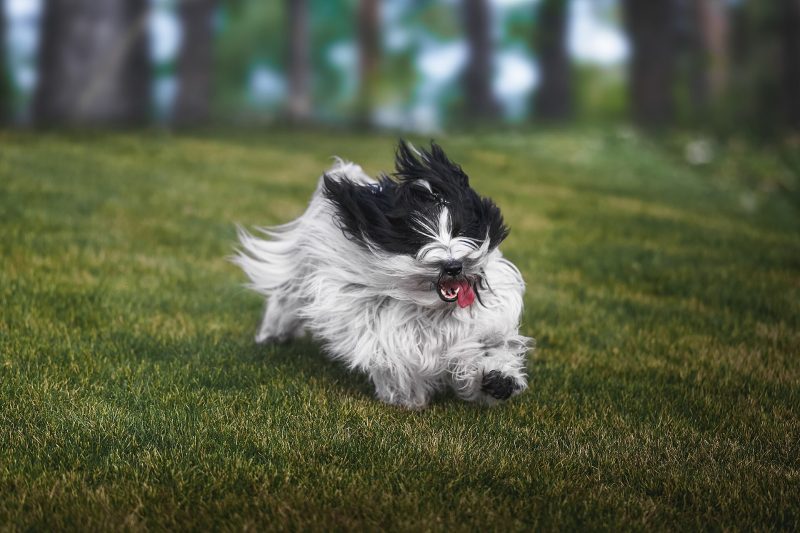
Picture a compact, square dog standing roughly 14 to 16 inches at the shoulder and weighing 18 to 30 pounds, hidden under a profuse coat that falls over the eyes and feet. The build is sturdy and well muscled, with a level back, a tail that curls over the loin and a medium-length head carrying a fall of hair over large, dark eyes. The feet are the breed's signature: broad, flat and heavily furred between the toes, working like snowshoes on mountain terrain and giving the dog a surprisingly sure-footed, bouncy gait.
The double coat has a fine, woolly undercoat and a long, straight or slightly wavy outer coat that should never be silky or curly. Almost any color or combination is allowed, from white, cream and gold through gray, smoke and black to parti-colors and tricolors; the FCI and UK standards exclude only liver, chocolate and merle, while the AKC accepts any color. The Lhasa Apso is the closest look-alike but is smaller, lower and longer in body, and the Polish Lowland Sheepdog is larger with a docked or bobbed tail.
Temperament & Personality
Tibetan Terriers are devoted, perceptive and a little bit cat-like in their independence. With their own people they are affectionate and playful, often following a favorite person from room to room and leaning in for attention. With strangers they are reserved rather than shy: a Tibetan Terrier will announce a visitor with a confident bark, watch for a while and then decide the newcomer is acceptable. This watchfulness made them useful sentinels in Tibet and makes them good alert dogs today, though they are not guard dogs and are rarely aggressive.
Indoors the breed is calm once exercised, happy to nap on a sofa and keep an eye on the household. Outdoors it is agile and energetic, with a love of climbing and jumping. Most are good with children who handle them gently, get along with other dogs and accept cats they were raised with. They are sensitive to tone and tension, and they dislike being alone for long periods, which can show up as barking or chewing.
Exercise & Activity
A Tibetan Terrier needs a moderate but real amount of activity: plan on 45 to 60 minutes a day split between a brisk walk, a sniffing stroll and some play. These dogs were built for rough terrain, so they love hiking, scrambling over rocks and bounding through snow, and they do very well in agility, rally and scent work, which also feed their quick minds. A fenced yard is a bonus, not a substitute for walks.
The heavy coat is a cold-weather asset but a summer liability; walk early and late in hot months and provide shade and water. Under-exercised Tibetan Terriers get restless, bark more and may redirect their energy into chewing or digging at carpets. Mental work matters as much as mileage: puzzle feeders, short training sessions and hide-and-seek games settle them.
45 to 60 minutes a day, including some off-leash play in a safe space
Great hiking and agility partner
Watch for overheating under the coat in summer
Training
The Tibetan Terrier is intelligent and learns quickly, but it was never bred to take orders, so it tends to ask "why?" before complying. Owners often joke that the dog trains them. The way through is positive, reward-based training in short, upbeat sessions: food, toys and praise all work, while harsh corrections make this sensitive breed shut down or dig in. Keep things varied, because repetitive drilling bores them.
Housetraining can take patience and a consistent schedule. Recall deserves early, steady work since a Tibetan Terrier on an interesting scent may choose to ignore you. Socialize puppies thoroughly before 16 weeks so that their natural reserve with strangers stays polite rather than tipping into suspicion, and teach a reliable "quiet" cue early because the breed likes to announce things. Crate training and gradually lengthened alone time help prevent separation anxiety. Many Tibetan Terriers excel at agility, rally, obedience and trick training once they decide the game is worth playing.
Grooming & Care
This is a high-maintenance coat, and honesty about that up front saves a lot of matted dogs. A full-length coat needs a thorough comb-through two or three times a week, more during the adolescent coat change at nine to twelve months, when the soft puppy coat tangles into the adult coat. Work in sections with a pin brush and a wide-tooth comb down to the skin, misting lightly first so the hair does not break, and pay special attention behind the ears, under the legs and around the collar.
Many pet owners keep the coat in a shorter "puppy cut" from a groomer every six to eight weeks, which cuts brushing to a quick weekly pass. Bathe every three to four weeks or when dirty, and dry thoroughly. The hair over the eyes can be tied up or trimmed. Shedding is light, but loose hair gets caught in the coat, which is why combing matters.
Comb to the skin 2 to 3 times a week in full coat
Trim the hair between the pads and check the ears weekly
Nails every 3 to 4 weeks, teeth brushed several times a week
Health
Tibetan Terriers are generally robust and long-lived, with a typical lifespan of 12 to 15 years; UK veterinary records put average life expectancy at about 14 years. The conditions breeders watch for are mostly inherited and mostly testable. Eyes are the main concern: primary lens luxation, several forms of progressive retinal atrophy and cataracts all occur in the breed. Neuronal ceroid lipofuscinosis, a rare but fatal nervous-system storage disease, also has a DNA test, and responsible breeders screen for it so that two carriers are never paired. Hip dysplasia and patellar luxation occur at moderate rates, and some lines see hypothyroidism, allergic skin disease and diabetes in middle age.
The parent club's recommended screening for breeding stock includes OFA or PennHIP hip evaluation, a patella exam, an annual eye exam by a veterinary ophthalmologist, BAER hearing testing and DNA tests for NCL, PLL and the PRA variants. Ask to see these results before buying a puppy. For your own dog, keep up yearly checkups and ask your vet promptly about cloudy or painful eyes, limping, weight gain or increased thirst, all of which can be early signs of the conditions above.
Nutrition
Feed a complete and balanced diet appropriate to life stage: a puppy formula until about 12 months, then an adult food, and a senior or lower-calorie food later if activity drops. Most adults do well on two measured meals a day; puppies need three or four smaller ones. Because the coat hides the body, judge condition with your hands, feeling for ribs under a light layer of fat, rather than by eye. Tibetan Terriers are not notorious gluttons, but neutered and less active dogs do gain weight, which stresses hips and knees.
Keep treats under about a tenth of daily calories, and use part of the regular ration for training rewards. Some dogs in the breed have food sensitivities that show up as itchy skin or ear trouble; if you suspect that, ask your vet before changing diets or adding supplements rather than trial-and-error at home. Fresh water should always be available, and a slow-feeder bowl is useful for the occasional fast eater. Wipe the beard after meals to keep the facial hair clean.
Living With This Breed
A Tibetan Terrier fits comfortably in an apartment or a house as long as it gets its daily outings and is not left alone for long workdays. It is a quiet-enough neighbor when its alert barking is managed early, but a bored or lonely one can be vocal. The breed tolerates cold with ease and heat poorly, so plan summer walks around the weather. Fencing should be solid and reasonably tall; these dogs climb and jump better than their size suggests.
The breed is a good family dog with children old enough to be gentle, and most live happily with other dogs and cats. For a pet sitter or daycare, the key notes are: expect a reserved first greeting and let the dog approach; keep it leashed outdoors because recall is optional; stick to the brushing routine or at least check for mats; and know that this dog does better with company and a walk than with a long empty afternoon.
Apartment-friendly with daily exercise
Needs company; long solo days are hard on it
Leash outdoors, secure fencing, shade in summer
Interesting Facts
It is not a terrier. European visitors to Tibet simply reached for the nearest familiar word for a smallish shaggy dog, and the name stuck.
Tibetans traditionally never sold these dogs; they were given as tokens of good luck, which is why the breed is sometimes called the Holy Dog of Tibet or the Luck Bringer.
The wide, flat, hair-covered feet act like built-in snowshoes and helped the dogs cross deep snow and scramble over rocks.
The breed owes its Western existence to a surgeon: Dr. Agnes Greig received her first one as a thank-you from a patient in 1922.
A 2024 UK study put the breed's typical life expectancy near 14 years, well above the average for purebred dogs.
Tibetan Terriers compete successfully in agility and are known for a bouncy, cat-like ability to leap onto furniture and walls.
Breeds similar to the Tibetan Terrier

What Tibetan Terrier owners say
Real pets, photos, stories and tips from the SitterNation community — separate from the editorial guide above.
Log in to add your pet, photos, stories and tips.
Meet Tibetan Terriers on SitterNation
No Tibetan Terriers have joined yet. Owners can show their pet here from the pet's profile.
Tibetan Terrier community photos
No Tibetan Terriers photos yet — be the first to share one.
Stories from Tibetan Terrier owners
No stories yet. What is life with yours really like?
Tips from Tibetan Terrier owners
No tips yet. One practical thing that works for you is enough.
Ask Tibetan Terrier owners
No questions yet. Ask the people who live with the breed.