Typical tendencies
Energy level
Calm at home with short bursts of play.
Good with children
Fine with calm, respectful older kids.
Good with other dogs
Gets along with known, polite dogs.
Trainability
Learns, but on its own schedule.
Shedding
A light scatter, easy to keep up with.
Apartment friendly
A natural fit for city living.
More traits
Exercise needs
Adaptability
Grooming needs
Drooling
Intelligence
Family friendly
Good with cats
Friendly with strangers
Sociability
Protectiveness
Prey drive
Overview
The Lhasa Apso is a small, long-coated dog with the self-possession of a much larger one, bred for a thousand years to stand watch inside Tibetan monasteries and palaces. Lhasas are devoted and affectionate with their own people, independent-minded, and quietly suspicious of strangers until they decide otherwise, which makes them excellent little sentinels and loyal companions for adults and families with older children. They suit apartment living, moderate exercise and owners who appreciate a dog with opinions.
They are less suited to households wanting a cuddly, eager-to-please pet that loves everyone, to families with toddlers, or to anyone unwilling to commit to serious coat care or a regular trim. Lhasas are hardy and long-lived, often reaching 12 to 15 years and beyond, and they age gracefully, keeping their dignity and their watchful bark to the end.
History & Origin
The Lhasa Apso comes from the high plateau of Tibet, where for roughly a thousand years it lived in villages, noble households and Buddhist monasteries. Larger Tibetan Mastiffs guarded the gates while the small, keen-eared Lhasas kept watch inside, barking at anything that slipped past; the Tibetan name Apso Seng Kyi is usually translated as bearded lion dog or bark lion sentinel dog. The dogs were never sold, only given, and a pair of Lhasas was considered a gift of good fortune.
British officers returning from India brought Tibetan dogs to Britain in the early 1900s, where they were at first called Lhasa Terriers. The American line began with the naturalist and explorer C. Suydam Cutting, who befriended the 13th Dalai Lama and in 1933 received a pair of Lhasas as a gift. The AKC registered the breed in 1935, first in the Terrier Group, and moved it to the Non-Sporting Group in 1959. The FCI gave the breed definitive recognition in 1960.
Appearance
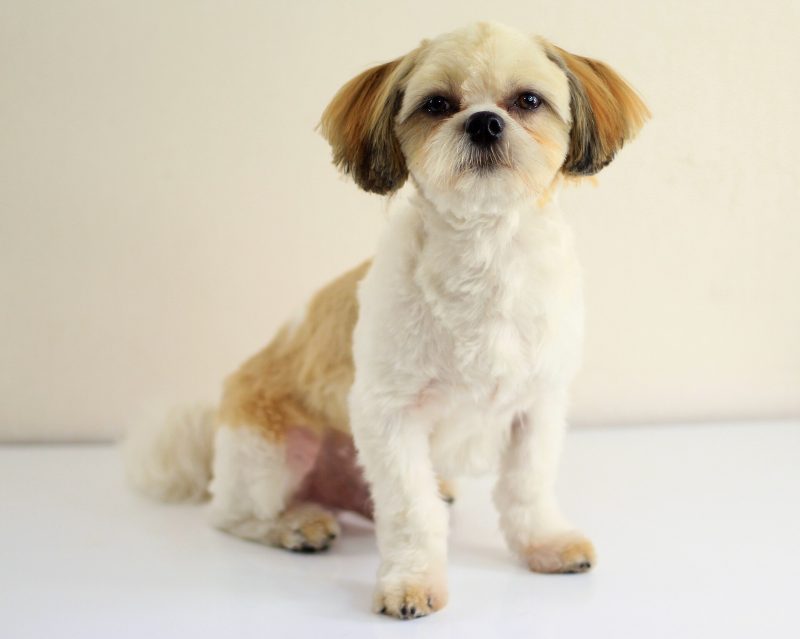
The Lhasa Apso is a sturdy, well-balanced small dog, a little longer than tall, standing about 10 to 11 inches at the shoulder for males and 9 to 10 inches for females, and weighing 12 to 18 pounds depending on sex. Under the coat is a surprisingly strong body with a deep chest and good bone. The head is moderate rather than flat-faced, with a fall of hair over dark, medium-sized eyes, heavy whiskers and a beard. Ears hang down and are heavily feathered, and the tail is carried in a curl over the back.
The coat is the breed's hallmark: long, heavy, straight and hard rather than silky or woolly, with a parting down the spine and a moderate undercoat. Colors include gold, cream, honey, red, grizzle, slate, black, white, brown and parti-color. The Shih Tzu is its closest look-alike but has a flatter face, rounder head and softer coat; the Tibetan Terrier is taller and squarer.
Temperament & Personality
Lhasas are confident, calm and self-contained, with a dignity that owners often describe as regal. Indoors they are alert house dogs that like a vantage point, announce arrivals with a sharp bark and then settle back into comfortable companionship; outdoors they are curious and steady rather than frantic. They bond deeply with their family but are not clingy, and many choose a favorite person. Strangers are regarded with reserve, sometimes for several visits, and the breed does not appreciate being grabbed or hugged by people it does not know. That watchfulness is a feature, not a flaw, but it needs early socialization to stay polite.
Lhasas tolerate respectful older children and are generally fine with other dogs and cats, though they will not be bullied. They have a stubborn, independent streak that makes them more a partner than a servant, and a sense of humor that shows in sudden bursts of play.
Exercise & Activity
Lhasas need modest exercise: a couple of short walks a day totaling 30 to 45 minutes, plus some indoor play, keep most adults fit and content. They enjoy sniffing their neighborhood, a game of fetch down a hallway and a romp in a fenced yard, and a surprising number take to agility, rally and trick training. Mental stimulation matters, since a bored Lhasa invents its own jobs, usually involving barking. They were bred for a cold, high plateau and handle chilly weather well, but their heavy coat and shortish muzzle make them prone to overheating, so walk in the cool of the day in summer and never leave them in a hot car. Swimming is not a strength; the coat becomes heavy when wet.
Two short walks and daily play
Puzzle toys and short training games for the mind
Boredom shows as barking, pacing and sulky stubbornness
Training
Training a Lhasa is a negotiation with a small, intelligent dog that sees no reason to repeat something it has already done once. Keep sessions brief, use food and praise generously and make it worth the dog's while; force or raised voices make a Lhasa stubborn and resentful. Housetraining is the breed's best-known challenge, so set a firm schedule, reward every outdoor success and stay patient for several months, and many owners add an indoor option for bad weather. Teach a quiet cue early, since alert barking is instinctive. Socialization in puppyhood is essential, with gentle exposure to many people, children and dogs, so that natural reserve does not become snappishness. Accustom the puppy to daily brushing, having its face wiped and being handled by a groomer, because grooming is for life. Lhasas respond well to clicker training and can earn obedience and rally titles with a handler who respects their independence.
Grooming & Care
A full-coated Lhasa is a serious grooming commitment. Brush and comb to the skin every day or at least every other day, working in sections with a spray of conditioner to avoid breaking the hair, and check the armpits, behind the ears and the hind legs for mats. Bathe every two to four weeks with a gentle shampoo and conditioner and dry thoroughly. Wipe the eyes and the hair under them daily, tie up or trim the topknot so hair does not irritate the eyes, and keep the hair around the rear end clean. Most pet owners choose a puppy cut or teddy-bear trim every six to eight weeks, which cuts brushing to two or three times a week. Clean ears weekly and pluck or trim the hair inside them if your vet advises. Trim nails every few weeks and brush teeth often, because small breeds lose teeth early. Shedding is light.
Health
Lhasa Apsos typically live 12 to 15 years and many reach their late teens. The breed's best-known inherited problem is renal dysplasia, a kidney malformation that usually shows up as excessive thirst, poor growth or weight loss between six months and two years; it has no cure, and affected dogs should not be bred. Eye problems are common: progressive retinal atrophy, for which a DNA test exists, hereditary cataracts, glaucoma, dry eye and cherry eye. Patellar luxation, hip dysplasia, intervertebral disc disease, dental disease, allergic skin disease, sebaceous adenitis and hemophilia B are also reported, and the shortish muzzle makes some dogs noisy breathers in heat.
The AKC's parent club does not currently require specific screening tests, but careful breeders have breeding stock examined by a veterinary ophthalmologist, their patellas evaluated, and use DNA tests where available. Ask your vet about kidney blood and urine screening for a young Lhasa and about eye checks as part of routine visits.
Nutrition
Feed a complete, balanced small-breed food matched to the dog's life stage: three or four meals a day for puppies to guard against low blood sugar, two measured meals for adults. Lhasas are not greedy as a rule, but they are small, sedentary indoor dogs and gain weight quietly under all that coat, so weigh them regularly and feel for ribs rather than trusting your eyes. Keep treats small and count them. A dog diagnosed with kidney disease will usually be moved to a vet-prescribed renal diet, which is one of the most useful tools for managing the condition, so never change a kidney patient's food without advice. Fresh water should always be available. Some owners find a diet or supplement that supports skin and coat helpful; ask your vet about omega-3 fatty acids and about dental diets if tartar builds up quickly.
Living With This Breed
The Lhasa is a natural apartment dog: small, clean, moderate in energy and quiet when it has nothing to report. It copes with being alone for a working day better than most companion breeds, as long as it has had a walk and has a window to monitor. It likes cool weather and needs air conditioning or shade in summer heat. Lhasas do best with adults and older children who respect a dog's space; toddlers who grab are a poor mix. They usually accept other dogs and cats that live with them.
Warn a sitter that the dog is reserved with strangers and should be allowed to approach in its own time
Keep the face and eyes clean daily and brush as instructed
Watch for heat stress on warm walks
Alert barking at the door is normal; give the dog a job such as a settle on its bed
Interesting Facts
The Tibetan name Apso Seng Kyi is often translated as bearded lion dog, linking the breed to the Snow Lion, Tibet's national symbol.
Lhasas could not be bought in old Tibet; they were only given as gifts, and the pair the Dalai Lama sent C. Suydam Cutting in 1933 founded the American breed.
The breed was placed in the AKC Terrier Group in 1935 even though it has no terrier blood, and was moved to the Non-Sporting Group in 1959.
Lhasas are among the longest-lived dogs; individuals living into their late teens and early twenties are well documented.
Early British imports were called Lhasa Terriers, and for years Lhasas, Shih Tzus and Tibetan Terriers were muddled together in the show ring.
Breeds similar to the Lhasa Apso




What Lhasa Apso owners say
Real pets, photos, stories and tips from the SitterNation community — separate from the editorial guide above.
Log in to add your pet, photos, stories and tips.
Meet Lhasa Apsos on SitterNation
No Lhasa Apsos have joined yet. Owners can show their pet here from the pet's profile.
Lhasa Apso community photos
No Lhasa Apsos photos yet — be the first to share one.
Stories from Lhasa Apso owners
No stories yet. What is life with yours really like?
Tips from Lhasa Apso owners
No tips yet. One practical thing that works for you is enough.
Ask Lhasa Apso owners
No questions yet. Ask the people who live with the breed.