Typical tendencies
Energy level
Calm at home with short bursts of play.
Good with children
Gentle and tolerant around children.
Good with other dogs
Selective; careful introductions needed.
Trainability
Learns, but on its own schedule.
Shedding
Noticeable, with heavier seasonal blows.
Apartment friendly
Can manage in a flat with plenty of outings.
More traits
Exercise needs
Adaptability
Grooming needs
Drooling
Intelligence
Family friendly
Good with cats
Friendly with strangers
Sociability
Protectiveness
Prey drive
Overview
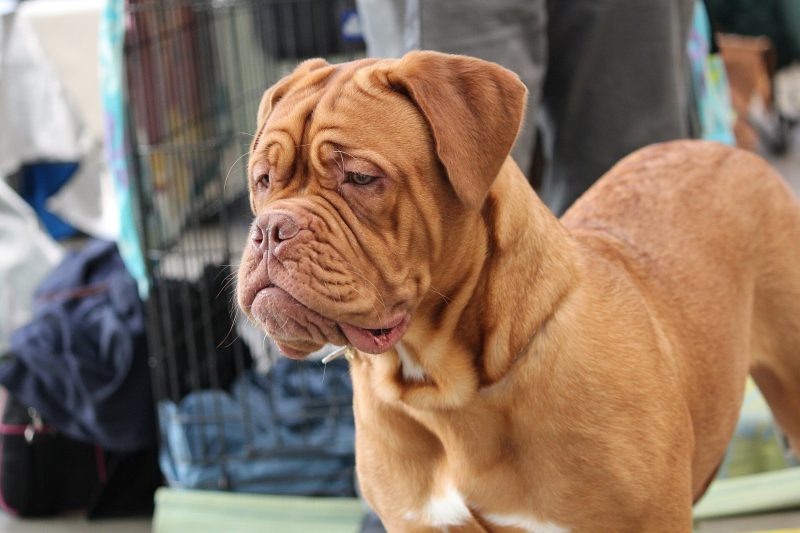
The Dogue de Bordeaux is France's ancient mastiff: a massive, low-slung dog with the largest head in the dog world in proportion to its body, a deeply wrinkled face, a fawn coat and a drool towel that never leaves the kitchen counter. Males stand 23.5 to 27 inches and weigh 110 to 145 pounds, females 23 to 26 inches and 99 to 120 pounds. Lifespan is the breed's greatest sorrow: figures as low as 5 to 8 years are commonly quoted, though a large 2024 UK study put the median nearer 11. Dogues are calm, patient and deeply attached to their families, with a serious guarding instinct toward strangers and other dogs. They suit experienced owners with a roomy home, a tolerance for slobber and the budget for a giant breed's veterinary care. They are a poor fit for first-time owners, small apartments, hot climates and households that want a dog to play nicely at the dog park.
History & Origin
Mastiff-type dogs have lived in southwestern France since at least the 1300s, and the Dogue takes its name from Bordeaux, the heart of the old Aquitaine region where the type was most common. For centuries these dogs hunted boar and other big game, drove and guarded cattle, protected estates and vineyards and worked for butchers. France's first dog show, held at the Jardin d'Acclimatation in Paris in 1863, included a class for the breed, won by a female named Magenta, and regional variations were gradually unified into a single type by about 1920. Both world wars devastated numbers, and by the 1960s only a couple of breeders remained in France. A schoolteacher named Raymond Triquet led the rebuilding effort, wrote the modern standard in 1971 with veterinarian Maurice Luquet and later helped write the American standard. The 1989 film Turner & Hooch introduced the breed to a worldwide audience. The Dogue de Bordeaux Society of America, founded in 1997, became the parent club, and the AKC recognized the breed in 2008 as its 158th breed.
Appearance
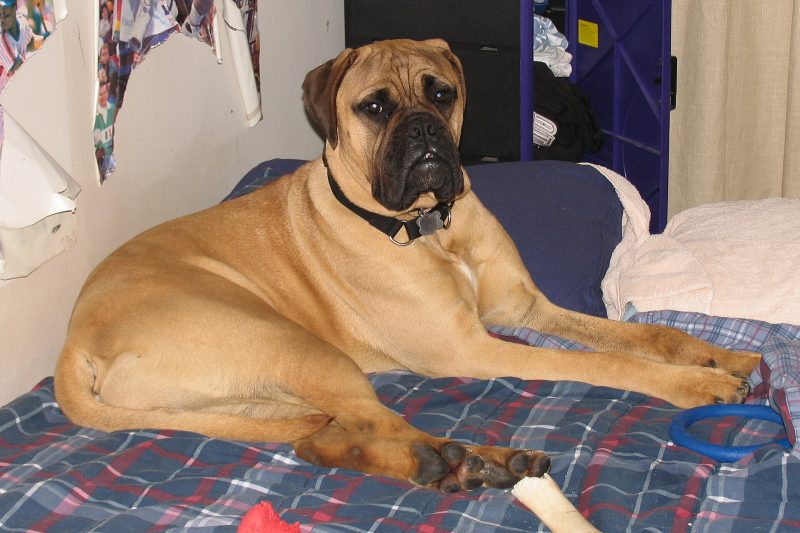
A Dogue de Bordeaux is built like a wrestler: short, wide and tremendously muscular, longer than it is tall, with a broad chest that nearly reaches the elbows and a thick, loose-skinned neck. The head is the breed's signature, broad and trapezoid-shaped when seen from above, with a short, upturned muzzle, a slightly undershot jaw, deep furrows and wrinkles across the forehead and a dewlap below; in a male the circumference of the head should roughly equal the height at the shoulder. The eyes are oval and set wide apart, the ears small and drooping. The coat is short, fine and soft to the touch and comes in all shades of fawn from light to deep mahogany and the rare isabella, with a black mask, a brown mask or no mask at all. A little white is allowed on the chest and toes. Compared with a Bullmastiff, the Dogue is lower, wider and far more wrinkled, with a shorter muzzle and a red rather than black-masked look.
Temperament & Personality
Beneath the intimidating face is a calm, affectionate, surprisingly sensitive dog. Dogues are devoted to their family, gentle and patient with children they know, and content to lie across the doorway for hours keeping watch. They form intense attachments and can become anxious or destructive when ignored or left alone too long. With strangers they are watchful and reserved, and their guarding instinct is strong, so introductions should be managed by the owner. Many Dogues are selective or outright unfriendly toward unfamiliar dogs, especially of the same sex, and small pets are at some risk unless the dog is raised with them. They are not high-energy, not big barkers and not easily rattled, but they are stubborn, and a 130-pound dog that decides not to move cannot be made to. Expect snoring, flatulence and a great deal of drool, delivered with real affection.
Exercise & Activity
A Dogue de Bordeaux needs moderate exercise, around 45 minutes a day split into two or three easy walks, plus some play. The breed is not built for distance running or agility, and puppies in particular must not be over-exercised while their joints are forming; no forced running, stairs in moderation and no jumping from heights until the dog is fully grown. Short hikes, gentle fetch, tug, scent games and swimming suit adults. Heat is the serious limit: the short muzzle makes panting inefficient and the breed overheats quickly, so walk early and late in summer and keep water and shade at hand. Cold weather is fine in short doses.
Mental work such as nose games and puzzle toys counts toward the daily total
Never exercise hard in heat or right after meals, because of the bloat risk
Sitters should use a strong harness or head collar; this dog can pull an adult over
Training
Dogues are intelligent but willful, and they learn best with calm, consistent, reward-based training started the week the puppy comes home. Harsh methods backfire with this breed, which is sensitive to its owner's mood and will simply shut down or dig in. Socialization is non-negotiable: a guardian breed this size must meet many friendly strangers, well-mannered dogs and new environments as a puppy so that its protectiveness stays measured. Teach loose-leash walking, a solid leave-it and a reliable recall before the dog weighs more than you do, and practice calm greetings at the door. Keep sessions short, as Dogues tire of repetition, and reward with food, praise and rest. Crate training gives a sensitive dog a secure place. Sitters should meet the dog with the owner present, move slowly and avoid confrontations over food or resting spots.
Grooming & Care
The Dogue's short coat sheds moderately and needs only a weekly going-over with a rubber mitt or soft brush. Bathe every month or two with a mild shampoo. The real work is the face: wipe and dry the forehead wrinkles, the lip folds and the dewlap several times a week, because trapped moisture and food cause irritation and infection, especially in humid weather. Keep a towel in every room for drool. Check the eyes daily for redness and discharge, since the loose lids are prone to problems. Clean the drop ears every week or two, trim nails every two to three weeks and brush the teeth regularly. Check the footpads regularly for cracking or thickening.
Weekly brushing, wrinkle and lip-fold care several times a week
Bath every four to eight weeks, with folds dried thoroughly
Moderate shedding year-round; a mitt removes most of it
Health
The Dogue de Bordeaux carries a heavy health load and a short commonly quoted lifespan of 5 to 8 years, though a 2024 British study found a typical lifespan of just over 11 years, which suggests that good breeding and lean condition make a real difference. The parent club recommends hip, elbow and shoulder evaluations and a cardiac exam for breeding dogs. Hip dysplasia is common, elbow dysplasia and shoulder osteochondritis also occur, and heart disease is a major concern: subaortic stenosis, tricuspid valve dysplasia, dilated cardiomyopathy and rhythm disturbances have all been reported. Bloat with stomach torsion is a life-threatening emergency in this deep-chested breed. A DNA test identifies carriers of hereditary footpad hyperkeratosis, which thickens and cracks the pads from about four to six months of age. The short muzzle brings breathing difficulty, heat intolerance and extra anesthesia risk, and the loose eyelids lead to entropion and ectropion. Skin fold infections, demodex mange and cancers are seen, and many litters are delivered by cesarean. Ask your vet about any coughing, fainting, lameness, retching or cracked pads.
Nutrition
Feed a complete and balanced large-breed diet, and use a large-breed puppy formula so that a Dogue puppy grows slowly and steadily; fast growth and extra weight stress developing hips and elbows. Puppies eat three or four small meals a day, adults two. Because bloat is a real danger, split the daily ration, use a slow-feeder bowl, avoid exercise for an hour before and after meals and ask your vet whether a preventive gastropexy makes sense, often at the time of spay or neuter. Keep the dog lean; a visible waist and easily felt ribs protect the joints and heart in a breed that gains weight easily. Treats should stay within a tenth of daily calories. Dogs with heart disease or pad problems may need specific diets or supplements prescribed by the veterinarian. Sitters should follow the owner's feeding schedule exactly, never free-feed and know the signs of bloat, including a swollen belly, restlessness and unproductive retching.
Living With This Breed
A Dogue de Bordeaux needs space, not acreage: a house with a securely fenced yard and a cool indoor spot to sprawl is ideal, and a ground-floor home spares the joints. It is an indoor dog that must live with its family and should not be left alone all day. Dogues are gentle with children in their own home but can knock a toddler over without noticing, and they are usually poor companions for unfamiliar dogs, so dog parks and group daycare are not a fit. Hot, humid climates are hard on them. Drool, snoring and shedding are part of the deal, as is a watchdog that takes strangers seriously. Check whether your insurer or landlord restricts mastiff breeds.
Sitters: be introduced by the owner first, walk in the cool hours and watch for overheating
Keep visits calm; no roughhousing and no contact with strange dogs
Know the owner's vet and the signs of bloat before the first visit
Interesting Facts
Beasley, the Dogue who played Hooch opposite Tom Hanks in the 1989 film Turner & Hooch, made the breed famous outside France almost overnight.
The Dogue has the largest head of any breed relative to body size; a male's head circumference should roughly equal its height at the shoulder.
A female named Magenta won the breed's class at France's first dog show, held in Paris in 1863.
Raymond Triquet, the schoolteacher who saved the breed from near-extinction in the 1960s, is honored as the father of the modern Dogue.
Dogues historically worked for butchers and cattle drovers and were used to hunt boar in southwestern France.
Despite recognition in France for well over a century, the breed only joined the AKC in 2008.
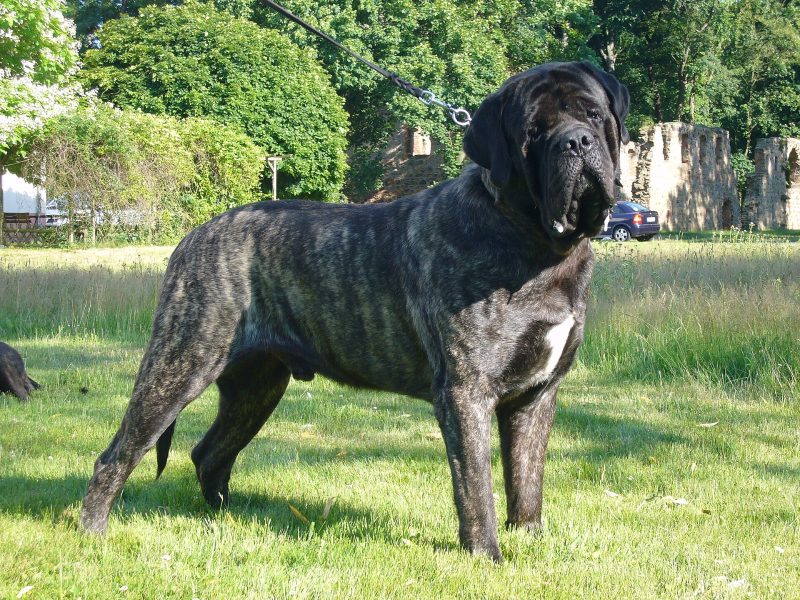
Breeds similar to the Dogue de Bordeaux
What Dogue de Bordeaux owners say
Real pets, photos, stories and tips from the SitterNation community — separate from the editorial guide above.
Log in to add your pet, photos, stories and tips.
Meet Dogue de Bordeauxs on SitterNation
No Dogue de Bordeauxs have joined yet. Owners can show their pet here from the pet's profile.
Dogue de Bordeaux community photos
No Dogue de Bordeauxs photos yet — be the first to share one.
Stories from Dogue de Bordeaux owners
No stories yet. What is life with yours really like?
Tips from Dogue de Bordeaux owners
No tips yet. One practical thing that works for you is enough.
Ask Dogue de Bordeaux owners
No questions yet. Ask the people who live with the breed.