Typical tendencies
Energy level
Ready to go when you are, settles after.
Good with children
Fine with calm, respectful older kids.
Good with other dogs
Enjoys most canine company.
Trainability
Learns, but on its own schedule.
Shedding
A light scatter, easy to keep up with.
Apartment friendly
A natural fit for city living.
More traits
Exercise needs
Adaptability
Grooming needs
Drooling
Intelligence
Family friendly
Good with cats
Friendly with strangers
Sociability
Protectiveness
Prey drive
Overview
The Italian Greyhound is a true sighthound shrunk to lap size: 13 to 15 inches of slender legs, arched back and velvet skin, with a sprint that startles people who think of it as a toy. It suits gentle households, including apartments, where someone is home a good deal and the dog can be a constant companion, nap in sunbeams, burrow under blankets and explode into zoomies in a fenced yard. IGs are affectionate, sensitive, clean and quiet, but they are fragile in the first two years, hard to housetrain, miserable in the cold and quick to chase anything small.
They are a poor fit for families with boisterous toddlers, homes with large rowdy dogs, cold climates without indoor heat and sweaters, or owners who want a robust, independent dog. For someone who wants an elegant, devoted shadow with a comic streak, there is nothing else like one.
History & Origin
Small, fine-boned sighthounds appear in Mediterranean art from ancient Egypt and Greece onward, and dogs of this type were kept as companions in the Roman world; remains of small sighthounds were found in the ruins of Pompeii. The breed as we know it was refined in Italy during the Renaissance, when it became a favorite of the nobility and appears in paintings by Giotto, Carpaccio, Memling and Bosch. From there it spread to the courts of Europe: Frederick the Great of Prussia, Catherine the Great of Russia, Anne of Denmark and Queen Victoria all kept them. An Italian treatise of 1626 gives one of the first written descriptions.
In the 1800s breeders pursued ever smaller dogs and the breed suffered for it, and both world wars nearly wiped it out in Europe; American stock, built from early imports, helped restore it. The AKC registered its first Italian Greyhound in 1886, the British club formed in 1900 and the Italian Greyhound Club of America in 1954.
Appearance
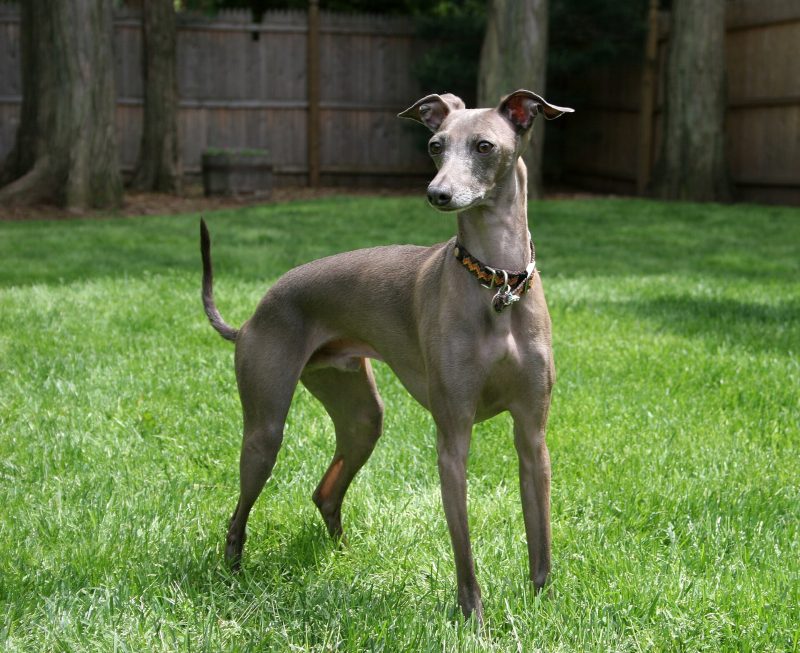
The Italian Greyhound is a Greyhound in miniature, standing 13 to 15 inches at the shoulder and weighing 7 to 14 pounds. The outline is a series of curves: a long, narrow head with a fine muzzle and folded rose ears, a long arched neck, a deep chest, a tucked-up belly and a back that arches over the loin, with a long, low-set tail carried in a curve. The legs are long and fine, the feet hare-like, and the whole dog moves with a high-stepping, flashy trot and runs in a double-suspension gallop like its big cousins.
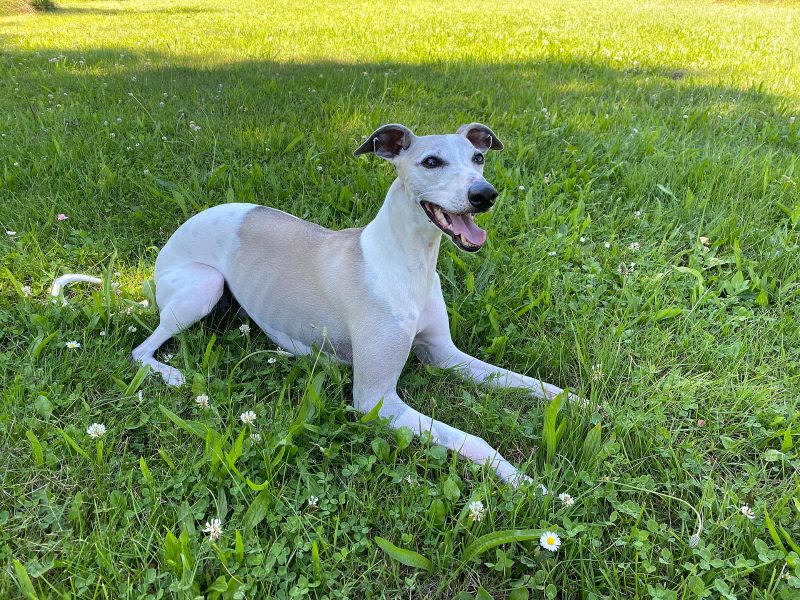
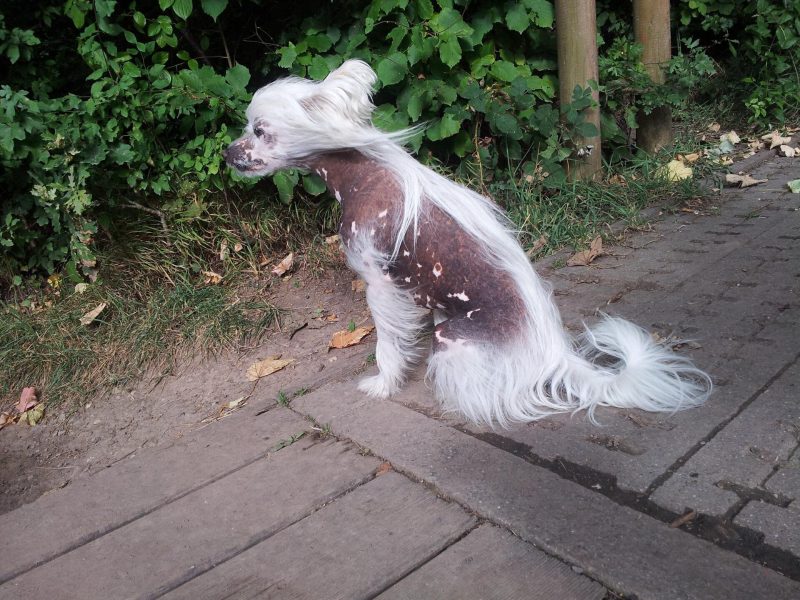
The coat is short, fine, glossy and single, lying close to skin that feels like warm suede. Colors include fawn, red, blue, black, cream, sable and chocolate, often with white on the chest and feet; the AKC accepts any color except brindle and black-and-tan patterns. The Whippet is the look-alike at roughly twice the size; the Chinese Crested shares the fine build but not the sighthound outline.
Temperament & Personality
Italian Greyhounds are affectionate, sensitive and attached to their people to an unusual degree, often choosing one person to shadow and sleep on. They are gentle and quiet in the house, happy to spend hours curled under a blanket, and then suddenly fast and playful, racing in circles and leaping onto furniture. With strangers they are reserved to shy and dislike being grabbed; they warm up on their own terms. They are good with calm, older children and with other small dogs, and they enjoy the company of another IG.
Larger, rough dogs frighten them and can hurt them by accident. Cats they grow up with are usually fine; running cats, squirrels and birds trigger a strong chase instinct. They are not watchdogs, though some bark at noises. They hate cold, rain and wet grass and will refuse to go out in bad weather. Harsh words wound them. Under the delicacy is a stubborn, clever little hound with opinions.
Exercise & Activity
An Italian Greyhound needs moderate exercise, about 30 to 60 minutes a day: a couple of walks and, crucially, the chance to run flat out in a safely fenced area several times a week. They are sprinters, not endurance dogs, and are happy to nap the rest of the day. Never let an IG off leash in an unfenced space; sighthounds chase on sight, do not hear you when running, and are too fast to catch. Many enjoy lure coursing, agility, rally and trick training, which also exercise the mind.
Protect the legs: for the first 18 months avoid high jumps on and off furniture, rough play with big dogs and slippery floors, since forearm fractures from an awkward landing are the breed's signature injury. In cold weather they need a coat and short outings; in heat they do well but need shade. A bored IG may become destructive or obsessive about licking.
30 to 60 minutes daily with regular fenced sprints
Never off leash in open areas
Sweaters, ramps and no big leaps in puppies
Training
Italian Greyhounds are bright and learn quickly when training is gentle, short and rewarding, and they shut down completely under harsh handling. Housetraining is the big challenge: small bladders, a dislike of cold and wet, and a tendency to sneak off behind furniture mean that many IGs take a year or more to become reliable. Use a consistent schedule, a crate or pen, generous rewards for outdoor success, and consider a covered potty area or indoor option for bad weather.
Socialize early and carefully with calm people and gentle dogs so that natural shyness does not become fear. Teach a reliable recall for emergencies, knowing it will not hold against a running squirrel, and practice calm greetings rather than leaping. Food works well as a reward, as does play. Many IGs enjoy tricks, rally, agility and lure coursing. Expect a dog that trains well in the living room and forgets everything on the sidewalk until you practice there too.
Grooming & Care
The Italian Greyhound coat is about as easy as grooming gets: a weekly wipe with a soft cloth or hound glove removes loose hair and keeps the coat shining, and shedding is light. Bathe only when dirty, every month or two, with a mild shampoo, and dry the dog promptly since it chills fast. The important jobs are elsewhere. Nails grow quickly and long nails change the gait and risk splitting on a sprint, so trim or grind them weekly.
Teeth are the breed's weak point: the long narrow jaw crowds the teeth and periodontal disease starts early, so brush daily and expect professional cleanings. Check the ears weekly. The thin skin tears easily on fences and brambles, so inspect the dog after play and clean small nicks. Some IGs develop thin coats on the thighs and ears, which is usually cosmetic but worth mentioning to your vet. In winter, a wardrobe of sweaters is a necessity rather than an indulgence.
Weekly wipe-down, baths only as needed
Weekly nail trims
Daily tooth brushing; dental disease is the main problem
Health
Italian Greyhounds often live 14 to 15 years and are generally healthy, but a few problems are characteristic. Fractures of the forearm are common in young dogs, usually from a jump off furniture or a fall from arms, and repairs can be complex. Periodontal disease is nearly universal without daily care, and an inherited enamel defect, familial enamel hypoplasia, affects a share of the breed and has a DNA test. The parent club asks breeders to certify patellas, since patellar luxation is common, to have eyes examined by a veterinary ophthalmologist for progressive retinal atrophy and cataracts, and to test thyroid function; DNA tests for PRA and for primary closed-angle glaucoma are also recommended.
Autoimmune diseases, epilepsy, Legg-Calve-Perthes disease of the hip and color dilution alopecia in blue dogs occur. Like other sighthounds, IGs have low body fat and may be sensitive to some anesthetics; remind your vet of the breed before any procedure. Ask breeders for OFA results for both parents.
Nutrition
Italian Greyhounds burn energy fast and have little fat reserve, so they need a complete, calorie-dense diet fed in two or three small meals rather than one. Puppies should eat a quality small-breed growth food three or four times a day to avoid low blood sugar, and should not be allowed to get fat, which stresses fragile growing bones; equally, do not supplement calcium. Adults should look lean with the last ribs and hip points visible, which alarms people used to rounder dogs but is correct for a sighthound.
Kibble size matters for a small narrow mouth, and chewing appropriate dental chews or raw vegetables can help the teeth. Picky eating is common; avoid topping food with ever-richer extras, which teaches the dog to hold out. Seniors may need a softer diet as teeth are lost. Fresh water should always be available. Ask your vet about diet if your dog is thin despite a good appetite or has recurrent stomach upset.
Living With This Breed
Italian Greyhounds are ideal apartment and city dogs: small, quiet, clean and content with walks and indoor play, as long as someone is home much of the day. They do poorly left alone for long hours and may become anxious or destructive. They need a warm home, blankets to burrow in and a fenced area for sprints. They live well with other small dogs and cats raised with them, and badly with large boisterous dogs. Families with toddlers should wait; a dropped or stepped-on IG can break a leg. Furniture should have ramps or steps, and balconies and high windows should be secured.
A sitter should know that the dog is never off leash, must be lifted and set down carefully, needs a coat in cold weather, may have housetraining lapses in bad weather, and should not play with big dogs. Home sitting usually suits an IG far better than kennels or busy daycare.
Apartment perfect, but not for long days alone
Warm home, ramps, secure fencing
Sitters: careful handling, leash always, no rough dogs
Interesting Facts
Italian Greyhounds appear in Renaissance paintings by Giotto, Carpaccio, Memling and Bosch, often at the feet of saints and nobles.
Frederick the Great of Prussia was so attached to his Italian Greyhounds that he asked to be buried beside them, a wish finally granted in 1991.
Catherine the Great's IG, Zemira, was immortalized in porcelain and is still produced as a figurine.
The breed runs in a double-suspension gallop, all four feet off the ground twice per stride, and can top 25 miles per hour.
Fans call them IGs or Iggies, and owners speak of the Iggy lean, where the dog presses its whole body against your legs.
An IG's skin is so thin and its coat so fine that you can see veins and the outline of muscles, which is why they shiver in a cool room.
Breeds similar to the Italian Greyhound
What Italian Greyhound owners say
Real pets, photos, stories and tips from the SitterNation community — separate from the editorial guide above.
Log in to add your pet, photos, stories and tips.
Meet Italian Greyhounds on SitterNation
No Italian Greyhounds have joined yet. Owners can show their pet here from the pet's profile.
Italian Greyhound community photos
No Italian Greyhounds photos yet — be the first to share one.
Stories from Italian Greyhound owners
No stories yet. What is life with yours really like?
Tips from Italian Greyhound owners
No tips yet. One practical thing that works for you is enough.
Ask Italian Greyhound owners
No questions yet. Ask the people who live with the breed.