Typical tendencies
Energy level
Ready to go when you are, settles after.
Good with children
A famously patient playmate for kids.
Good with other dogs
Enjoys most canine company.
Trainability
Quick to learn and keen to please.
Shedding
Fur on everything, all year round.
Apartment friendly
Needs space and a garden to be happy.
More traits
Exercise needs
Adaptability
Grooming needs
Drooling
Intelligence
Family friendly
Good with cats
Friendly with strangers
Sociability
Protectiveness
Prey drive
Overview
The Leonberger is a giant German dog that was designed to look like a lion and turned out to behave like a very large, very patient nanny. Males weigh 110 to 170 pounds, yet the breed is known for a steady, friendly temperament, a genuine fondness for children and a love of water that shows up the first time a Leo meets a lake. Most are calm indoors and sociable with strangers, which makes them easy to have around but poor guard dogs.
The costs are real. The coat sheds heavily, the dog drools, food and veterinary bills scale with size, and the lifespan is short at 7 to 9 years. Leonbergers want to be with their people and do not do well shut in a yard or left alone for long days. They suit households with space, time for grooming and a taste for walks with a dog that draws a crowd. For the right family, a Leo is as gentle as a dog this big can be.
History & Origin
The breed is named for Leonberg, a town near Stuttgart whose crest shows a rearing lion. Heinrich Essig, a town councilor and prolific dog trader, set out in the 1840s to produce a dog that matched the crest, and the first litter he called Leonbergers arrived in 1846. He claimed crosses between a Landseer-type Newfoundland, Saint Bernards and a Pyrenean mountain dog, though his records were loose and show judges grumbled that the result was a Saint Bernard look-alike. A gifted salesman, Essig placed dogs with royalty across Europe, including Empress Elisabeth of Austria and Tsar Alexander II.
The first breed clubs formed in 1891, after Essig's death, and fixed the tawny coat and black mask. World War I nearly erased the breed: two enthusiasts, Karl Stadelmann and Otto Josenhans, found only about 25 survivors and five fit for breeding, and rebuilt from them through a cooperative founded in 1922. Numbers crashed again in World War II. American families imported Leos in the 1970s and 1980s and founded the Leonberger Club of America in 1985; the AKC admitted the breed to full recognition in 2010.
Appearance
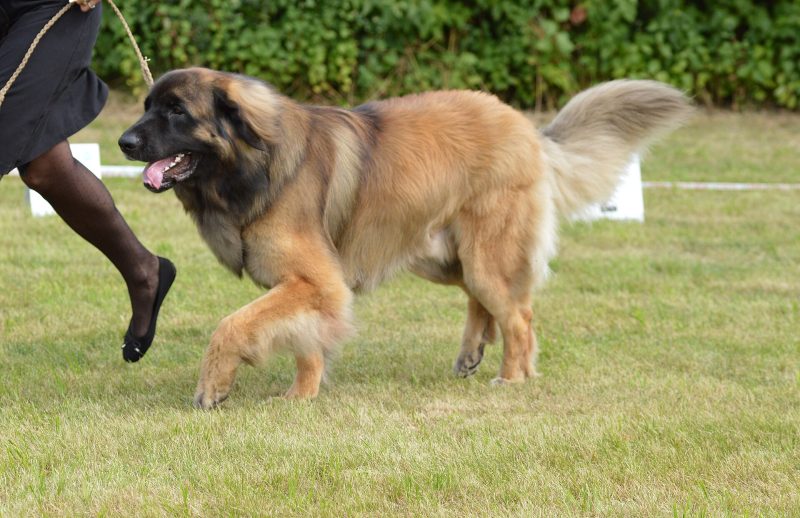
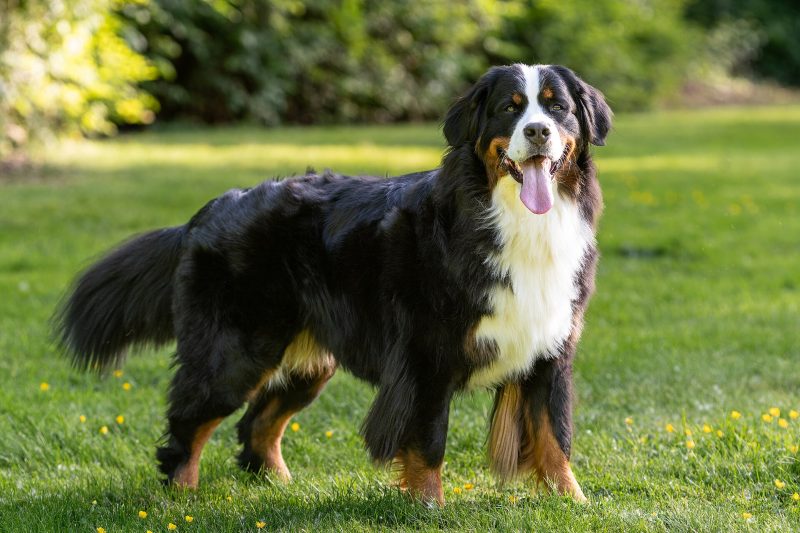
A Leonberger is big but balanced, longer than tall, with a deep chest, strong bone and an easy, ground-covering trot. Males stand 28 to 31.5 inches at the shoulder and weigh 110 to 170 pounds; females run 25.5 to 29.5 inches and 90 to 140 pounds. The head is strong with a moderately long muzzle, medium-sized hanging ears and dark brown eyes that give a kind, intelligent look. The black mask on the face is a breed hallmark.
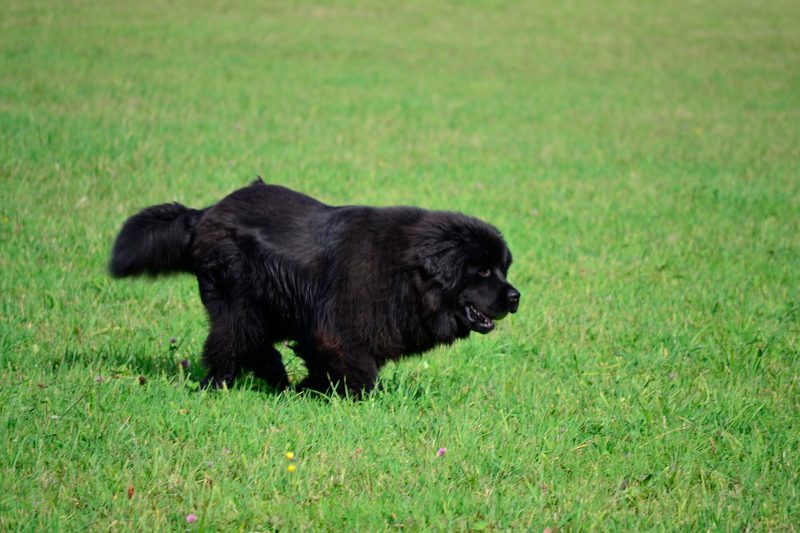
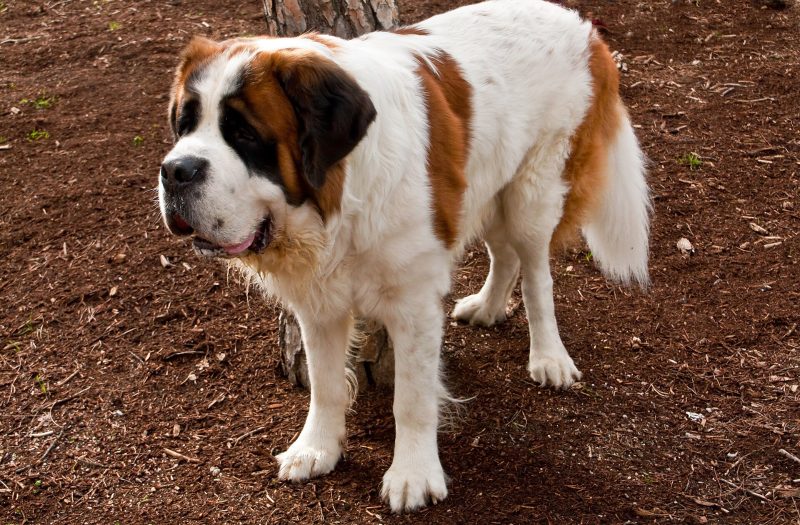
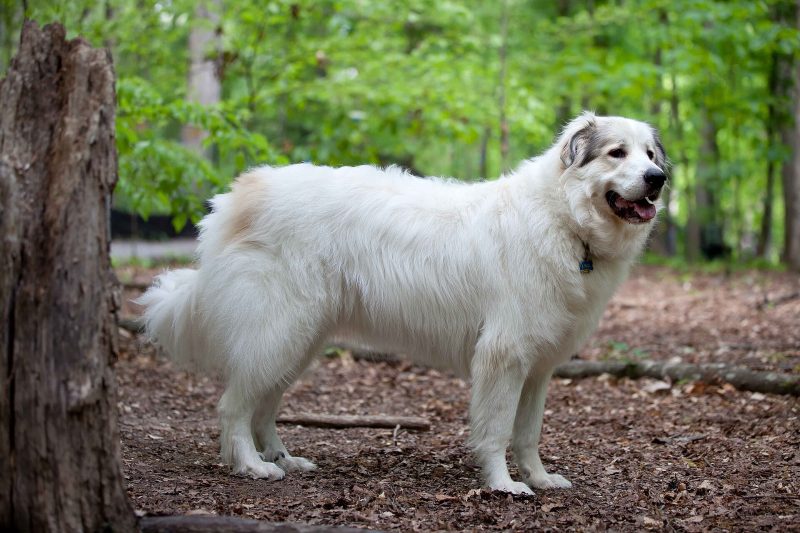
The double coat is long and water-resistant, lying close over the body with a dense undercoat, and males carry a noticeable mane over the neck and chest. Colors range from lion-yellow and golden through red and reddish-brown to sand, usually with dark tips on the outer hairs, plus the black mask. Compared with look-alikes, a Newfoundland is blockier and usually black, a Saint Bernard is red and white with a heavier, more wrinkled head, and a Great Pyrenees is white. The Leo's tawny coat, black mask and lighter frame set it apart.
Temperament & Personality
The breed standard asks for a dog that is self-assured, calm and friendly, and a well-raised Leonberger is exactly that. Leos are affectionate without being clingy, happiest lying where they can see the family and quick to greet visitors with a lean rather than a bark. They are famously good with children, patient under clumsy handling and careful about their size, though a tail at toddler height can still clear a coffee table. Most are easygoing with other dogs and cats, especially when raised with them.
Indoors a Leo is a low-key presence that sleeps a lot; outdoors it brightens and wants to walk, swim and pull things. Watchfulness is moderate: a Leonberger notices strangers and will plant itself between its people and anything odd, but aggression is out of character. The breed is sensitive, reads tone of voice well and wilts under harsh treatment. Left alone too long it becomes anxious or destructive.
Exercise & Activity
Adult Leonbergers need a moderate 45 to 60 minutes of activity a day, ideally split into two outings. Steady walks, hikes at a walking pace and, above all, swimming suit the breed; many Leos take to water on first contact and will paddle for an hour. Carting and drafting are traditional jobs the breed club still titles, and a Leo pulling a small cart or wearing a pack is a happy dog. Mental work matters too, so add some training or scent games.
Heat is the limit. The heavy coat means a Leonberger overheats fast, so summer exercise belongs in early morning or evening with shade and water nearby. Puppies need restraint: no jogging, no repeated stairs and no long hikes until the growth plates close at around 18 to 24 months, since the frame is still soft.
A bored Leo chews, digs and leans on people more than usual.
Skip heavy exercise for an hour on either side of meals to lower bloat risk.
Training
Leonbergers learn quickly and want to please, but training is non-negotiable because an untrained adult outweighs most owners. Start as soon as the puppy comes home with sit, down, a reliable recall, loose-leash walking and a solid wait at doors and the car. Reward-based methods work best: the breed is soft and responds to praise and food, while rough handling produces a dog that simply refuses to move. Keep sessions short and varied, because Leos get bored with repetition.
Socialization is just as important. Expose the puppy to visitors, children, other dogs, traffic and new floors early and often so the adult's natural calm has something to rest on. Jumping up and leaning are the common sticking points; teach a sit for greetings before the dog weighs 100 pounds. Many Leos go on to drafting, water rescue, therapy work and rally, and the breed club runs titles in several of them. A Leo with a job is a settled, contented house dog.
Grooming & Care
The coat is the main chore and it never ends. Brush thoroughly two or three times a week with a slicker and a long-toothed comb, working down to the skin on the mane, the feathering on the legs, the pants and behind the ears, where mats form first. During the big seasonal sheds in spring and fall, brushing becomes a daily job and the hair comes off in handfuls. Many owners book a professional blow-out in those months. Never shave the coat; it insulates against heat as well as cold.
Bathe every month or two, or when the dog has rolled in something, and dry fully so the undercoat does not stay damp. Trim the hair between the pads and tidy the feet. Check the hanging ears weekly and clean them if they look waxy. Clip nails every few weeks and brush teeth several times a week.
Keep a towel by the door; Leos drool after drinking and after exercise.
A regular grooming routine started in puppyhood makes an adult that lies still for it.
Health
Leonbergers live 7 to 9 years on average, and cancer is the leading cause of death, with osteosarcoma and hemangiosarcoma the most common types. The breed also carries a group of inherited nerve diseases. Leonberger polyneuropathy, in several genetic forms known as LPN1, LPN2 and LPPN3, causes a weak, high-stepping gait and laryngeal paralysis with a changed bark and noisy breathing. Leukoencephalomyelopathy, or LEMP, affects the spinal cord and brain and shows up as a worsening, uncoordinated gait from as early as one year old. DNA tests exist for all four, and the University of Minnesota runs a combined panel that breeders use.
Other concerns are hip and elbow dysplasia, bloat with twisting of the stomach, dilated cardiomyopathy, hypothyroidism and cataracts. Responsible breeders screen with OFA hip and elbow evaluations, an eye exam, a cardiac exam, thyroid testing and the neurological DNA panel. If your Leo develops a hoarse bark, wobbly hind legs, a swollen belly or sudden lameness, call your vet promptly. Ask your vet about a preventive gastropexy and about senior cancer screening.
Nutrition
A Leonberger grows from a one-pound newborn to well over 100 pounds in a year and a half, and how it is fed during that time shapes its joints for life. Puppies should eat a large-breed growth formula that keeps calcium and calories moderate so the skeleton grows slowly and evenly; feeding a puppy to look chubby is the worst thing you can do for its hips and elbows. Ask your vet when to move to an adult food, usually between 12 and 18 months.
Adults eat less per pound than smaller dogs, so measure meals and adjust to body condition rather than to the bag. You should feel the ribs easily under the coat, which hides weight gain well. Split the daily ration into two meals, use a slow feeder if the dog bolts food and avoid hard exercise around mealtimes to reduce bloat risk. Fresh water should always be available, and a Leo drinks a lot. Treats count toward the total; ask your vet before adding joint supplements.
Living With This Breed
Leonbergers need a house, not an apartment, and a securely fenced yard they can use for a stretch and a sniff. They are indoor dogs, though: a Leo shut outside becomes lonely and loud. Cool climates suit them best, and in hot regions they need air conditioning, shade and water. They are gentle with children and most pets, but a dog this size needs supervision around small kids simply because of bulk. Barking is modest, escape attempts are rare, and most are polite with visitors once they have had a sniff.
Time alone is the sticking point. Leos bond closely and tolerate four or five hours but not a full working day every day. For sitters and daycare staff, the main things to know are the drool, the hair, the water obsession and the heat sensitivity.
Needs a vehicle and a sitter who can handle a strong dog on leash.
Keep walks short and shaded in summer; carry water.
Expect a dog that leans on you for affection.
Interesting Facts
The breed was created to match the lion on the coat of arms of Leonberg, Germany, which is why the tawny coat, black mask and mane were fixed as its signature.
Heinrich Essig placed Leonbergers with Empress Elisabeth of Austria, Tsar Alexander II and Otto von Bismarck, making the breed a nineteenth-century status symbol.
After World War I only about 25 Leonbergers could be found; every modern Leo descends from the handful that two German enthusiasts rebuilt the breed from in the 1920s.
Leonbergers train for water rescue in Europe and can tow a small boat; their webbed feet and water-resistant coat come from their Newfoundland ancestry.
The AKC recognized the breed only in 2010, though Leonbergers appeared at the Westminster Kennel Club show throughout the 1880s.
A Leo's rear dewclaws are sometimes left on, and its tail is carried low even when the dog is happy, unlike most big fluffy breeds.
Breeds similar to the Leonberger
What Leonberger owners say
Real pets, photos, stories and tips from the SitterNation community — separate from the editorial guide above.
Log in to add your pet, photos, stories and tips.
Meet Leonbergers on SitterNation
No Leonbergers have joined yet. Owners can show their pet here from the pet's profile.
Leonberger community photos
No Leonbergers photos yet — be the first to share one.
Stories from Leonberger owners
No stories yet. What is life with yours really like?
Tips from Leonberger owners
No tips yet. One practical thing that works for you is enough.
Ask Leonberger owners
No questions yet. Ask the people who live with the breed.