Typical tendencies
Energy level
Calm at home with short bursts of play.
Good with children
A famously patient playmate for kids.
Good with other dogs
Enjoys most canine company.
Trainability
Picks up cues with steady, short sessions.
Shedding
Keep the lint roller within reach.
Apartment friendly
Needs space and a garden to be happy.
More traits
Exercise needs
Adaptability
Grooming needs
Drooling
Intelligence
Family friendly
Good with cats
Friendly with strangers
Sociability
Protectiveness
Prey drive
Overview
The St. Bernard is a gentle giant in the most literal sense: a dog that can top 180 pounds and still wants to lie across your feet while the kids climb on it. Bred for centuries by the monks of a Swiss mountain hospice to find travelers lost in the snow, it carries that patient, steady temperament into modern family life. Saints are quiet indoors, slow to anger, tolerant of children and usually easygoing with other pets.
They suit people with a house, a yard, a cool climate or good air conditioning, and a genuine tolerance for drool and hair. Exercise needs are modest, but the costs of feeding, medicating and boarding a giant breed are not, and the lifespan of 8 to 10 years is short. If you want a calm, devoted companion with a big heart and can live with the logistics, a St. Bernard is hard to beat.
History & Origin
Around 1050 a monk later canonized as Saint Bernard of Menthon founded a hospice on the Alpine pass that now bears his name, roughly 8,000 feet up, to shelter pilgrims heading to Rome. The monks acquired their first large farm dogs in the 1660s, and the earliest written records from the hospice date to 1707. Over the following century the dogs became famous for finding travelers buried by avalanches. The most celebrated, Barry, worked at the hospice from 1800 for roughly a dozen years and is credited with saving more than 40 lives; his preserved body stands in the Natural History Museum in Bern.
Brutal winters between 1816 and 1818 nearly wiped out the hospice line, and from 1830 the monks crossed the survivors with Newfoundlands, which produced the longhaired variety. Heinrich Schumacher began planned breeding and the first stud book in 1855. The Swiss St. Bernard Club formed in Basel in 1884, a breed standard soon followed, and the Saint became Switzerland's national dog. The AKC recognized the breed in 1885; the Saint Bernard Club of America was founded in 1888.
Appearance
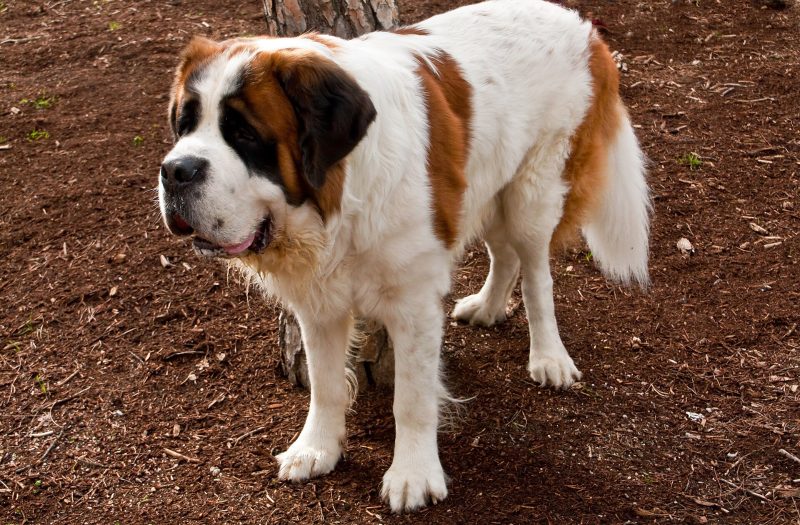
Everything about the St. Bernard is big. Males stand 28 to 30 inches at the shoulder and weigh 140 to 180 pounds; females run 26 to 28 inches and 120 to 140 pounds. The head is massive and broad with a short, deep muzzle, a forehead that wrinkles when the dog is alert, and medium-sized dark eyes set in slightly drooping lids that give the famous soulful look. The ears are high-set, triangular and hang close to the cheeks. The body is powerful and a little longer than tall, with a deep chest, strong straight legs and a long, heavy tail carried low.
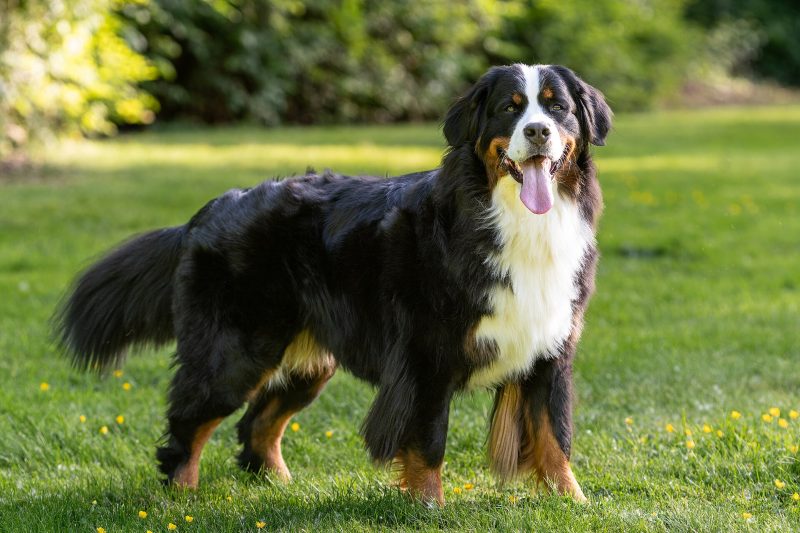
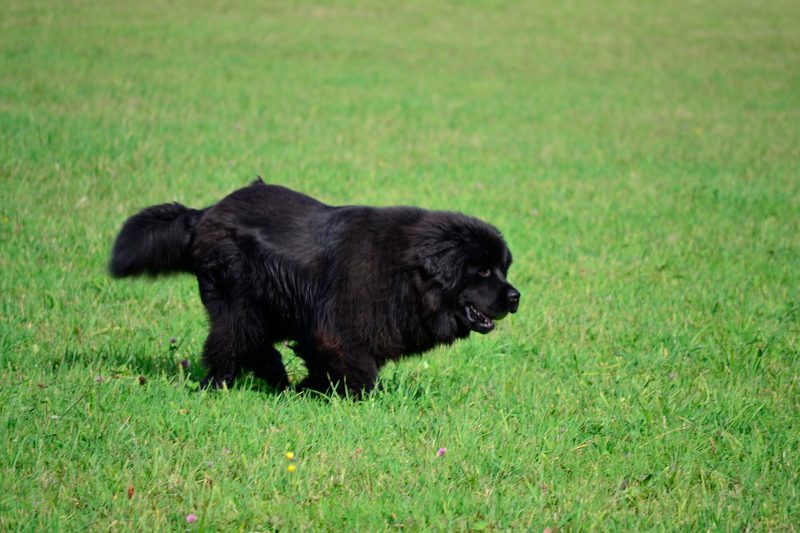
Two coat types are shown together: the shorthaired, which is dense, smooth and close-lying, and the longhaired, which is medium length, straight to slightly wavy, with feathering on the legs and a bushy tail. Colors are white with red or brindle patches, or red with white markings, usually with a white blaze, chest and feet and dark shading on the face and ears. Next to a Bernese Mountain Dog the Saint is bigger and mostly white; next to a Newfoundland it is two-toned.
Temperament & Personality
The classic St. Bernard is calm, patient and affectionate, with an unhurried way of moving through the world. Indoors most adults are sleepy homebodies who follow their person from room to room and settle nearby with a sigh. They bond with the whole household rather than one favorite, and they are famously tolerant of children, though a wagging tail at toddler height or a friendly lean can still knock a small child over. Supervision matters because of size, not temper.
Saints are watchful without being suspicious. Most will announce a visitor with a deep bark and then wait to see what you think; outright aggression is rare in a well-bred, well-socialized dog. They generally get along with other dogs and cats, especially those they grow up with. Some are sensitive and dislike shouting or household tension, and many hate being left alone for long stretches. Expect drool, snoring and a dog that takes up most of the sofa.
Exercise & Activity
For a dog this size the St. Bernard needs surprisingly little exercise. One good walk of 30 to 60 minutes a day, split in two in warm weather, plus some sniffing and gentle play in the yard keeps most adults fit. They enjoy hikes at a walking pace and cold-weather outings far more than jogging, and many take happily to carting or pulling a sled with children aboard, a sport the breed's parent club encourages.
Heat is the enemy. Saints overheat quickly once temperatures reach the mid-70s Fahrenheit, so summer exercise belongs in the early morning or evening with shade and water. Puppies need restraint rather than conditioning: the breed grows for two years or more, and forced running, stairs or jumping on hard ground before then can harm developing joints.
A bored Saint chews, digs and leans on fences until they give way.
Skip strenuous activity for an hour before and after meals to lower bloat risk.
Training
St. Bernards are willing, kind-hearted learners, but their size means training cannot wait. Start the day the puppy comes home with the basics that matter most at 150 pounds: walking on a loose leash, a solid sit and down, waiting at doors, and not jumping on people. Reward-based methods with food and calm praise work best; Saints wilt under harsh handling and tend to plant their feet and refuse when pushed. Keep sessions short, because the breed gets bored with endless repetition.
Socialize generously during puppyhood so the adult's natural watchfulness settles into easy confidence around visitors, children, other dogs and strange places. Stubbornness in adolescence is common and usually passes with consistency. Many Saints enjoy obedience, rally and drafting work, and their steady temperament makes them good therapy dogs. One habit to address early is leaning or sitting on people, which is charming in a puppy and a real problem in an adult.
Grooming & Care
Both coat types shed heavily and need the same routine: a thorough brushing once a week with a slicker brush and an undercoat rake, stepped up to daily during the two big seasonal sheds in spring and fall. The longhaired variety also needs a comb worked through the feathering behind the ears and on the legs where tangles form. Bathe every couple of months or when dirty; frequent washing strips the coat's natural oils.
Drool is a daily chore. Keep a towel by the door and wipe the jowls and chest, and check the facial folds and the droopy lower eyelids for debris and irritation. Clean the ears weekly, trim nails every few weeks and brush teeth several times a week.
A professional de-shedding session helps during the heavy molt.
Watch for hot spots under matted or damp hair in summer.
Health
The St. Bernard's typical lifespan is 8 to 10 years, and most of the conditions that shorten it are tied to size. Hip and elbow dysplasia are common; responsible breeders screen breeding stock through OFA or PennHIP hip evaluations and OFA elbow evaluations. Gastric dilatation-volvulus, or bloat, is a life-threatening emergency in this deep-chested breed, and every owner and sitter should know the signs: a swollen belly, unproductive retching and restlessness. Dilated cardiomyopathy occurs more often than in most breeds, so a cardiac exam is on the parent club's recommended list, alongside an eye exam by a veterinary ophthalmologist for entropion, ectropion and cataracts, and a DNA test for degenerative myelopathy.
Osteosarcoma, a bone cancer, has a hereditary component in the breed. Cruciate ligament tears, epilepsy and heat stroke are also seen. Ask your vet about a large-breed joint plan and weight targets, and bring any sudden lameness, collapse or breathing difficulty in straight away.
Nutrition
Feeding a Saint is mostly about restraint. Puppies should eat a large-breed growth formula, which slows the rate of growth without changing adult size and helps protect developing joints; ask your vet how long to keep them on it, since the breed matures slowly. Adults need a measured amount of a complete diet split into two or three meals a day rather than one large one, which also reduces bloat risk. Avoid vigorous exercise for an hour either side of meals, and ask your vet before changing bowl height or adding supplements.
Saints gain weight easily and carry it badly, so keep a visible waist and ribs you can feel under the coat. Treats add up fast on a dog that trains for food. Seniors often need fewer calories and may benefit from joint support; your vet can advise on what is worth adding and what is not.
Living With This Breed
A St. Bernard needs space more than acreage: room to turn around indoors, a yard for sniffing and a cool place to sleep. Apartments rarely work, both for the dog's size and for stairs that are hard on giant joints. Air conditioning in warm climates is a necessity, not a luxury. They are quiet, slow-moving housemates that do best with people home much of the day and tolerate a few hours alone once mature.
They are usually wonderful with children and other pets but should be supervised with small kids simply because of their mass. Drool lands on walls, clothes and guests; hair collects in corners. Most are not escape artists, but a bored Saint can push through a weak fence.
For sitters and daycare staff:
Keep walks short and shady in heat, and carry water.
Feed measured meals and no exercise right after.
Know the signs of bloat and the nearest emergency vet.
Wipe drool and check between the toes after muddy walks.
Interesting Facts
The brandy cask around the neck is a myth that started with an 1820 painting by Edwin Landseer; the hospice monks never used them, though they keep one around for tourist photos.
Barry, the most famous rescue dog in history, is on display at the Natural History Museum in Bern, and the hospice has kept one dog named Barry in his honor ever since.
Buck, the hero of Jack London's The Call of the Wild, was written as half St. Bernard.
The 1992 film Beethoven made the breed a household name and set off a wave of impulse purchases that rescue groups still talk about.
Bamse, a St. Bernard who served as mascot on a Norwegian minesweeper in World War II, has his own statue in Montrose, Scotland.
The last documented rescue by a hospice dog took place in 1955; today the dogs are kept by a foundation for tradition and visitors.
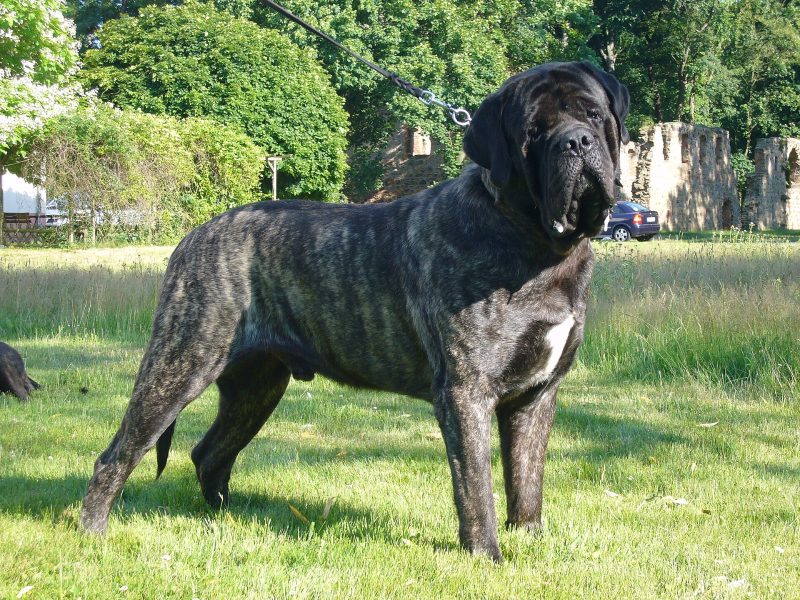
Breeds similar to the St. Bernard


What St. Bernard owners say
Real pets, photos, stories and tips from the SitterNation community — separate from the editorial guide above.
Log in to add your pet, photos, stories and tips.
Meet St. Bernards on SitterNation
No St. Bernards have joined yet. Owners can show their pet here from the pet's profile.
St. Bernard community photos
No St. Bernards photos yet — be the first to share one.
Stories from St. Bernard owners
No stories yet. What is life with yours really like?
Tips from St. Bernard owners
No tips yet. One practical thing that works for you is enough.
Ask St. Bernard owners
No questions yet. Ask the people who live with the breed.